ARTS / CULTURE & LEISURE
Beijing plans Ming Culture Theme Park to bring 600-year-old imperial heritage to life
By Published: Jul 05, 2026 11:38 PM

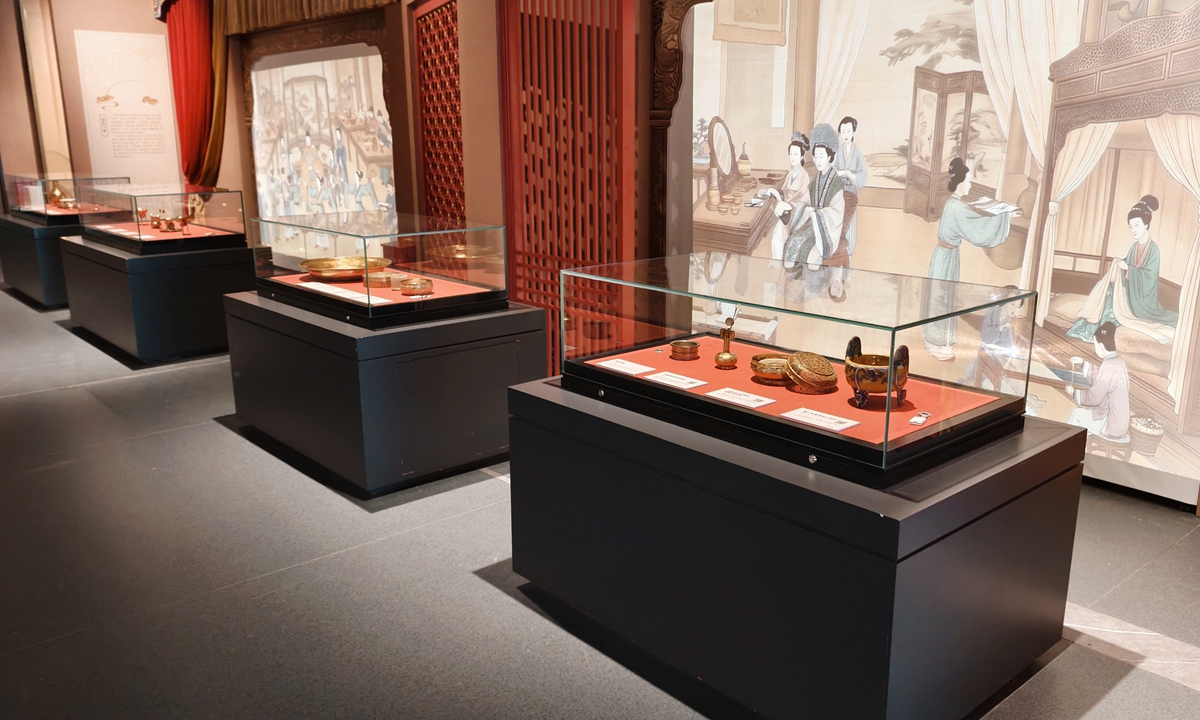
Ming artifacts are exhibited in Beijing.
From July 4 to 5, 2026, the Ming Culture Forum convened in Beijing's Changping district, drawing experts from Tsinghua University, the Palace Museum, the Ming Tombs Special Administrative Office, and cultural institutions preserving Ming imperial mausoleums across the country. Centered on the planning of a Ming Culture Theme Park, the gathering represented more than an academic discussion - it signaled a new practical approach to large-scale heritage sites, moving from isolated preservation behind fences toward a "living symbiosis" with contemporary society.
For centuries, China's rich cultural heritage has sometimes suffered from fragmented protection and isolated display. Professor Lü Zhou, director of the National Heritage Center at Tsinghua University and a leading authority on cultural heritage conservation, addressed this challenge directly in an interview with the Global Times.
"Large heritage sites and cultural remains should allow the public to enter, understand, and become engaged with them," Lü noted. A cultural theme park built on substantial archaeological foundations is not mere landscaping or commercial development. Instead, it should offer systematic protection and multi-dimensional presentation, linking scattered resources into chains and networks that generate scale and synergy, vividly conveying the unique creativity and values of Chinese civilization.
The planned Ming Culture Theme Park in Changping embodies three core characteristics outlined by Lü: integrity, innovation, and people-orientated approaches.
Integrity involves integrating Changping's rich but dispersed Ming-era resources into a cohesive whole. Rather than isolated "single-point" protection, the park will create a comprehensive public cultural space that presents over 270 years of Ming Dynasty (1368-1644) history. Innovation will harness digital intelligence technology to create immersive experiences, allowing artifacts and history to "speak" directly to visitors. This approach aims to make Ming culture more rejuvenated, vibrant, and accessible to contemporary audiences.
People-orientated approaches ensure that local villagers transition from bystanders to active participants and beneficiaries. Through employment and income opportunities tied to cultural preservation, the project seeks to deliver tangible benefits to communities, making heritage protection a shared endeavor.
"Changping's Ming cultural resources stand out for the profound integration of imperial court culture and ancient capital culture," said Hu Hansheng, a research fellow with decades of experience studying the Ming Tombs and former president of the Ming Imperial Mausoleums Research Society.
The Ming Tombs in Beijing were listed by UNESCO in 2003, while the Xiaoling Tomb of the Ming Dynasty in Nanjing is an extension of the "Imperial Tombs of the Ming and Qing Dynasties" on the World Heritage List. Today, eight sections of the Ming Tombs are open to the public. Authorities expect that by 2030, the exhibition scope of the Ming Tombs will extend to all principal mausoleums.
The 13 Ming Tombs are far more than imperial burial grounds; they embody deep ritual and symbolic significance rooted in the principle of "treating the dead as the living." Their spatial layout mirrors cosmological ideals similar to the Forbidden City. The tomb area is embraced by mountains, evoking a natural microcosm of the heavens.
Architecturally, connections are striking: The three major halls of the Forbidden City - Fengtian, Huagai, and Jinshen - correspond to the offering halls in the tombs. Changling's Ling'en Hall, for instance, parallels the Forbidden City's main hall with its hip roof, nine-bay width, and golden nanmu, a rare Chinese hardwood.
Changping's heritage also forms an integral part of Beijing's ancient capital culture. The Juyongguan section of the Great Wall guards the northwest, serving both military and imperial tomb protection roles.
The central question remains: How can major heritage sites that have "slept" for centuries truly come alive? Lü Zhou's answer is clear: not by enclosing them, but by fostering symbiosis between historical spaces and modern life.
A key feature of living heritage is the continuation of original functions and genuine community participation. Lü cited the Liangzhu Ancient City Site Park as a model of "bottom-up" protection, where nearly 4,000 households collaboratively drafted village covenants based on shared identity. Locals were prioritized as patrollers and guides, transforming protection from top-down mandates into community-led stewardship.
The same philosophy will guide the Ming Culture Theme Park. Lü hopes it will serve as an exemplary model of living heritage transmission and a cultural bridge between the past and future. "Making the people who live there part of heritage protection and inheritance, that is truly sustainable," he said.
During the forum, complementary activities brought abstract Ming culture to life. The Palace Museum, Capital Museum, and four other institutions representing Ming imperial tombs jointly exhibited over 70 sets of Ming artifacts. A highlight was the "Five Crowns Gathering" display, where five royal crowns from the Dingling Tomb appeared alongside digital restorations, recreating the grandeur of Ming imperial crown and robe rituals.
Notably, the World Heritage-listed Thirteen Tombs are establishing collaborative exhibition mechanisms with other Ming imperial sites. A digital Ming culture platform is under development, along with the youthful "Chang Xiao Ming" IP and a mini-program for online exhibitions to attract younger audiences.
In the future, Juyong Pass, Baifu Spring, and the Ming Tombs are expected to link into an integrated Ming culture tourism route, offering immersive experiences for visitors.
RELATED ARTICLES