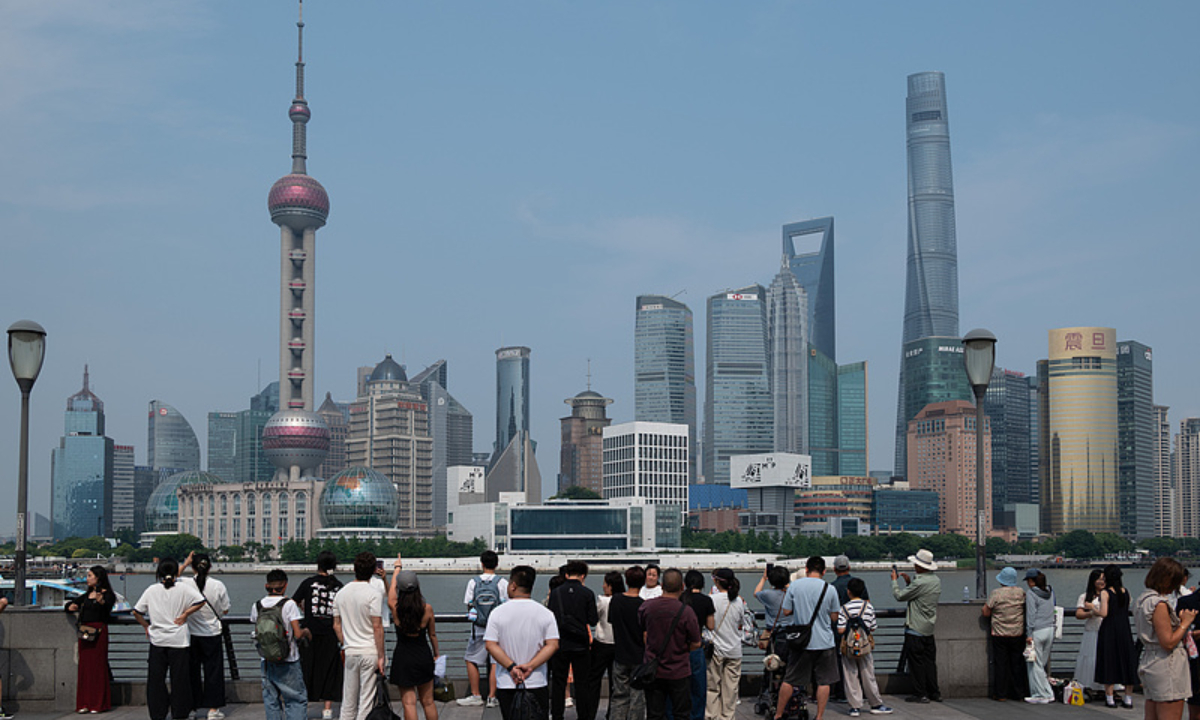
Tourists visit the Bund, Shanghai on June 25 Photo: VCG
China's Ministry of Culture and Tourism has issued a five-year plan to accelerate the construction of a tourism powerhouse, vowing to boost inbound tourist arrivals to 190 million by 2030, with total spending surpassing $150 billion, the ministry said on Wednesday.
That will be a significant increase from the current level. In 2025, China recorded 154.5 million inbound tourist arrivals, representing a year-on-year growth of 17.1 percent, while inbound tourism spending reached $131.1 billion, surging 39.2 percent compared with the previous year, according to official data.
The ministry noted that the plan is aimed at further consolidating the pillar industry status of tourism by 2030, with the role of tourism in stimulating domestic demand, promoting employment, and invigorating the market further strengthened. The share of value added from tourism and related industries in GDP has steadily increased.
According to the plan, China will continuously optimize visa-free policies and steadily expand the scope of visa-free countries. In addition, it plans to open new international air routes and special tourist trains, while increasing the number of flights and transport capacity.
Furthermore, the ministry will intensify efforts to train foreign-language tour guides and widely apply intelligent translation equipment. It will promote the Chinese hospitality tradition, showcase the unique cultural features of Chinese tourism, and cultivate the renowned "China Service" brand.
"Through these measures, the ministry will make targeted efforts in policy facilitation, transportation accessibility, and service improvement, which also serve as a vivid demonstration of China's commitment to greater openness, helping boost international tourists' confidence and further consolidate China's position as a premier global tourism destination," Li Chang'an, an economist at the University of International Business and Economics, told the Global Times on Wednesday.
Li noted that when foreign tourists personally experience China's culture, history and modern achievements, it helps enhance China's international image and cultural influence, thereby promoting the construction of a tourism powerhouse.
By 2030, the number of domestic tourist trips is expected to reach 8.3 billion, with total domestic tourism spending amounting to 7.7 trillion yuan, with the inclusiveness of tourism further highlighted, the plan said.
The ministry will enrich high-quality tourism supply and adapt to the needs of different tourist groups by launching customized and personalized tourism products and routes. For instance, it will focus on the health and wellness, emotional companionship, and interest-based social needs of the elderly, and develop themed products such as wellness tourism and nostalgia tours.
In order to unleash consumption potential, the ministry is proposing to ensure companies provide paid annual leave for employees and encourage flexible staggered holidays. It supports regions with the necessary conditions to promote spring and autumn breaks for primary and secondary schools.
Li noted that these efforts are highly integrated and targeted, focusing on both supply-side innovation and demand-side guidance. "The policies will further stimulate the public's enthusiasm for travel, while also promoting the improvement of quality and efficiency in the tourism industry, thereby enhancing its overall competitiveness."
In another new move, the ministry on Wednesday launched the 2026 national summer cultural and tourism consumption season in Northwest China's Qinghai Province. The consumption season will run from early July to the end of August, during which various regions will host more than 30,000 cultural and tourism consumption events and issue over 450 million yuan in consumption vouchers and other subsidies.
Li said that the tourism industry serves as an important pillar in China's economic transformation and high-quality development, particularly excelling in expanding domestic demand and promoting the upgrading of the services sector.
A report released by the World Travel & Tourism Council (WTTC) predicts that China's tourism industry will expand by 5.3 percent in 2026, with an average annual growth rate of 6.5 percent over the next decade. By 2036, the sector is expected to nearly double in size to $3.5 trillion.
In a recent interview with the Global Times, Gloria Guevara, WTTC president and CEO, said that if current trends continue, China's accelerated expansion in the tourism sector will place the country firmly on track to become the world's leading travel and tourism economy.
"The combination of culture, history, gastronomy, excellent infrastructure and ease of movement within the country will drive a significant increase in international travelers from all over the world," she said.
RELATED ARTICLES