

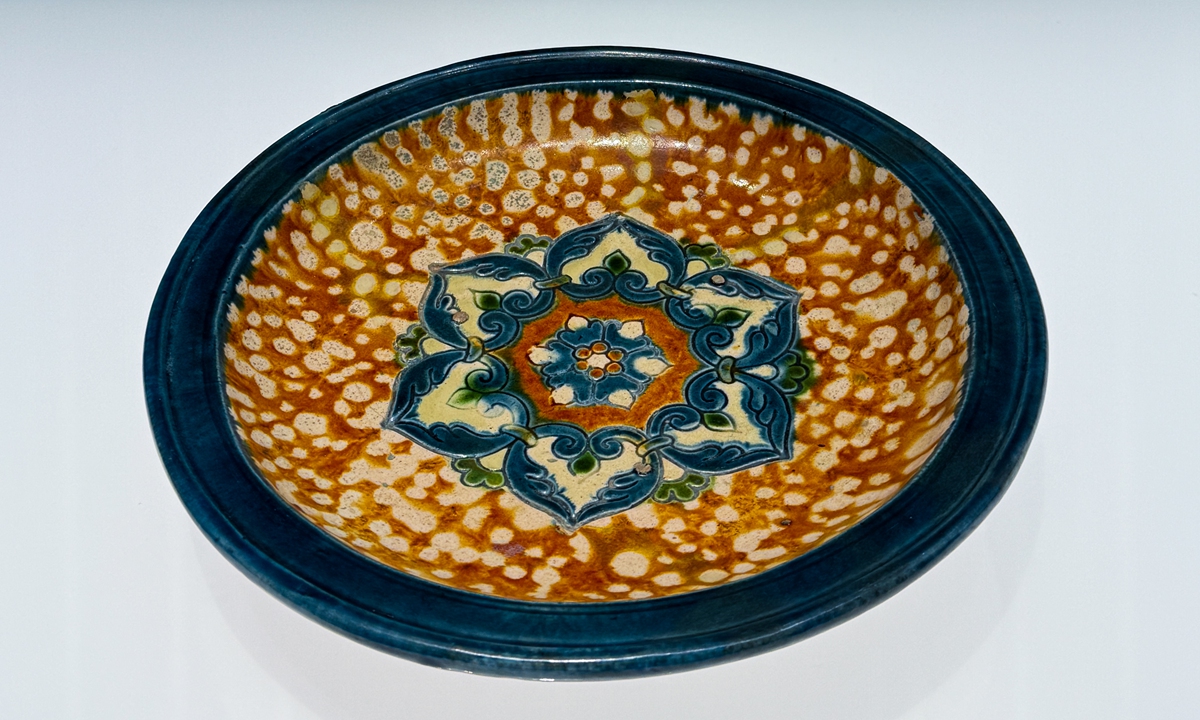
Baoxiang flower design, often seen on Dunhuang murals, textiles, silk
In a move that quickly spawned online memes likening it to luxury giant Armani's aggressive trademark strategy, Zhejiang University has secured full-class registration for its "Qiushi Eagle" emblem across all 45 trademark categories. The university's robust defensive posture against potential squatting, compared by many to that of the luxury brand Giorgio Armani, stands in stark contrast to the painful reality facing Chinese cultural heritage: traditional designs and motifs - many with centuries or even millennia of history - remain largely unprotected as public domain resources, leaving them vulnerable to appropriation and even reverse infringement claims by some foreign brands.
The issue exploded into public view again with the recent high-profile lawsuit in which Louis Vuitton (LV) won 10.3 million yuan ($1.52 million) from Chinese milk tea brand Molly Tea. Critics pointed out the irony: LV's iconic monogram draws clear inspiration from Tang Dynasty (618-907) treasures such as the baoxiang floral motif and shidi (persimmon) patterns, elements long embedded in China's artistic tradition.
While one Chinese institution builds an ironclad legal wall around a modern eagle symbol, the nation's ancient decorative "genes" float freely - sometimes to be privatized abroad through minor commercial tweaks and then "weaponized" against domestic players.
This contradiction has ignited broader discussion on how China can safeguard its rich textile, ceramic, and architectural heritage in the age of global intellectual property wars. Various experts and insiders have given insights into this topic in interviews with the Global Times.
Ancient treasure
Huang Qingsui, founder of China's Traditional Pattern Database and an associate professor at the Guangxi University of the Arts, has spent years documenting the motifs that are part of the living pulse at festivals celebrated by various ethnic groups, temple murals and imperial porcelain.
"From the intricate halos on Dunhuang frescoes to the crane images on Jingdezhen's heritage blue-and-white wares, these are totems of a nation as they carry our ancestors' wisdom and philosophy of time and space," he told the Global Times.
Born in a Zhuang ethnic community in South China, Huang grew up surrounded by a living vocabulary of embroidery and carved wood, a legacy that fuels his research.
When the LV controversy erupted, media reported that founder Georges Vuitton claimed the monogram design was once inspired by traditional Japanese symbols, but Huang pointed out that those very symbols absorbed centuries of aesthetic genes from China's Tang Dynasty.
"The 19th-century European craze for Eastern art was never a simple absorption of Japanese design, but a widespread borrowing of an entire East Asian decorative system that had been nourished by a Chinese cultural bloodstream," he argued, adding that Chinese porcelain, silk and lacquer had been reshaping European taste since the Yuan and Ming dynasties (1279-1644); many classic Western logos, from Givenchy's fretwork to LV's monogram, rest on shared ancient Eurasian motifs rather than being uniquely Western creations.
Few motifs reveal this shared heritage more clearly than the shidi (persimmon) motif. Its four-pointed form - the calyx left on a persimmon after the fruit is picked - became a decorative staple as early as the Shang and Zhou dynasties (c.1600BC-256BC).
By the Han Dynasty (206BC-AD220), it was not just a mere ornament. Scholars believed the cruciform structure encodes the ancient concept of the four cardinal directions, mapping the sun's path and anchoring the origins of cosmic order. On a Han Dynasty bronze mirror, the central boss represents the celestial pole; the four petals radiate outward to the edges of the known world, a visual diagram of the universe itself, Yizhan, an art media outlet under the Beijing Daily, reported.
Huang emphasized that Chinese patterns have always been an inclusive, evolving system. From the Wei-Jin (220-420) period through the Tang Dynasty, Silk Road exchanges merged foreign elements with local aesthetics, turning the ancient patterns from a religious symbol into a folk decorative resource shared by all.
National cultural security
Unlike the emotional public debates during controversy over Dior's skirt design, which clearly borrowed elements of Chinese horse-faced Hanfu but failed to correctly attribute the source, Huang and Wang observed that the latest online discussions about the ownership of traditional designs marked a notable shift toward rational cultural awakening.
On the Chinese lifestyle platform RedNote, Chinese users accused LV of attempting to monopolize a traditional Chinese design by posting side-by-side images suggesting the French luxury house's motif drew upon traditional Chinese motifs.
"Chinese netizens now actively verify historical relics and sort out the evolutionary context of traditional motifs, replacing blind emotional outbursts with evidence-based cultural tracing," Huang said.
Wang Xianhua, a dean of the School of Humanities at the Shanghai University of Finance and Economics, put the phenomenon into a longer arc. In 1896, at the height of colonialism, founder Georges Vuitton could freely sample Eastern public-domain designs without permission and without credit as "Eastern civilizations were positioned as passive providers of inspiration rather than equal dialogue partners," noted Wang. While a century later, when a Chinese brand does the same with an ancestral design, it faces a lawsuit. "It shows a power imbalance in cultural discourse," Wang told the Global Times.
According to Huang, for the past century, Western powers have dominated global intellectual property rules and cultural narratives. For China to build a culturally strong nation and engage in equal global civilizational dialogue, it is critical to develop an independent, systematic genealogy of traditional culture and reclaim the global interpretive power over Chinese decorative motifs and broader fine traditional Chinese culture.
"What appears to be an isolated trademark dispute over ancient designs ultimately reflects deeper issues concerning national cultural security and global cultural discourse power," said Huang.
The LV vs Molly Tea dispute, experts argued, has moved beyond a simple infringement case into a deeper question: The core problem is not weak protection, but a severe mismatch between the tools of protection and the objects they aim to safeguard. The real fight is shifting from protecting commercial innovation to defending cultural identity.
Beijing-based cultural scholar Yu Jinlong pointed to a structural lag: modern trademark law, built around registration and commercial distinctiveness, runs on a clock utterly out of sync with the slow, collective creation of traditional designs. A millennium-old motif can be lightly remixed, registered, and then used to fence out the inheritors of the culture that birthed it. That gap, Yu warned, might generate more lawsuits.
To counter this, Huang's team is building a digitized Chinese decorative motif database that uses archaeology, iconography and digital evidence chains to replace subjective claims with verifiable cultural documentation.
In fact, Chinese researchers have already noticed the problem and leapt into action. At this year's "Two Sessions," Gao Youdong, deputy to the 14th National People's Congress, proposed a national ethnic design gene bank to preserve resources at risk of being digitally captured and commercially exploited by foreign entities. The goal is not just to archive beauty, but to reclaim the power of cultural interpretation in a global arena where, too often, others write the narrative.
Overseas models have also pointed a way forward. Huang gave the example of the Scottish Register of Tartans, operational since 2009, which does not ban the use of checkered patterns; it protects the cultural identity tied to the name "tartan."
The logic mirrors geographical indications: Anyone can make luosifen, a Chinese fermented rice noodle soup, but only those from Liuzhou, Guangxi Zhuang Autonomous Region, can be called "Liuzhou Luosifen."
Applying this to China's heritage, a weaving workshop could use a geometric design, but it could not label it "Zhuang ethnic brocade" without proper provenance.
Huang said such approaches offer a mature template for China. The goal is not to lock patterns behind paywalls, but to build a complete genealogy of Chinese motifs. A system that says, "This is who we are, this is where our designs came from, and this is the story no court ruling can erase."
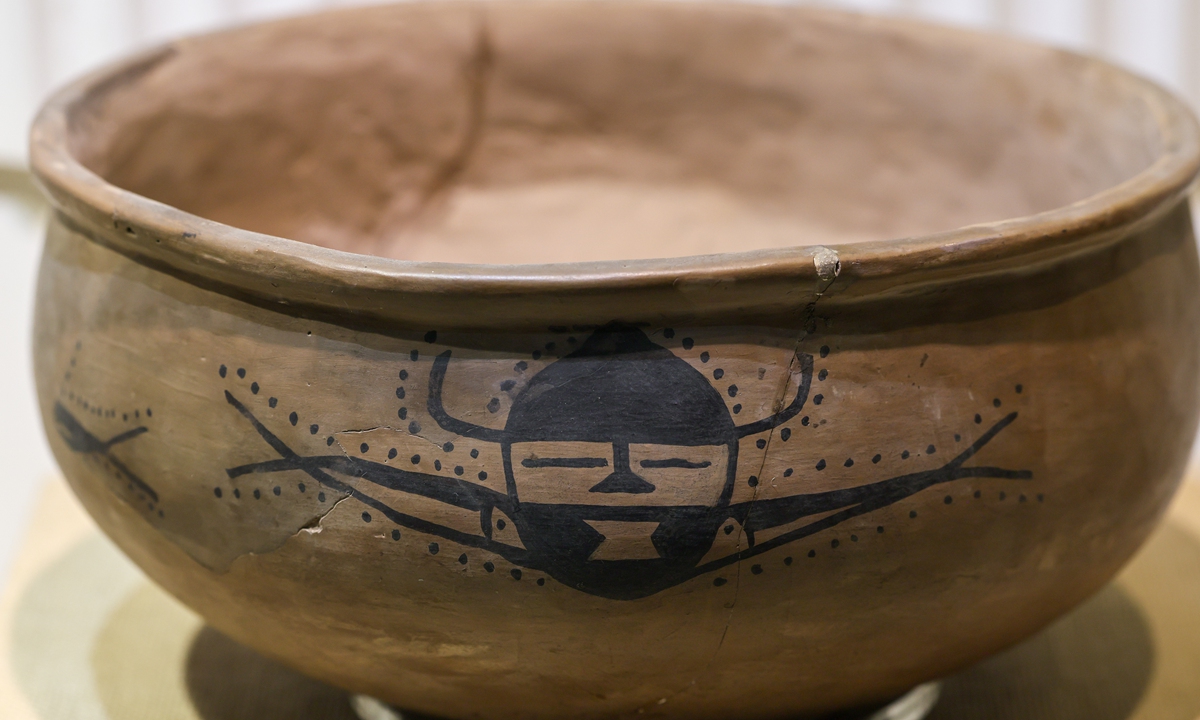
Yangshao Culture period ( around 5000 BC to 3000 BC)
Representative Motif: Human-faced fish pattern, often seen on Yangshao painted pottery
Cultural Significance: Totemic worship and prayers for survival. The fish motif symbolizes fertility and bountiful harvests—the early stage of Chinese decorative art.
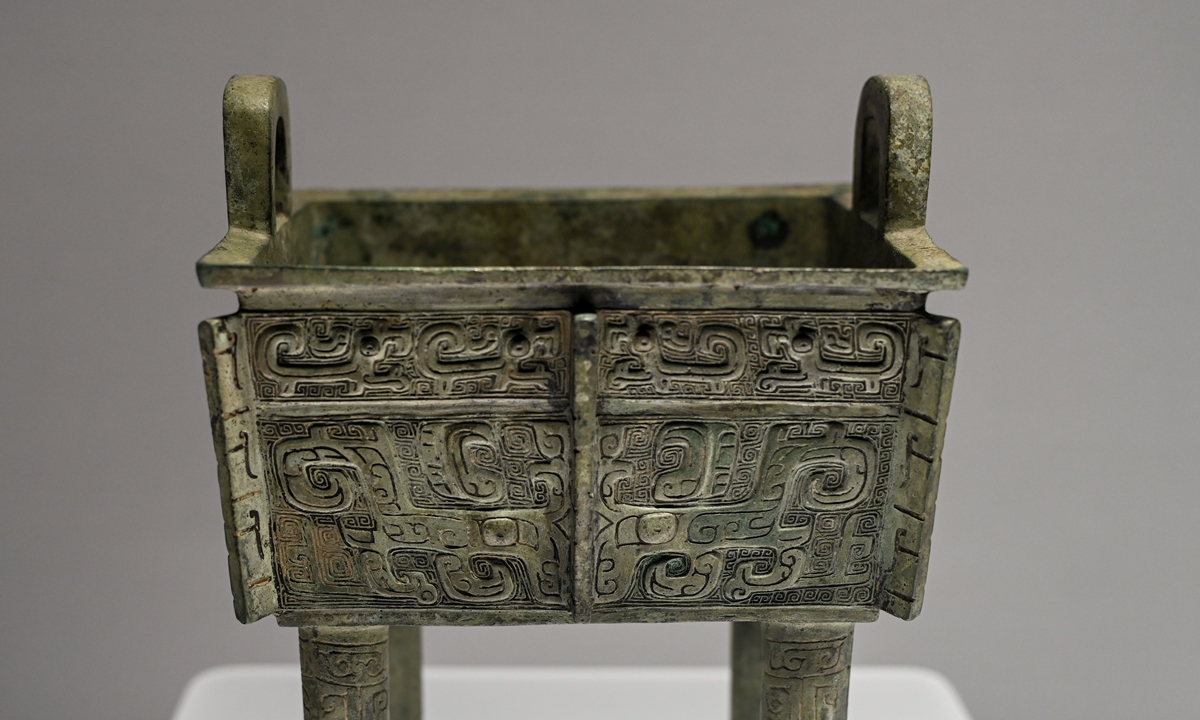
Shang and Zhou Dynasties (c. 1600-256 BC)
Representative Motif: Yunlei (cloud-and-thunder) pattern, often seen on bronze ritual vessels
Cultural Significance: Ritual propriety and theocracy
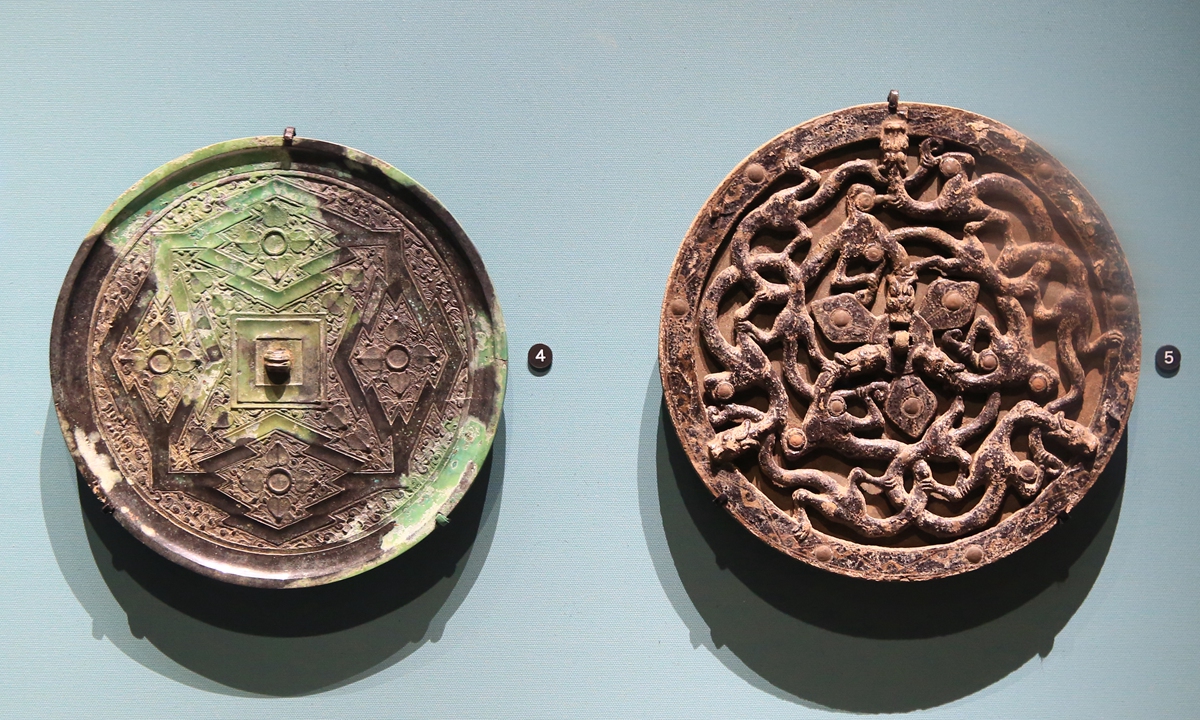
Warring States to Han Dynasty (475 BC-220)
Representative Motif: Panchi (coiled dragon) pattern, often seen on lacquerware, silk paintings
Cultural Significance: Beliefs in transcendence and flowing vitality
Northern and Southern Dynasties to Tang Dynasty (386-907)
Representative Motif: Baoxiang flower design, often seen on Dunhuang murals, textiles, silk
Cultural Significance: Silk Road synthesis. A hybrid of Indian lotus, Persian pearl-roundels, and native peonies, symbolizing perfection
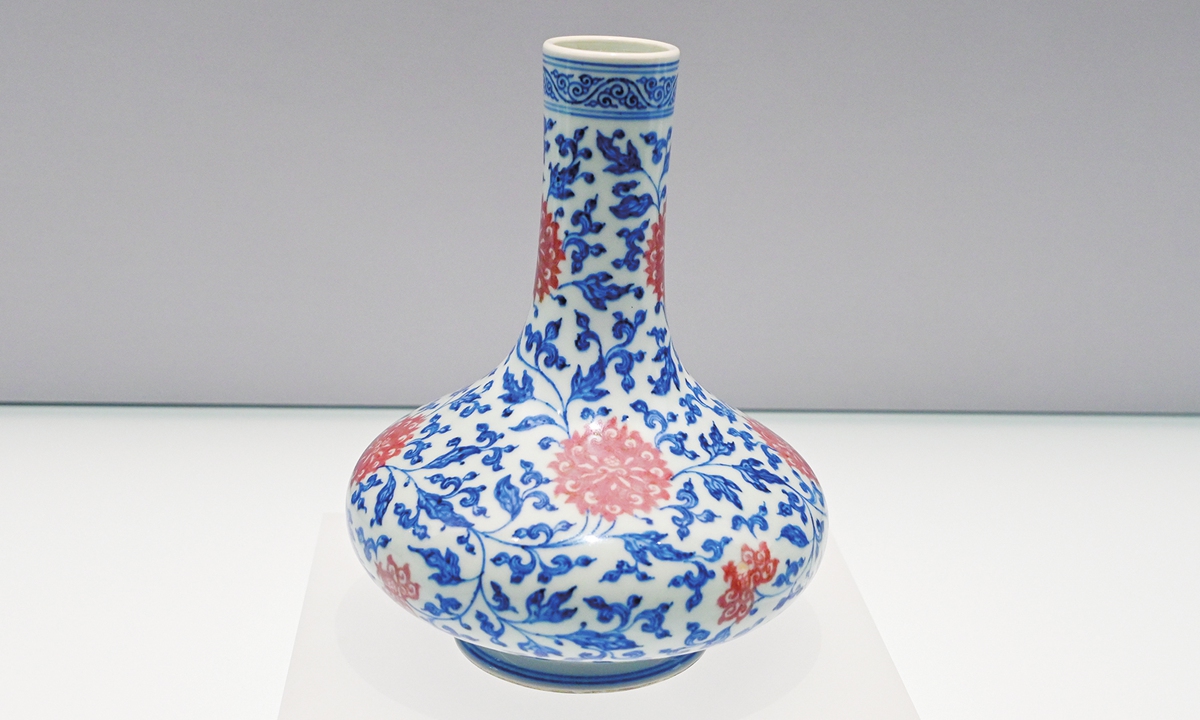
Song and Yuan Dynasties (960-1368)
Representative Motif: Interlocking lotus scrolls, often seen on Ru ware ceramics, Song brocade
Cultural Significance: Scholarly aesthetics. A shift from divine to human-centered themes, celebrating natural elegance
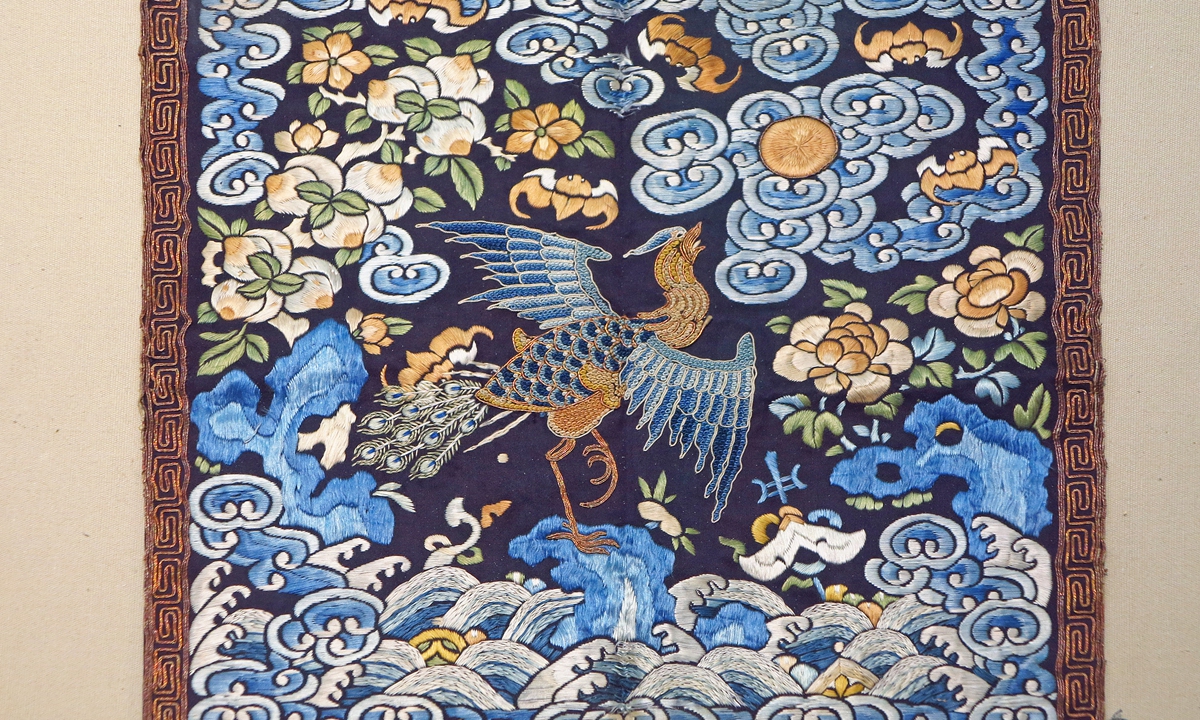
Ming and Qing Dynasties (1368-1911)
Representative Motif: Rank badges (civil birds, military beasts), often seen on dragon robes, official uniforms
Cultural Significance: Imperial authority and social identification. These badges functioned as "professional logos" of the feudal hierarchy