US, Iran exchange fresh strikes amid Hormuz disputes; US unfreezing Iranian assets, easing sanctions may create room for further talks, says expert
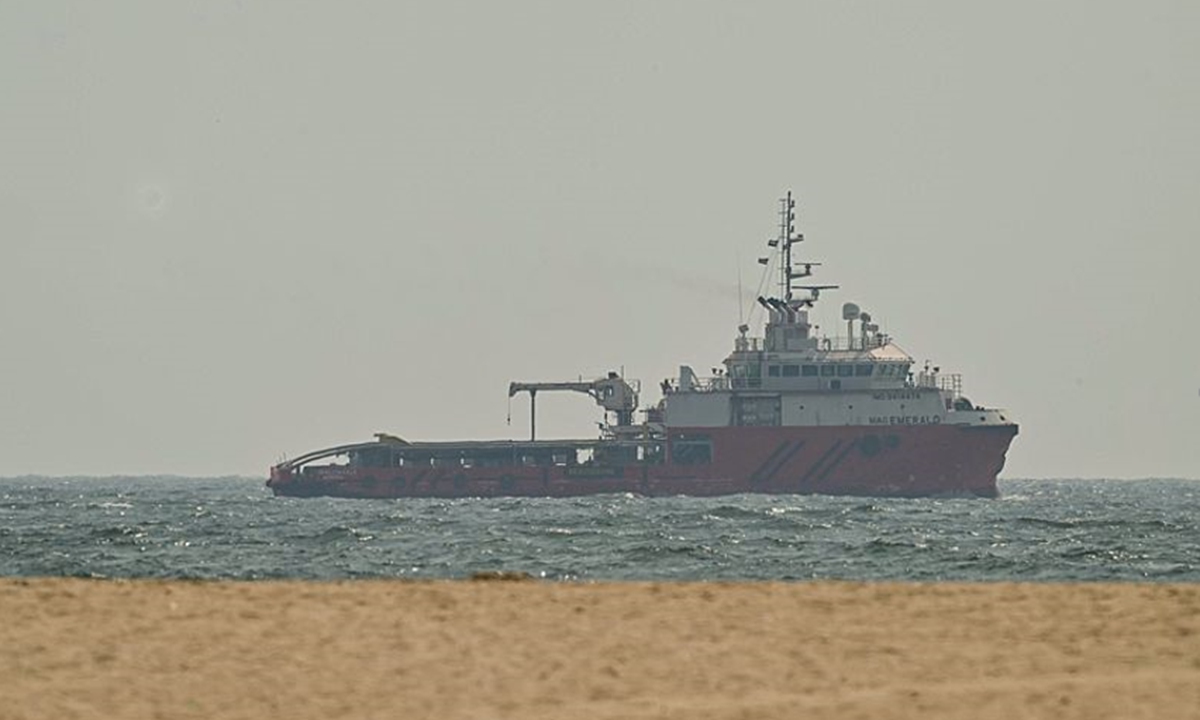
A ship sails off the coast of Ajman on July 10, 2026. Traffic through the Strait of Hormuz has fallen sharply since July 8, especially through the UN-backed Omani route, analysts said, after vessels were attacked earlier this week and as the United States and Iran traded renewed strikes. Photo: VCG
The US and Iran continued to exchange strikes over the weekend, with Tehran claiming attacks on Bahrain, Kuwait, Jordan, Qatar and Oman in what it described as retaliation for continued US strikes on southern Iran, Al Jazeera reported.
The latest developments came after the US launched a third round of strikes against Iran this week. The US Central Command (CENTCOM) said on Sunday that US forces struck approximately 140 Iranian military targets on July 11 using precision munitions launched by land- and sea-based aircraft, drones and naval vessels, holding Iran accountable for attacking another commercial vessel in the Strait of Hormuz.
In another statement, CENTCOM said Washington had previously made clear that Iran was provided yet another opportunity to demonstrate adherence to the Memorandum of Understanding (MoU) after being held accountable for earlier attacks on commercial vessels but has again failed, so that US is imposing a heavy cost by continuing to degrade Iran's ability to attack civilian mariners and commercial ships freely transiting the strait.
Reuters reported that the exchange of strikes over the past several days had prompted Trump to declare the end of a ceasefire intended to halt the conflict that the US and Israel launched on February 28, although he said the door remained open for further negotiations.
Earlier, Iran said several ships had attempted to transit the Strait of Hormuz via an "unauthorized route" and ignored repeated warnings to correct their course. The waterway would remain closed until "the end of US interference in this region," Iran's Islamic Revolutionary Guard Corps (IRGC) said, according to Reuters.
The report added that Tehran had again declared the Strait of Hormuz closed and stepped up attacks on US facilities across Gulf states.
Meanwhile, Iran's top negotiator with the US, Mohammad Bagher Ghalibaf, wrote on X on Sunday: "The era of one-sided deals is OVER. We told you: keep your word or pay the price. Reality is knocking."
The core issue is ultimately about the rules governing the Strait of Hormuz, Sun Degang, director of the Center for Middle Eastern Studies at Fudan University, told the Global Times on Sunday.
"Iran insists on absolute control over the strait, while some commercial vessels have chosen to transit through the southern shipping lane outside Iranian jurisdiction, bypassing the northern route controlled by Iran," Sun said.
Against this backdrop, Iranian Foreign Minister Abbas Araghchi met with Omani Foreign Minister Sayyid Badr Albusaidi in Muscat on Saturday to discuss diplomatic efforts and the situation in the Strait of Hormuz, according to the official Oman News Agency (ONA), as cited by CNN reported.
The two sides discussed efforts to ensure the safety and freedom of navigation in the strategically vital waterway "in light of the circumstances and repercussions arising from recent developments."
According to CNN, citing a source familiar with the negotiations, Oman has drafted a proposal to manage shipping through the Strait of Hormuz via two separately controlled routes.
Under the proposal, which has yet to be finalized, both shipping lanes would remain open. The Southern Corridor, through Omani territorial waters, would allow free navigation under pre-war conditions. Vessels using the Northern Corridor, through Iranian territorial waters, would require prior approval from Tehran, although no transit fees would be levied under the deal.
Sun said the proposal would likely face significant obstacles to implementation.
"As Iran's domestic political landscape evolves, the IRGC is gaining greater influence, making Iran more inclined to adopt a tougher stance toward US," he said. "Iran is likely to become even less willing to negotiate with the US and will continue pressing for absolute jurisdiction over the Strait of Hormuz."
"The situation is likely to continue with cycles of escalation and de-escalation for some time," Sun noted, saying if US shows flexibility on issues such as unfreezing Iranian assets or easing sanctions on its oil exports, Iran may make further progress in negotiations.
RELATED ARTICLES