ARTS / CULTURE & LEISURE
'Mobile museums' bring shared multi-ethnic history to remote Xinjiang communities
Culture's last mile
By Published: Jul 14, 2026 10:40 PM

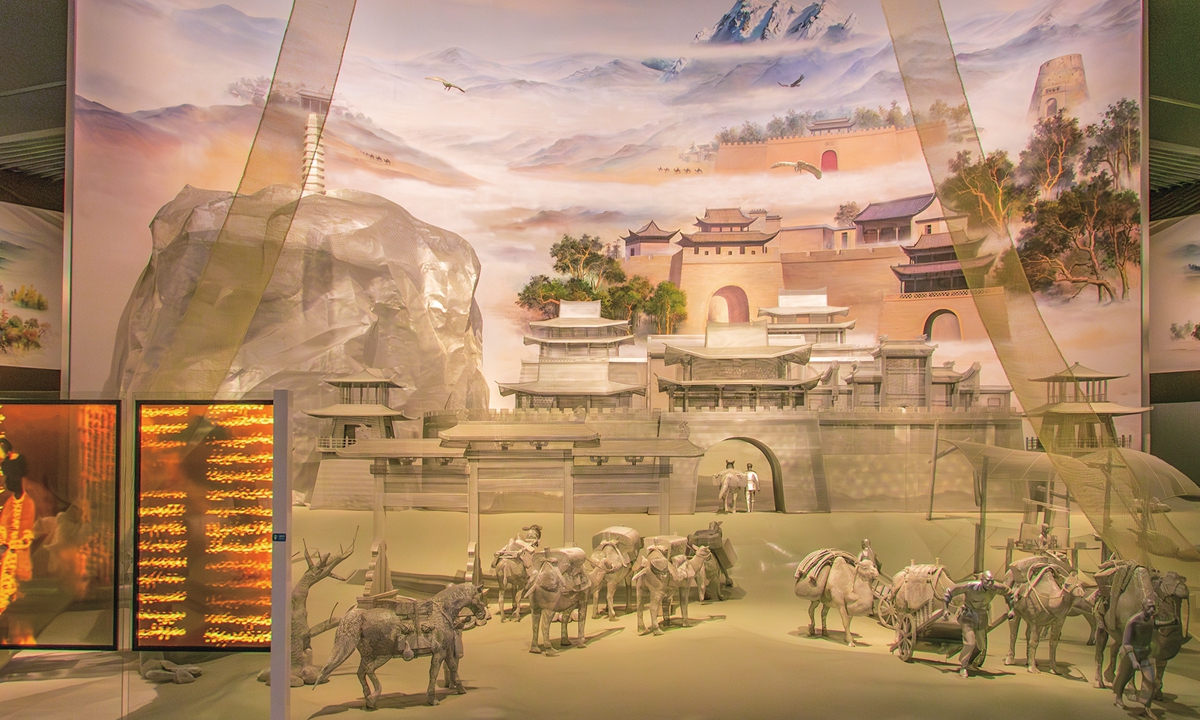
An Ancient Silk Road-themed display at Xinjiang's Urumqi Museum. Photo: VCG
Zhao Jirong, a guide at the Urumqi Museum in Northwest China's Xinjiang Uygur Autonomous Region, still remembers the day she and her colleagues went into Urumqi No.132 Middle School. They told students and teachers the story of how, more than 200 years ago, thousands of Xibe people left Northeast China, facing countless hardships before settling in the Ili River Valley. In the audience, a teenage boy suddenly stood up and said he belongs to the Xibe people. He explained that although he was not at a museum, hearing Zhao's explanation helped him understand, for the first time, where his ancestors came from and why Xinjiang feels so much like home. Zhao's presentation explained why the ethnic Xibe people in China live in two areas far from each other.
Zhao told the Global Times that this was just one striking moment from the museum's "mobile exhibition" initiative, which takes stories and artifacts out of gallery halls and into schools, neighborhoods, and daily life. In recent years, such moments have accumulated and convinced Zhao that one of the greatest parts of sharing a museum's cultural resources more widely is turning "grand narratives" locked behind glass into close personal stories - things directly relevant to the daily lives and families of people from every background in Xinjiang.
Today, traveling exhibitions led by museums have sprung up, creating a genuine craze for mobile museums. Different museums bring their treasured cultural relics to various places through display panels, replicas, and digitalizations, protecting the original artifacts while making cultural heritage more accessible to diverse communities across the region.
In Turpan, replicas of local cultural relics attract crowds in open-air markets; in Altay, petroglyphs tell ancient stories through display boards.
Carefully chosen digital display boards now break through the physical limitations of museums, bringing public culture right to remote areas and those with limited mobility, bridging the "last kilometer" for access.
Zhang Peng, a cultural researcher and associate professor at Nanjing Normal University, noted that mobile museums have a special significance in Xinjiang. He told the Global Times that Xinjiang is home to many ethnic groups and remarkable cultural diversity, making it crucial that mobile museums travel deep into communities. Through local storytelling, these touring exhibits help break down cultural barriers in understanding.
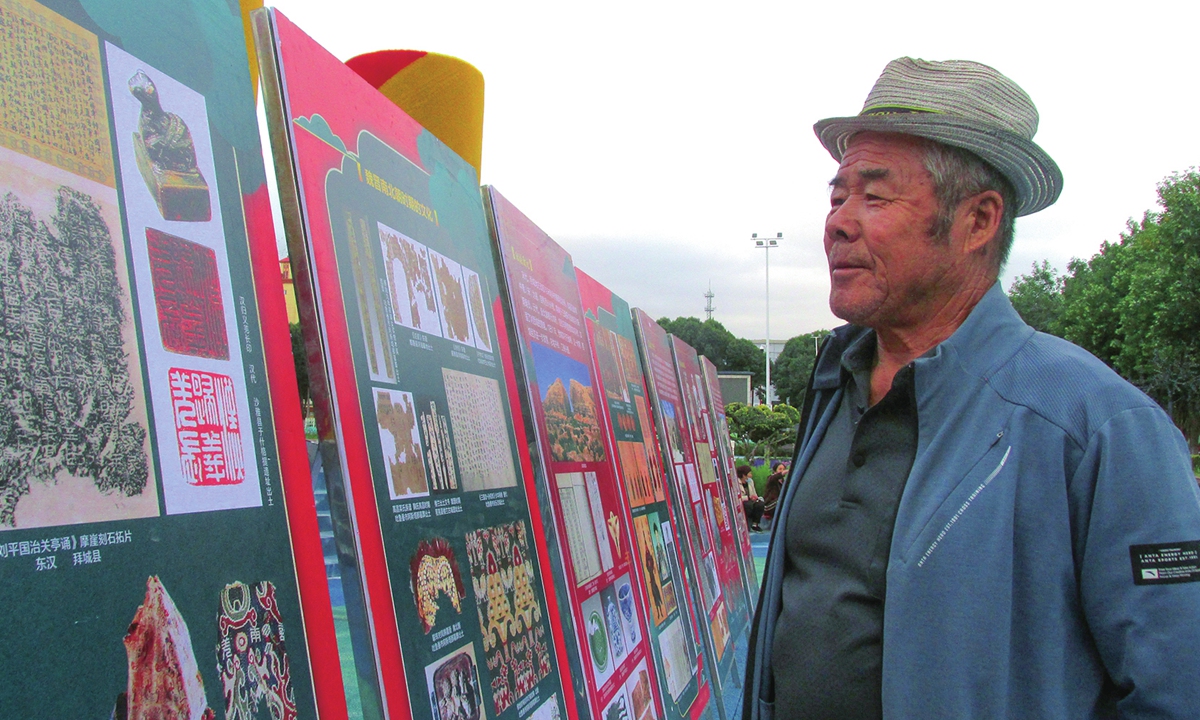
A resident of Xinjiang's Tacheng prefecture views exhibits brought by the region's "mobile museum" initiative.
History at one's fingertips
Zhao and her fellow guides now set up mobile museum exhibitions each year at townships, schools, and more, hosting hundreds of tours annually.
Their displays focus on Xinjiang's diverse ethnic histories and cultural ties, documenting migration, integration along the Silk Road.
The exhibition panels feature clear text and a rich selection of artifacts and images, systematically displaying Xinjiang's history as a crossroads along the ancient Silk Road - a meeting place for major world civilizations and a region where many ethnic groups and religions interacted, flourished, and formed an inclusive, multi-layered culture. Visitors are often deeply engaged by these accessible, visual presentations.
Zhao recalled one occasion when they were giving a talk in a public park, an elderly man in a wheelchair listened attentively from start to finish, carefully reading each panel and artifact description. When the introduction ended, he told her, "I only knew Xinjiang was large before. Today, after seeing all this, I really understand - Xinjiang has always been an inseparable part of our motherland, with a long history and splendid culture. What you are doing is truly meaningful. People like me, who cannot travel far, can still see these amazing exhibits here in the park."
When setting up a mobile museum, guides like Zhao thoughtfully adapt the content to different audiences. For township residents, they emphasize local development, the daily lives and cooperation between ethnic groups through the generations. For students and teachers, the exhibits highlight the deeper history behind the artifacts and the long, continuous story of Chinese civilization.
Zhang pointed out that these traveling exhibitions lower the threshold for people's participation in cultural life, making distant and abstract history tangible and relatable for people of different ethnic groups. Instead of grand, far-away tales, the exhibitions inspire a sense of pride and understanding rooted in local life.
Innovating exhibition styles
The content and methods of mobile museums continue to evolve. Museums across Xinjiang have developed portable board stands for outdoor use, combining text and images, while incorporating cutting-edge digital tools: 3D data collection, VR immersive experiences, and more. Technologies now allow precious relics to appear virtually in places where they could never be sent physically, according to Zhao.
One signature event, the Museum on Horseback run by the museum of the Ili Kazak autonomous prefecture, uses VR headsets to allow herders to come "face-to-face" with artifacts from thousands of years ago, while 3D printers on site create replicas of bronze warrior figurines. Lessons about the history of grassland statues become hands-on when students receive model kits, picking up paintbrushes to decorate their own stone men, therefore connecting ancient culture with modern creativity.
In Kashi prefecture, the "mobile museum" project has dispatched more than 450 exhibition trucks over the mountains to reach isolated pastoral areas, according to the China News Service.
These mobile exhibits have brought, for the first time, 3D reconstructions of the ancient Mo'er Temple ruins to over 100,000 local farmers and herders.
As for further upgrading Xinjiang's mobile museum experience, Zhang offered his own ideas. He noted that curators should shift from merely displaying relics to telling dynamic, story-driven micro-narratives more closely related to everyday life.
He also suggested setting up robust feedback systems, so that exhibition content can be adjusted in real time, tailored to meet the needs of different ethnic communities.
RELATED ARTICLES