ARTS / MUSIC
Young pianist Luo Wei finds musical inspiration through extensive reading
Pages behind performance
By Published: Jul 16, 2026 05:40 PM

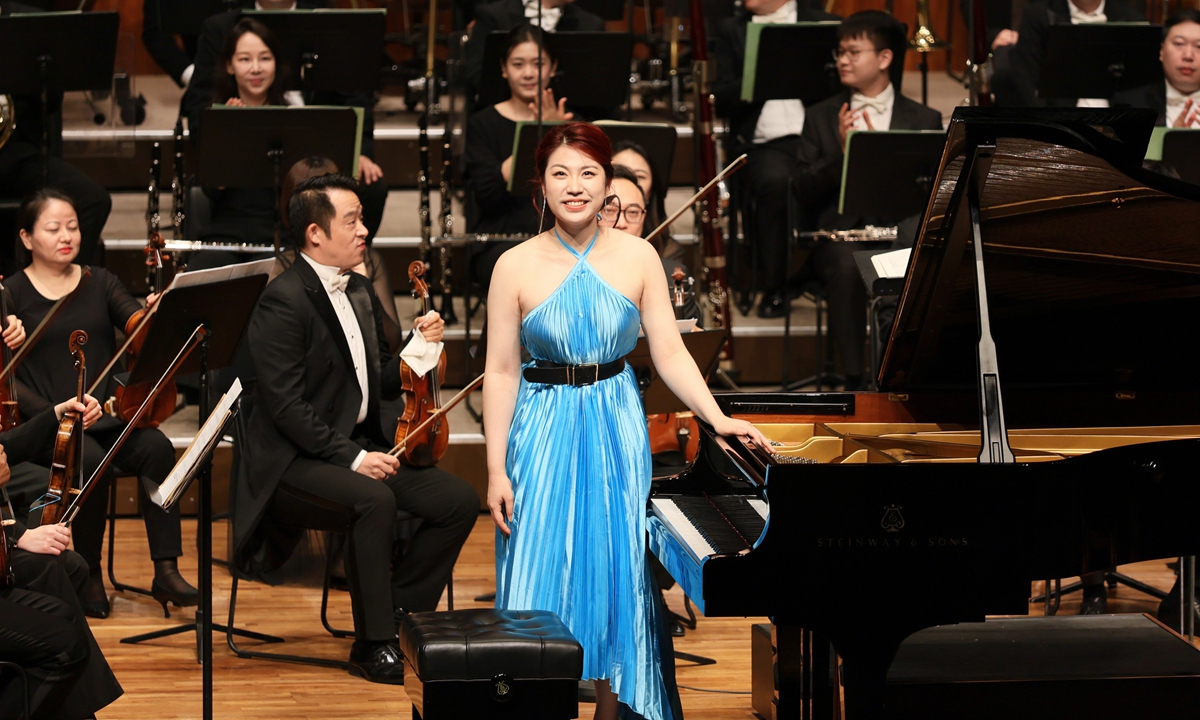
Chinese pianist Luo Wei Photo: Courtesy of Luo Wei
Editor's Note:In an age of information overload, reading remains a necessary channel to invigorate the mind, provide inspiration and cultivate virtue. Whether it is childhood enlightenment or the pursuits of adulthood, everyone's reading journey carries unique emotions and life experiences. The Global Times has specially launched the "100 Avid Readers" series, inviting guests from various fields to share their connections with books, stories of growth and sparks of thought.
In this installment,we meet Chinese concert pianist Luo Wei, whose reading habits fuel her artistry, bridging Chinese poetry and Western classical music.
In the luggage of Luo Wei, a rising Chinese concert pianist, there is always room for books. From the practice halls of the Curtis Institute of Music to stages across the world, her fingers race across the black and white keys while her mind travels through pages of literature.
For Luo, reading is not just a break from the piano. It is part of basic training - one that shapes how she hears, feels, and expresses music. "Music expresses through notes; literature through words. Both lead to the same place: one's own artistic voice," Luo said in an interview with the Global Times.
Luo's early life made reading feel natural. At home, the bookshelves held many Chinese editions of world classics, often shortened for young readers. Her mother read poems and stories aloud before going to bed. Those quiet moments built a habit that stayed with her when the details of individual stories faded. The feeling of being carried into other worlds remained.
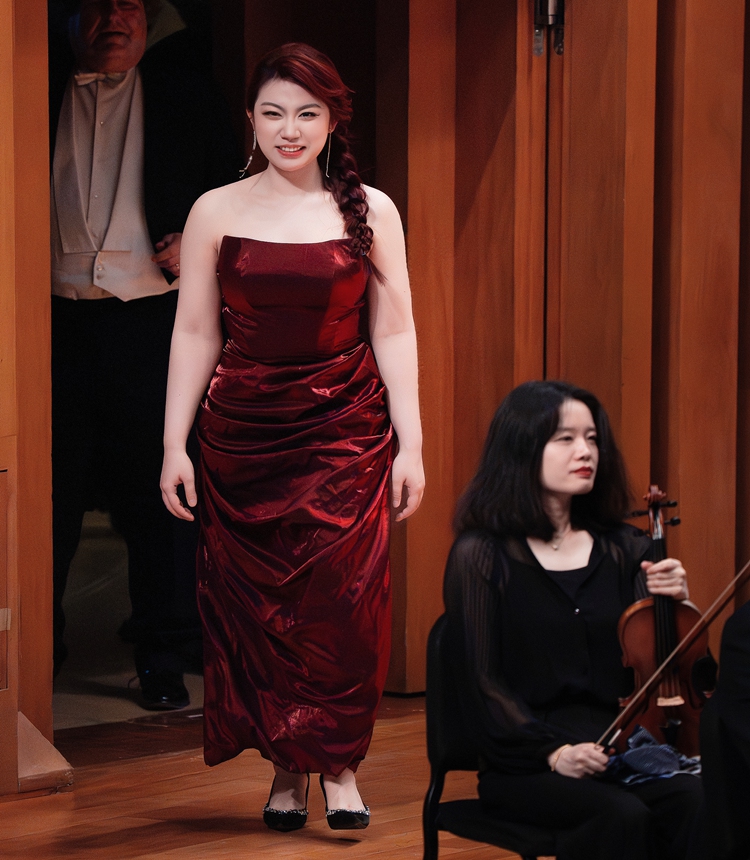
Chinese pianist Luo Wei Photo: Courtesy of Luo Wei
Mirroring classical musicMany assume a serious pianist must give every hour to the instrument. Luo disagrees. Competition at elite schools like Curtis and on international stages is intense. Simply sitting at the piano is not enough.
"Music is a form of expression," she explained. "To express deeply, you need to live deeply."
Literature has helped her music become more transparent, more alive. She points to the works of Jorge Luis Borges as especially important. Through translations and conversations with her friend, the poet Xi Chuan, Luo found herself drawn into Borges's worlds of labyrinths, mirrors, and branching time. These images changed how she thinks about life's possibilities and its hidden complexities.
The layered structure of Borges's writing - voices that imitate and diverge, only to circle back - mirrors the counterpoint in classical music.
"It helped me understand complex musical forms," she said. "Multiple lines moving together, echoing and separating."
Another constant companion is Andrei Tarkovsky's book Sculpting in Time. The Russian director viewed film not as recording time but as carving it, revealing unique poetry in each frame. For Luo, this idea connects directly to music, which is an art of time. Tarkovsky's philosophical approach to art gave her a fuller sense of what it means to shape sound with intention and depth.
On the road, where touring life can feel rootless, books become even more important. Luo described the disorienting feeling of waking up in a new city, unsure of the day or how long she has been away from home. "You feel like you're drifting," she said. Reading restores a sense of "I am still here." It acts like a spiritual stabilizer.
Among the books she carries regularly are Tarkovsky's reflections, slim philosophy volumes by Han Byung-chul, and a recent favorite - Walking in the Boundless Universe by her friend, the sculptor Xiang Jing.
In conversations about the body, space, and reaching the unreachable through art, Luo finds echoes of her own work at the piano. "Music is not just piling up sounds," she noted. "It is expression." Luo has taken this belief into her performances. At a solo recital at Beijing's National Centre for the Performing Arts earlier this year, she offered spoken introductions that linked Western classical pieces to Chinese poetry.
Words connect music
She connected Franz Schubert's music to Chinese poet Tao Yuanming's famous lines, one of China's most celebrated poets from the Jin Dynasty (265-420): "I pick chrysanthemums by the eastern fence, and see the southern mountain in the distance." The poem's sense of forgetting the self and finding quiet truth in nature matches the deep, solitary feeling in Schubert, especially toward the end of his short life. Both show a kind of wordless understanding that goes beyond explanation.
Johannes Brahms's disciplined forms and restrained emotion reminded her of Tang Dynasty (618-907) poet Du Fu. Du Fu's painstaking craft, perfect balance of sound and meaning, carries vast sorrow, much like Brahms's ability to contain deep feeling within strict classical structures.
In Beethoven's Waldstein sonata, also known as Dawn Sonata, Luo sees a celebration of nature and life that aligns with poet Su Shi's resilient spirit. Su Shi endured repeated exile yet wrote lines of remarkable freedom: looking back on stormy places and finding neither rain nor shine. Like Beethoven's famous resolve to seize fate by the throat, Su Shi's poetry shows light emerging from hardship.
Her message to young piano students who spend hours practicing but little time reading is direct. "Almost every truly outstanding artist I know - in music, painting, sculpture, film, or design - has a rich literary and cross-disciplinary understanding," she said. "If the piano starts to make life feel narrow, open a book or explore another form of art. It will come back to help you perform."
Luo has put this idea into practice through her own projects. She writes poetry and has created events that bring literature and music together.
During a collaborative project with poet Zhai Yongming in Chengdu, they performed a "Poetry on the Keys" evening: they read each other's poems, as if performing a musical duet, accompanying the words with the piano.
Both reading and serious music listening push back against a distracted age. They teach patience and the value of staying with something long enough for real emotion to build.
If one sentence can capture what reading means to her, it is this: "Reading allowed me to develop into an open-minded person first, before becoming a pianist."
In a world that often rewards narrow specialization, Luo Wei's path shows another way. The hours spent with books have not taken time from her music. They have given it depth, connection, and a larger sense of what it means to be alive.
Her fingers still fly across the keys, but the spirit behind them has been shaped by many voices - some originating from centuries ago, others belonging to friends, all helping her find her own.
RELATED ARTICLES