China vows to take ‘strong measures’ to protect firms’ lawful interests following UK’s nationalization of Chinese-owned British Steel
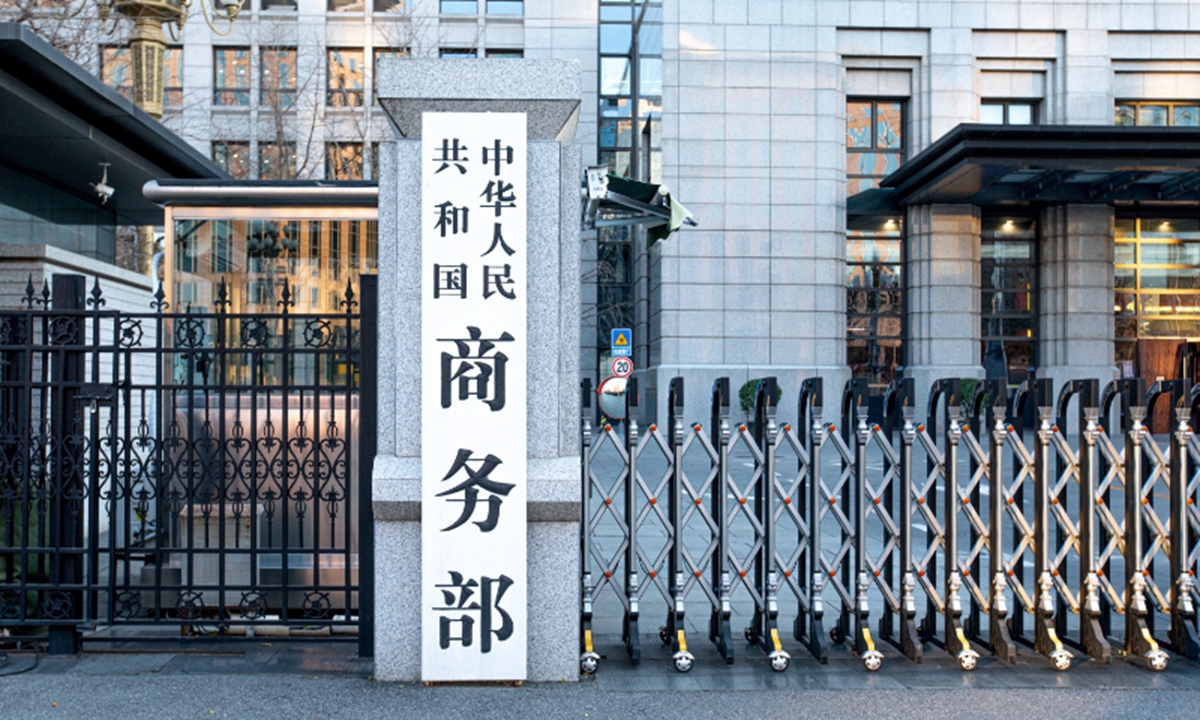
The Ministry of Commerce of China File photo: VCG
China's Ministry of Commerce (MOFCOM) on Friday voiced strong opposition to the UK government's nationalization of British Steel, a subsidiary of China's Jingye Group, criticizing the move as undermining Jingye Group's legitimate rights and interests and severely damaging Chinese companies' confidence in investing in the UK, while pledging to take strong measures to safeguard their lawful interests.
The UK side, disregarding Jingye Group's important contributions to the British economy and society, forcibly took control of British Steel and subsequently nationalized the company in the name of national security, seriously undermining Jingye's legitimate rights and interests and dealing a severe blow to Chinese companies' confidence in investing in the UK, a spokesperson for MOFCOM said on Friday, commenting on the UK government's nationalization of British Steel, which is owned by China's Jingye Group.
According to Reuters' Friday report, Britain has nationalised British Steel, fully taking over the loss-making company that was previously Chinese owned, in a move what it called to protect the future of steel production in the country, the government said on Thursday.
The move is the latest in a series of measures Britain has taken to support its steel industry, including a new set of tariffs and quotas to protect the sector from the dumping of cheap steel, and a tariff deal with the US, Reuters reported.
"British Steel had been loss-making for years before it was acquired by Jingye Group. Following the acquisition, Jingye Group injected substantial funds into the company, helping sustain its operations and preserve jobs," the spokesperson said.
China firmly opposes and is strongly dissatisfied with the UK government's decision, the spokesperson said, urging the UK government to abide by relevant international rules, earnestly fulfill its obligations under the China-UK bilateral investment treaty, treat Chinese companies operating in the UK in a fair and impartial manner, and fully protect their legitimate rights and interests, according to the spokesperson.
China will closely follow developments, support Chinese companies in safeguarding their rights through legal means, and take strong measures to firmly protect the interests of Chinese companies, the spokesperson said.
Zhang Jian, a vice president of the China Institutes of Contemporary International Relations, told the Global Times on Friday the UK's move reflects a protectionist approach that increases uncertainty in the global investment environment and could hinder future cross-border mergers and acquisitions.
"The acquisition of British Steel by Jingye Group helped the struggling company maintain operations to some extent. Although China-UK relations have shown signs of stabilization recently, differences and disputes between the two sides remain," Cui Hongjian, a professor at the Academy of Regional and Global Governance at Beijing Foreign Studies University, told the Global Times on Friday.
Against the backdrop of Europe's growing narrative around the so-called "China threat," such policy decisions are increasingly influenced by industrial strategies, so-called national security considerations, domestic politics and broader geopolitical factors, making the nationalization of British Steel far more than a simple trade issue, Cui said.
In March 2020, Chinese steelmaker Jingye Group said in a statement that it had completed the acquisition of British Steel's business and assets in Britain and the Netherlands, the Xinhua News Agency reported.
The completion secured the future of approximately 3,200 jobs, said Jingye, pledging to invest 1.2 billion pounds ($1.38 billion) to place the business on a more competitive and sustainable footing, said the report.
Hailing the acquisition as momentous, Ron Deelen, who was the British Steel CEO at that time, said "I'm confident we'll seize the incredible opportunity Jingye has given us to build on 150 years of heritage, and further cement British Steel's reputation as a manufacturer of world-class steel," Xinhua reported.
However, in April 2025, the British government seized operational control of British Steel from its Chinese owner, Jingye and, under plans announced by UK Prime Minister Keir Starmer in May, could fully nationalize it, Reuters reported in May.
On Monday, Jingye Group called on the UK government to face up to the facts and provide full compensation for the losses incurred from its investments in British Steel.
Jingye demands that the UK Government, based on the following two indisputable facts, promptly, adequately, and effectively compensate Jingye for its entire investment in British Steel, according to the company's official statement released on Thursday via official WeChat account.
First, British Steel has substantial inherent corporate value, the statement said. The UK Government initially seized operational decision-making rights through emergency legislation, and has subsequently sought to completely strip Jingye of its ownership through a nationalisation bill. These extreme, escalating measures—from forced takeover to full expropriation—fully underscore the profound value of British Steel. The UK Government must acknowledge this undeniable reality, according to the statement.
Second, over the past five years, Jingye has made substantial financial investments in continuous operations, equipment upgrades, safeguarding jobs, and green transition, read the statement. All such payments are fully documented and irrefutable. We are resolved to pursue full recovery of these investments, without compromise, the statement said.
Jingye Group said it reserves the right to pursue further legal proceedings against relevant parties under international and domestic law and will exhaust all lawful avenues to safeguard its legitimate rights and interests.
Chinese experts urged the UK side to treat Chinese companies operating in the UK in a fair and impartial manner and maintain effective channels of communication, rather than disregarding corporate interests and pursuing a forced takeover through unilateral measures.
RELATED ARTICLES