Foreign officials, CEOs see AI opportunities with China at WAIC, praising expo as 'spectacular' and 'impressive'
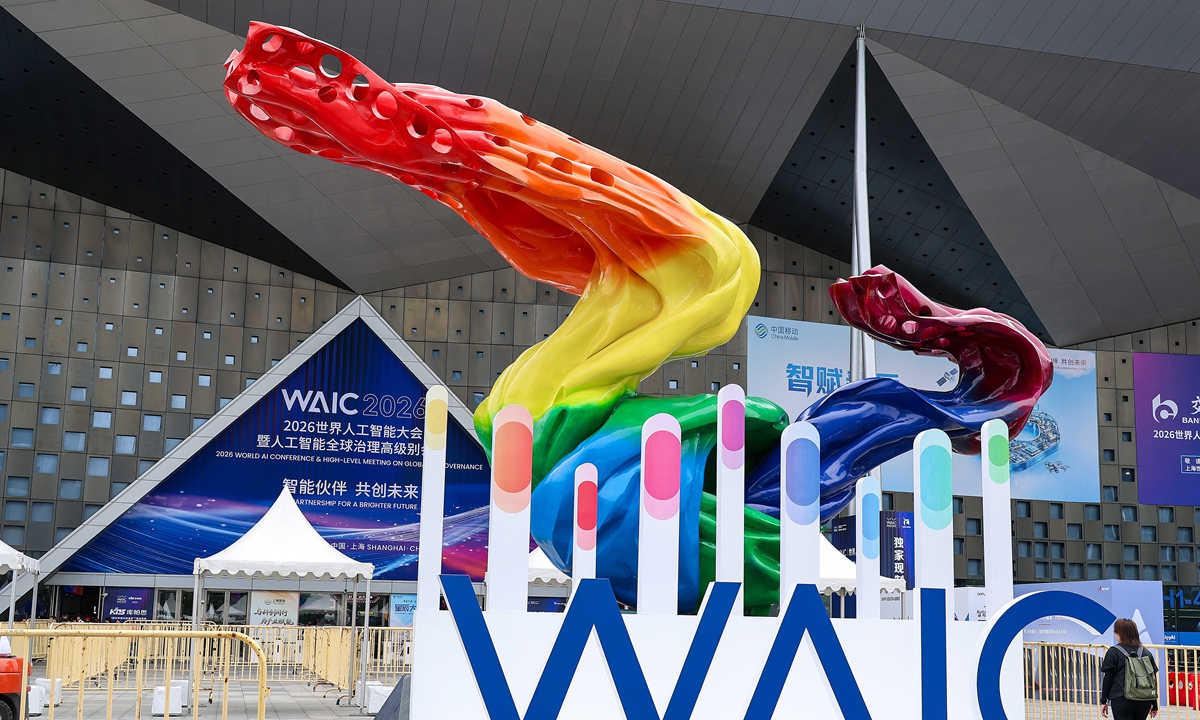
This photo shows the street installation for 2026 World Artificial Intelligence Conference in Shanghai, which is set to open on July 17, 2026, bringing together more than 1,100 companies and over 3,000 exhibits. Photo: VCG
"It's absolutely spectacular looking at the future of technology here," Bilal Bin Saqib, Pakistan's Minister of State and Chairman of the Pakistan Virtual Assets Regulatory Authority, told the Global Times on Saturday at the 2026 World AI Conference (WAIC) in Shanghai. He said he sees broad opportunities for collaboration between China and Pakistan in artificial intelligence (AI).
The WAIC has drawn global attention not only as a showcase of China's rapidly expanding AI ecosystem but also as a magnet for international partnership.
Foreign officials and tech executives attending the event have praised the expo as "spectacular" and "impressive," while highlighting growing opportunities to collaborate with Chinese companies in AI infrastructure, climate technology, and industrial innovation.
"There is a lot of mutual opportunity because China is, of course, the leader when it comes to not just the hardware but also the software, and Pakistan can truly benefit from this relationship," he said.
Saqib also welcomed China's AI-powered "MAZU" meteorological predictive analysis system, describing it as especially valuable for countries vulnerable to natural disasters.
According to media reports, the MAZU platform is helping countries use AI to improve forecasts and early warnings for floods, typhoons, heatwaves, and other extreme weather, as countries increasingly look to AI to strengthen disaster preparedness amid climate change.
In 2023, Chinese and Pakistani meteorological authorities began jointly developing a localized version of MAZU, tailoring the system to weather risks including monsoon rainfall, heavy precipitation, and glacial lake outburst floods.
"Countries like Pakistan suffer from natural catastrophes, and in this regard, it would be great for us to have access to such predictive analysis," Saqib said, adding that as an agrarian economy, Pakistan could use such tools to better protect crops, support farmers and strengthen food security.
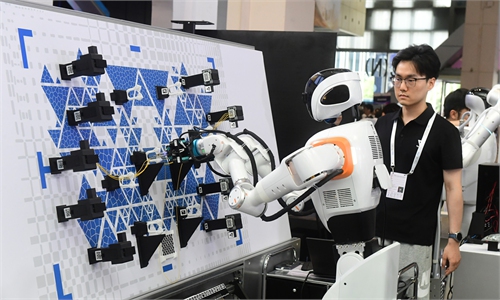
The remarks came as WAIC got underway in Shanghai, where visitors from around the world gathered to explore the latest advances in AI, robotics, chips, networking, cloud infrastructure and industrial applications.
Chinese experts said that as foreign officials and CEOs continue to flock to Shanghai, the message is clear: despite geopolitical headwinds, China's AI market remains a hub of innovation that international partners are eager to tap.
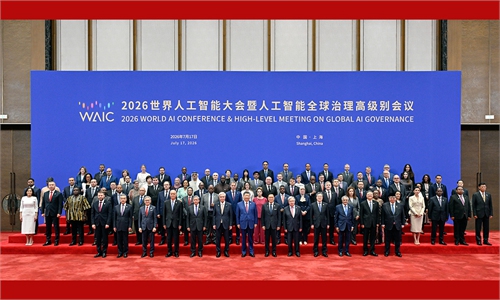
Over the years, the WAIC has become not only a key window into the growth of China's AI industry, but also a global platform for technological exchange, product showcases, ecosystem building and discussions on governance, they said.
Among the international attendees was Seshu Madhavapeddy, founder and CEO of US startup Frore Systems, a Silicon Valley-based thermal management technology unicorn.
He said it was his first time at the conference and that the scale and pace of innovation on display were striking.
"I went to see the exhibitions and they were very impressive," he told the Global Times on the sidelines of the event on Saturday. "I saw companies investing in AI across the entire spectrum of the ecosystem—from foundation models to GPUs, to networking switches."
Madhavapeddy said his company has long maintained close ties with Chinese partners, including Lenovo, with which it is working on thermal solutions for edge devices such as notebooks and tablets. He also pointed to collaborations with other companies, including Tencent, ByteDance, Alibaba, and Baidu, in building AI data centers in China.
He praised Chinese industry and business partners as "very open, very friendly, and very welcoming," and said what impressed him most was not only innovation itself but the speed at which new solutions are being developed.
Azamat Karamatov, CEO of IT Park Uzbekistan and a first-time participant, said WAIC demonstrated how quickly AI is moving from research into practical industrial use.
He said Uzbekistan views China as a "natural partner" in AI and deep tech, and is eager to participate actively rather than merely observe. "China has firmly established itself as a global leader in AI," Karamatov said, noting that the conference's theme, "Intelligent Partners, Co-create the Future," resonates deeply with Uzbekistan's vision for bilateral cooperation.
"China is one of Uzbekistan's closest strategic partners, and we are keen to be part of the next wave of AI innovation - not only as observers, but as active partners. Our priority is to build practical partnerships in AI, deep tech, and startup development," he said. "We want to encourage Chinese companies to establish R&D operations in Uzbekistan while helping Uzbek startups access the Chinese market."
The enthusiasm from foreign participants is backed by solid commercial momentum.
According to organizers, last year's event delivered a strong set of results: 32 major industrial projects were signed, with total investment reaching 45 billion yuan ($6.2 billion). The conference connected 827 upstream and downstream companies, released more than 300 procurement needs, and reached procurement intentions worth approximately 16.2 billion yuan, according to the event organizers.
RELATED ARTICLES