ARTS / FILM
Chinese netizens brush off South Korean scholar’s criticism of ‘Kung Fu Soccer’ as an overreaction
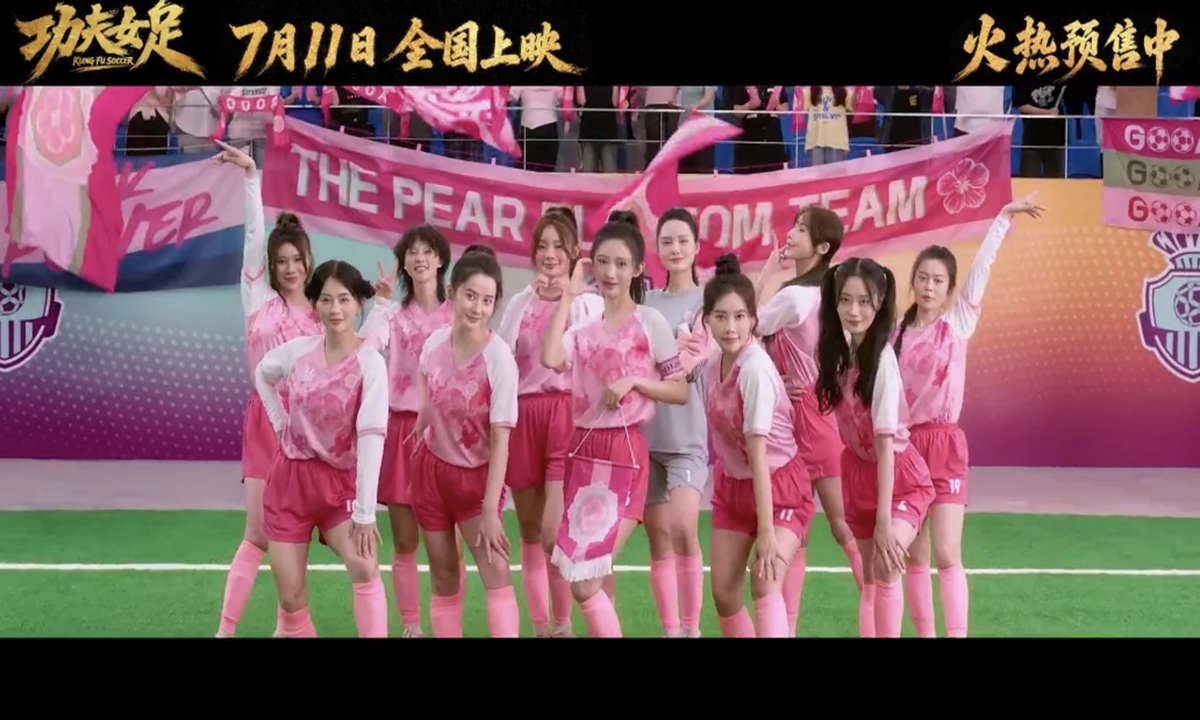
A poster featuring the Ewha Team from Kung Fu Soccer Photo: Sina Weibo
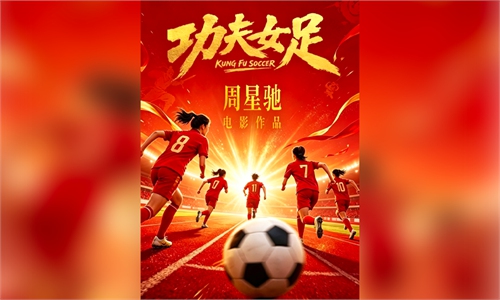
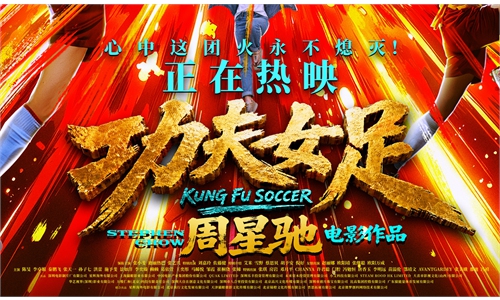
Chinese netizens dismissed the claims as "overly sensitive" following an accusation by a South Korean professor that Stephen Chow's hit comedy Kung Fu Soccer "insults" South Korea's women's national team.Kung Fu Soccer is seen as a successor to Chow's iconic 2001 comedy Shaolin Soccer, following a women's football team that combines martial arts with football to achieve success. As of Sunday, the film had grossed more than 1.3 billion yuan ($191 million) in its first nine days, according to Chinese ticketing platform Maoyan.
The debate appeared after the movie featured a fictional squad called the "Ewha Team," a name that Professor Seo Kyung-duk of Sungshin Women's University claimed resembles of Seoul's Ewha Womans University, among several other teams in the movie. In the comedic film, the players commit blatant fouls in an exaggerated manner, wear colorful cosmetic contact lenses with heavy makeups during matches, and deliver clumsy lines for comic effect. The professor claimed these depictions are "wrong to repeatedly insult Korean sports," The Korea Times reported.
This is not the first time Seo has targeted Chinese sports-related films. In 2022, he accused China's ice-sports production Fly! Skating Star of smearing South Korean athletes, arguing that its scene of a South Korean short-track skater tripping a Chinese competitor delivered biased and unfair portrayals of South Korean sportsmen.
A related hashtag has trended on China's X-like Sina Weibo over the weekend, and many Chinese users argued the Korean professor was forcing an unintended interpretation onto a slapstick comedy.
"Stephen Chow's films have always featured over-the-top characters - the devil team in Shaolin Soccer used performance-enhancing drugs. This is just comedic exaggeration, not a targeted attack on anyone," one widely circulated Sina Weibo comment read.
While some users described the reaction as "overly sensitive," some others noted that the exaggerated fouls tapped into occasional real-world controversies in international sports without endorsing any specific accusation.
A portion of online commentary pointed to perceived "double standards," arguing that South Korean movies and television shows have caricatured other cultures while reacting sharply to being parodied.
Netizens cited the Disney Korean drama Tempest, starring Jun Ji-hyun, which sparked widespread backlash in China over discriminatory and misleading content. The drama includes a controversial line questioning "why China prefers war" and claiming nuclear weapons would land in border areas, which critics said distorts China's long-standing stance on peaceful development.
Additionally, critics said the production deliberately used run-down urban street scenes to represent the Chinese city of Dalian and had most antagonist characters to speak Chinese, which they argued contributed to a biased and derogatory portrayal of the country.
Global Times
RELATED ARTICLES