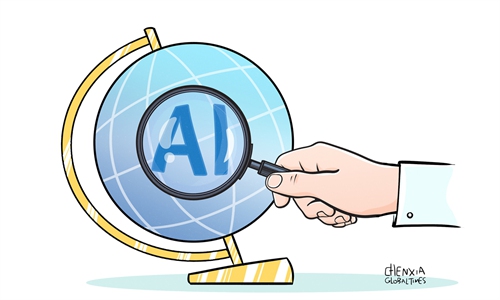
China's AI initiative focuses on openness, risk management: Zeng Yi, member of UN Advisory Body on AI
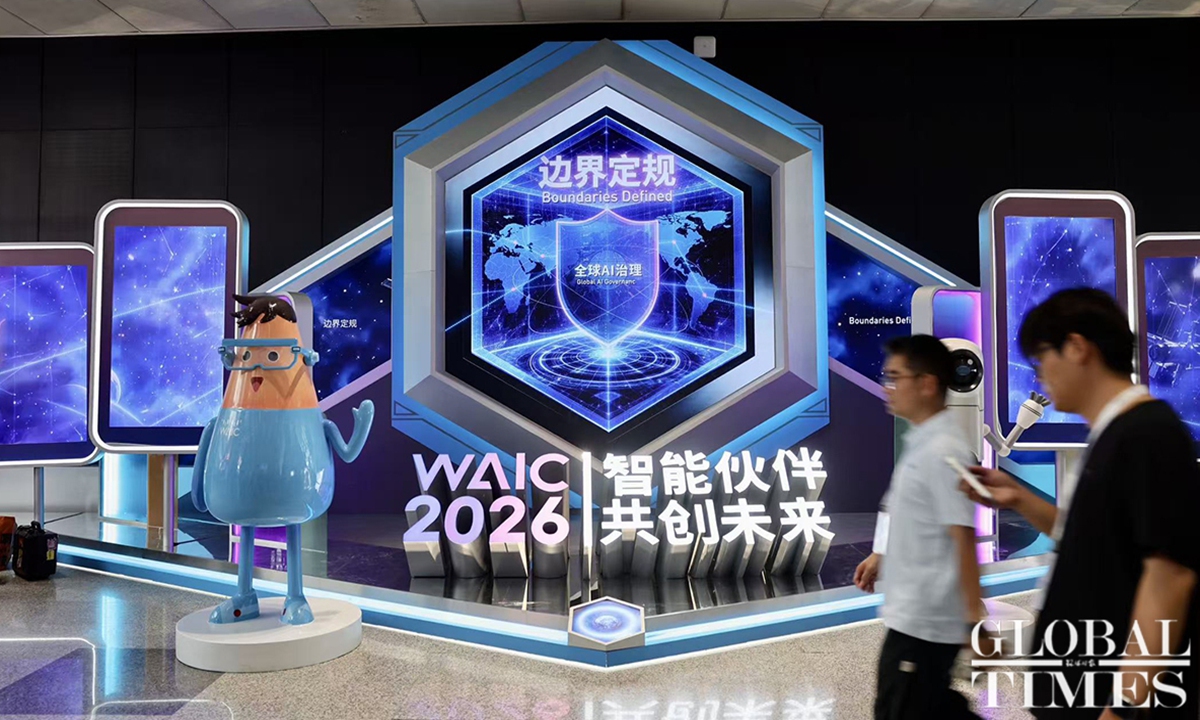
The 2026 World Artificial Intelligence Conference & High-Level Meeting on Global AI Governance kicked off in Shanghai on July 17, 2026. Photo: Chen Xia/GT
The 2026 World AI Conference (WAIC) and the High-Level Meeting on Global AI Governance, held in Shanghai from July 17 to 20, came at a critical inflection point. As a new wave of intelligent technology sweeps across economies and societies in the world, the conference theme "Intelligent Partners, Co-creating the Future" carries great significance.
The meeting indicates a structural shift in how China conceptualizes AI development: not as a zero-sum game among nations, but as a shared journey to promote the beneficial and inclusive development of artificial intelligence (AI) worldwide.
In my view, the theme of the conference underscores that AI development requires all countries to work together, build guadrails for safety and security, and share the benefits of technology development.
And, this theme carries two layers of meaning. First, it calls on all countries to coordinate AI development and safety. Second, it raises a deeper question: whether AI can evolve into a genuine partner for humanity. Answering the question requires global collaboration, not unilateral technological dominance.
As AI becomes increasingly embedded in economic activity, social governance, and international cooperation, its cross-border spillover effects mean that technological benefits and systemic risks are inseparable.
The United Nations, with broad support from its member states, has called for an inclusive and equitable global mechanism for AI development and governance. Yet the voices of the Global South, which seeks greater capacity-building support and meaningful participation in rule-making, have too often been marginalized under existing frameworks. This is precisely the gap that China has sought to address.
China's proposed Global AI Governance Initiative and the AI Capacity-Building Action Plan for Good and for All have received broad international support. Most existing intergovernmental AI organizations have overlooked the imperative of broad Global South participation and have fallen short in supporting the United Nations' central role.
Responding to China's proposal, 29 countries signed an agreement at this year's WAIC to establish the World Artificial Intelligence Cooperation Organization (WAICO). The new body is intended to serve as a landmark platform for coordinating AI development and security while building international consensus on AI governance.
China issued the Governance Principles for the New Generation Artificial Intelligence in 2019, explicitly positioning AI as an enabling technology for achieving global sustainable development.
In April 2026, the Chinese government issued the Measures for the Administration of Artificial Intelligence Technology Ethics Review and Services (Trial), translating the aspiration of "AI for Good" into practice. Meanwhile, a series of regulatory guidelines have been introduced to provide safeguards across the full lifecycle of AI model research, training, deployment, and application. Together, the measures ensure that ethical considerations and safety standards are not afterthoughts but are integral to innovation.
China's commitment to advancing AI for the greater good and contributing to global AI development is not rhetorical, which is embedded in a rapidly maturing governance framework. What underpins China's AI governance capacity is a set of three unique institutional advantages.
First, a new-style whole-of-nation approach that coordinates development and security, achieving synergistic development between scientific and technological breakthroughs and rule-making. Second, a people-centered value system that ensures scientific and technological development benefits the people. Third, a diversified, agile, and collaborative governance model that links government, universities, research institutions, enterprises, and social organizations to explore the synergy between regulation and technology, providing Chinese experience for the world.
China has contributed its own approach to global AI governance through a range of initiatives. Its commitment to improving the global AI governance system remains steadfast and carries profound significance.
China remains committed to providing international public goods, actively promoting AI for the common good and inclusive benefit, while helping the Global South strengthen AI capabilities.
In 2023, China was among the first to unveil the Global AI Governance Initiative, winning support from many countries.
In terms of building multilateral mechanisms, China was the main sponsor of the UN General Assembly resolution on enhancing international cooperation on capacity-building of AI, and initiated the Group of Friends for International Cooperation on AI Capacity-Building.
The launch of WAICO, backed by 29 signatory countries, creates an independent intergovernmental platform to help address the underrepresentation of the Global South.
In practical terms, China launched the AI Capacity-Building Action Plan for Good and for All, offering computing infrastructure, talent training, and joint development of AI safety guardrails. These measures address the twin challenges of fragmented global governance and a widening AI divide.
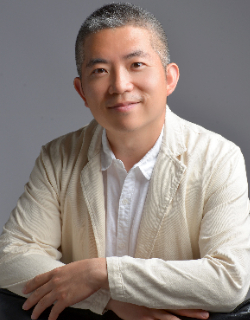
Zeng Yi, a professor at the Gaoling School of Artificial Intelligence, Renmin University of China, and member of UN Advisory Body on AI Photo: Courtesy of Zeng Yi
The author is Zeng Yi, a professor at the Gaoling School of Artificial Intelligence, Renmin University of China, and member of UN Advisory Body on AI. bizopinion@globaltimes.com.cn
RELATED ARTICLES