Moonshot’s Kimi K3 shows China AI’s rise through innovation, efficiency and open ecosystem
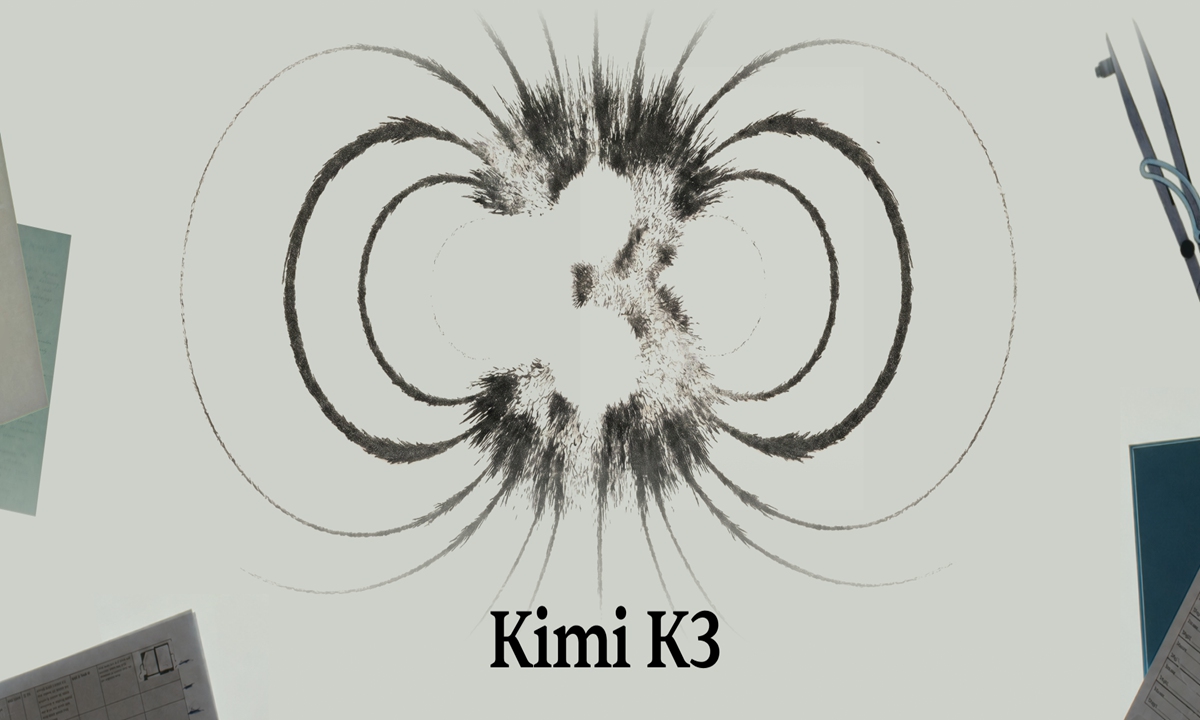
Photo: Courtesy of Moonshot AI
The release of Kimi K3, a 2.8 trillion-parameter large-language model (LLM) developed by Chinese artificial intelligence (AI) start-up Moonshot AI, has again put China's rapidly advancing AI sector in the global spotlight, as the model draws attention for its scale, efficiency gains and open-source approach.
The launch highlights how Chinese AI companies, despite US technology restrictions, are moving beyond their role as cost-effective followers and emerging as competitors with both technological capabilities and cost efficiency, industry analysts said. China's open approach could also help accelerate global AI adoption and contribute to a more inclusive digital ecosystem, they added.
Moonshot described Kimi K3 as the world's first open-source model at the 3-trillion-parameter level, designed for advanced intelligent scenarios including long-horizon coding, knowledge work and reasoning tasks.
The company said that architectural improvements, training methods and data optimization have helped Kimi K3 improve overall scaling efficiency by about 2.5 times compared with its previous Kimi K2 model, allowing computing resources to be converted into capabilities more effectively.
Moonshot explained that parameters are similar to neural connections in the human brain, and that nearly 3 trillion parameters allow the model to absorb and process a larger amount of knowledge and patterns. Like many domestic AI products, Kimi K3 also adopts a lower pricing strategy and an open-source approach, allowing developers to customize the model according to their needs.
Within hours of its release, Kimi K3 climbed to the top of the closely watched Frontend Code Arena run by Arena, a platform that evaluates AI models, becoming the first Chinese LLM to lead the ranking. It scored 1,679 points, ahead of Anthropic's Claude Fable 5 at 1,631, and ranked first in six of the benchmark's seven categories.
Anastasios Angelopoulos, co-founder and CEO of Arena, described the release as potentially "the single biggest release of the year," according to the Associated Press.
While Moonshot said that Kimi K3 still trails the strongest closed-source models, including Claude Fable 5 and GPT-5.6 Sol, the release has intensified discussion over China's rapidly evolving AI capabilities and the factors enabling Chinese companies to continue narrowing the gap with global leaders.
The Associated Press said that the model had taken the US technology industry "by surprise" and appeared to be catching up with leading versions of Anthropic's Claude and OpenAI's ChatGPT.
Reuters placed the launch in the context of Chinese AI companies "closing in on US rivals." It said increasingly powerful models from Moonshot AI, Z.ai and MiniMax were challenging the long-held assumption in the West that Chinese developers remained months behind their US counterparts.
Fortune said that Kimi K3further shrank the performance gap between Chinese and US models, while sharpening concerns over the "cost of deploying models." It noted that Chinese AI models are winning converts around the world, due to their lower cost and greater efficiency.
Liu Gang, chief economist at the Chinese Institute of New Generation Artificial Intelligence Development Strategies, told the Global Times on Sunday that the significance of Kimi K3 extends beyond the model itself to the pace and path of China's technological innovation.
The release highlights Chinese companies' faster progress in model architecture, algorithms and complex-task performance, with innovation increasingly focused on improving efficiency and solving practical problems, Liu said.
Kimi K3's launch also highlights innovation in the model's core architecture, Chen Jing, vice president of the Technology and Strategy Research Institute, told the Global Times. "By combining an open-source strategy with the Kimi agent platform, some Chinese large-model companies are creating a self-reinforcing 'model-application-data' cycle," Chen said.
The development shows that Chinese AI companies are building more comprehensive capabilities, Chen said, adding that models such as DeepSeek V4, Qwen and GLM are advancing along different technical paths, reducing the risks of relying on a single technological approach.
With annual recurring revenue reaching $300 million in June and surging further after the launch of Kimi K3, Moonshot AI has sent a Hong Kong IPO proposal to investors and could complete the listing within six months at the earliest, according to the STAR Market Daily on Sunday.
The launch comes as the 2026 World AI Conference (WAIC) and High-Level Meeting on Global AI Governance opened in Shanghai on Friday, where the event's broader message is that AI advances through openness rather than isolation, according to the Xinhua News Agency.
The US has tightened technology restrictions on China in recent years, including limits on access to advanced chips, but such restrictions have also accelerated domestic innovation and encouraged alternative development paths, according to analysts.
In early 2025, Chinese start-up DeepSeek helped push low-cost, open-source models to the forefront of China's AI ecosystem, and domestic companies have since accelerated efforts to embrace this more open development path.
Liu said that open-source development can accelerate the spread and application of AI technologies. China's open strategy can provide more opportunities for developing countries while contributing to the construction of a global AI ecosystem, he said.
Openness is not a zero-sum competition, Liu said, adding that expanding AI applications can also promote the growth of Chinese companies while enabling cooperation, competition and shared development worldwide.
Chen noted that China's open-source strategy challenges the closed development model that has dominated the AI industry by lowering participation barriers through improved cost efficiency. He added that smaller companies and developing countries can gain access to advanced AI capabilities at lower costs, creating a "technology equalization" effect that could accelerate AI adoption in emerging markets.
At the policy level, China has also emphasized inclusive sharing in AI development. On Friday, China released an action plan on AI cooperation and development as part of broader efforts to strengthen global AI collaboration and bridge the digital divide.
RELATED ARTICLES