ARTS / CULTURE & LEISURE
Chinese TV dramas overtake Korean dramas in Russia for the first time, survey shows
By Published: Jul 20, 2026 10:34 PM

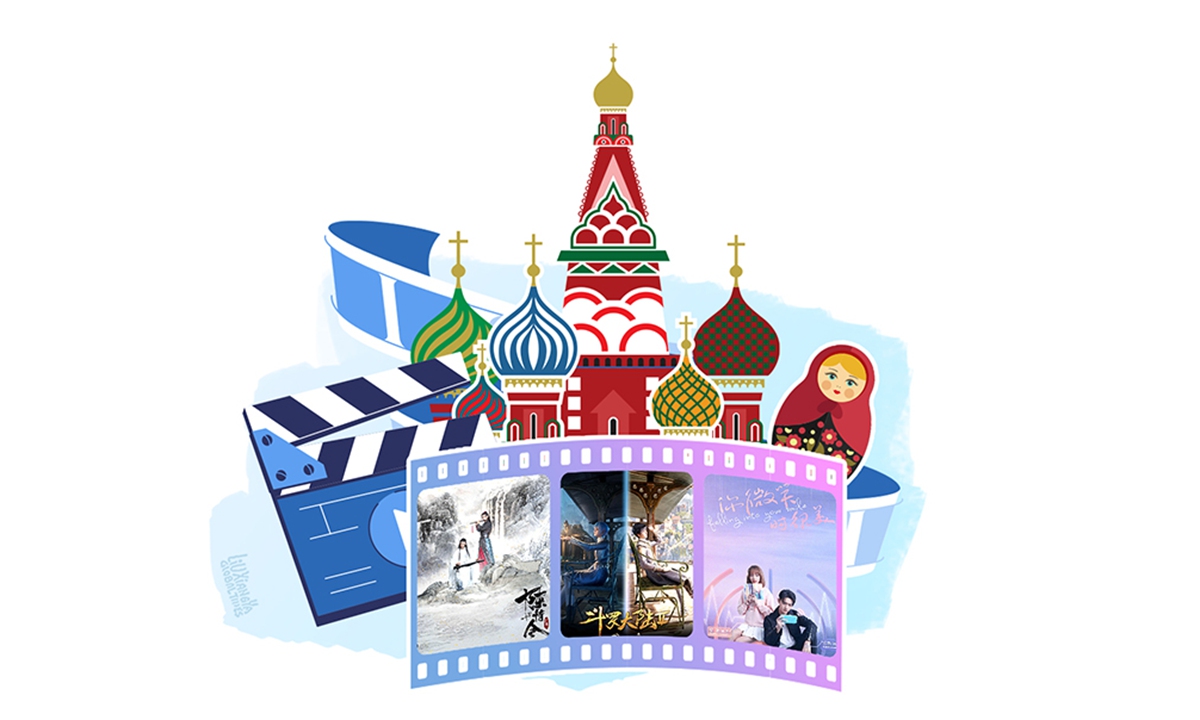
Illustration: Liu Xiangya/GT
It began as a quiet change in what people watched late at night or on weekends. But new figures released in mid-July 2026 show something bigger: a clear shift. A joint survey by Russian streaming service KION and delivery company Samokat found that Chinese TV series had overtaken South Korean dramas as the top Asian content in Russia, Sputnik reported.Chinese shows now make up 51 percent of Asian viewing, up from 39 percent in 2024. In the top 30 most popular Asian titles this year, Chinese productions are leading the way - from the nature documentary Wild China to fantasy animations such as Soul Land 2, and live-action hits including Falling into Your Smile and The Untamed.
For many Russians, these series have become more than simple entertainment. They act as captivating windows into modern China, sparking curiosity and strengthening everyday ties between the two countries.
At the heart of their appeal is epic scale and high production values. Chinese series often feature sweeping landscapes, detailed costumes, excellent CGI, and ambitious storytelling. Genres such as xianxia (immortal heroes) and wuxia (martial heroes) create grand, immersive worlds. Russian viewers, who grew up with rich literary traditions of long novels and epic tales, have responded warmly to this style. One fan on Russian news website Pikabu wrote, "It's like stepping into another universe - beautiful, dramatic, and emotionally rewarding." Russian audiences frequently say Chinese dramas feel more epic than Korean ones. "After Korean dramas, Chinese ones seem bigger and more exciting," one viewer noted. Another said, "Beautiful visuals, large-scale scenes, plenty of action and romance." Many enjoy the longer format that a Chinese series brings. "It pulls you in for months. You can watch it casually or pay full attention." The stories also touch upon universal feelings of loyalty, friendship, personal growth, and the tension between duty and love. The Untamed became a breakthrough hit, introducing many Russians to Chinese dramas through its mix of subtle romance, justice, and strong bonds. Fans praise the powerful character chemistry and emotional moments.
Chinese series offer real variety too, from light modern romances to grand historical epics and high-fantasy adventures. Their longer episode counts allow characters and plots to develop fully - a refreshing change from many fast-paced Western shows. This has created active communities on Russian social media platforms like VK, where people discuss plots, share clips, and recommend new titles.
Easy access has helped greatly. Video platforms provide Russian subtitles and dubbing, while fan groups share resources. Chinese film and television professionals have noted that the widespread adoption of tools like AI has significantly accelerated the efficiency of Chinese dramas reaching international audiences, from faster script adaptation and visual effects production to streamlined subtitling and global distribution workflows. This media enthusiasm reflects and strengthens the broader friendship between China and Russia. In recent years, more Russians have chosen to visit China for tourism, business, or cultural exploration.
Zhang Hongbo, executive vice president and director-general of the China Written Works Copyright Society, recalled that while accompanying renowned authors such as Mo Yan on trips to Russia he noticed local people showed a strong interest in China.
"They want to know more about China," he told the Global Times. Chinese TV series complement these real-life experiences. For those who have not yet visited, the shows help them imagine and understand the country better.
This two-way cultural flow matters. As economic and political ties grow, cultural connections at the personal level add warmth and trust. Russian audiences see a confident, creative China that values its ancient heritage while moving forward. In turn, their openness shows a willingness to enjoy stories from outside the Western mainstream. This kind of spontaneous, grassroots cultural affinity serves as the most solid ballast for the comprehensive strategic partnership of coordination between China and Russia for a new era.
It also offers a fresh paradigm for cultural exchange among non-Western countries: There is no need to replicate the mature templates of Western entertainment. By identifying shared regional aesthetic touchpoints, genuine bidirectional and vibrant cultural attraction can naturally flourish.
The trend shows strong momentum. As Chinese creators adapt popular web novels and streaming partnerships deepen, joint projects mixing Russian and Chinese storytelling traditions can emerge in the future.
In the end, Russian viewers' love for Chinese TV series is a good example of how culture can bring people closer. In homes from Moscow to St Petersburg, thousands are discovering China through stories of love, adventure, and resilience. As more Russians travel there in person, these screen connections turn curiosity into real understanding, proving that the strongest bridges are often built one episode at a time.
The author is a reporter with the Global Times. life@globaltimes.com.cn
RELATED ARTICLES