Imported Brazilian beef reaches 80% of China’s safeguard quota, to face additional 55% tariff once quota is fully exhausted: MOFCOM
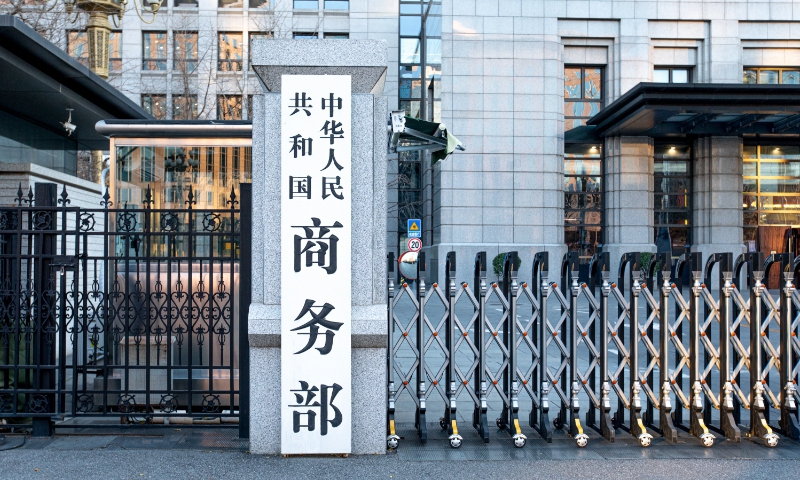
The Ministry of Commerce of China File photo: VCG
Imported Brazilian beef has reached 80 percent of the import quota on Tuesday, and once the quota is fully exhausted, China will impose an additional 55 percent tariff on imported Brazilian beef under China's safeguard measures, China's Ministry of Commerce (MOFCOM) said on Wednesday.
The MOFCOM said that under the No.87 announcement issued on December 31, 2025, once imports reach the specified quantity, an additional tariff of 55 percent will be levied on top of existing duties beginning on the third day after the threshold is hit.
China has had a country-specific quota for imported beef from countries including Brazil, Argentina, Uruguay, New Zealand, Australia and the US, and a 55 percent extra tariff mechanism on volumes above the quota since January 2026.
Brazil has the largest import quota at 1.1 million tons annually. The total import quota for 2026 for countries covered under the ministry's safeguard measures is 2.69 million tons.
The authorities will issue notifications when import volumes reach 50 percent and 80 percent of each country's annual quota, the MOFCOM said.
According to the MOFCOM, Brazil is China's largest source of beef imports, and China's imports of Brazilian beef have rapidly accelerated this year. He Yongqian, a MOFCOM spokesperson, told a press conference in June that China stands ready to maintain communication and advance the high-quality development of agricultural trade.
The MOFCOM also said that the safeguard measures on imported beef are designed to help the domestic industry weather current difficulties, rather than restrict normal trade. The country-specific quota system with additional tariffs on out-of-quota imports represents a moderate policy.
The measure offers relief to the domestic industry and creates room for its development, while addressing the legitimate demands of trading partners and minimizing disruptions to regular trade, the MOFCOM said.
China imposed an additional 55 percent tariff on imported beef from Australia from June 20, after shipments from the country reached the annual quota under China's safeguard measures.
The core goal of China's beef safeguard measures is to balance imported beef trade and the high-quality development of the domestic industry. Instead of imposing blanket import bans, this mechanism effectively guarantees domestic beef supply and consumer demand, while reserving reasonable market access for foreign trading partners and creating a stable adjustment and development environment for the domestic beef industry, Li Guoxiang, a research fellow at the Rural Development Institute of the Chinese Academy of Social Sciences, told the Global Times on Wednesday.
He noted that before the implementation of the quota-based safeguard measures, massive inflows of low-cost overseas beef led to excess market supply amid relatively stable domestic consumer demand, squeezing the market share of domestic beef products and disrupting the normal operation of the domestic cattle and beef industry.
"The tariff quota mechanism is a standard and compliant trade measure under WTO rules governing agricultural trade," Li said. "When surging imports of a specific product have severe impacts on domestic industries, economies are entitled to adopt legitimate regulatory tools including quota management and differentiated tariffs to mitigate industrial shocks. China's beef policy follows international common practices and is fully rules-based."
RELATED ARTICLES