ARTS / CULTURE & LEISURE
How one Chinese city's flames shaped global taste
A fire across millennia
By in Beijing and Ding Yazhi, Niu Yingbo in Jingdezhen Published: Jul 26, 2026 11:23 PM

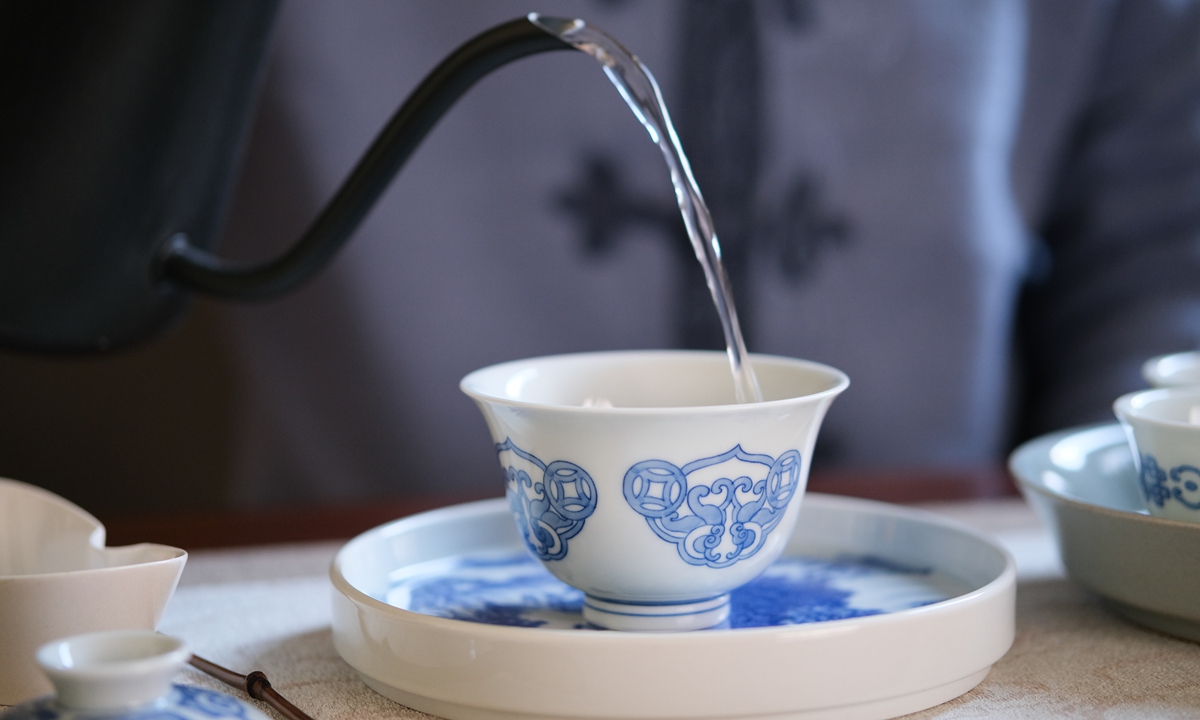
A person makes tea with a blue-and-white porcelain tea set made in Jingdezhen. Photo: VCG
Editor's Note:
The Jingdezhen Handicraft Porcelain Industry Sites were inscribed on the UNESCO World Heritage List at the 48th session of the World Heritage Committee held in Busan, South Korea, becoming China's 61st World Heritage site. Together with silk and tea, porcelain completes the triad of iconic ancient Chinese trade commodities that shaped millennia of cross-border commerce and civilizational exchange. But what defines this sprawling porcelain heritage site? How did the small city earn global UNESCO recognition? As an age-old "porcelain capital," Jingdezhen has long attracted global artists to head there to live, study and create. What do these international ceramic practitioners think of the milestone inscription, and why has Jingdezhen's porcelain craft retained continuous innovation and strong vitality for over a millennium? The Global Times interviewed heritage experts, national master craftsmen and foreign artists based in Jingdezhen to unpack the story behind the world heritage title.
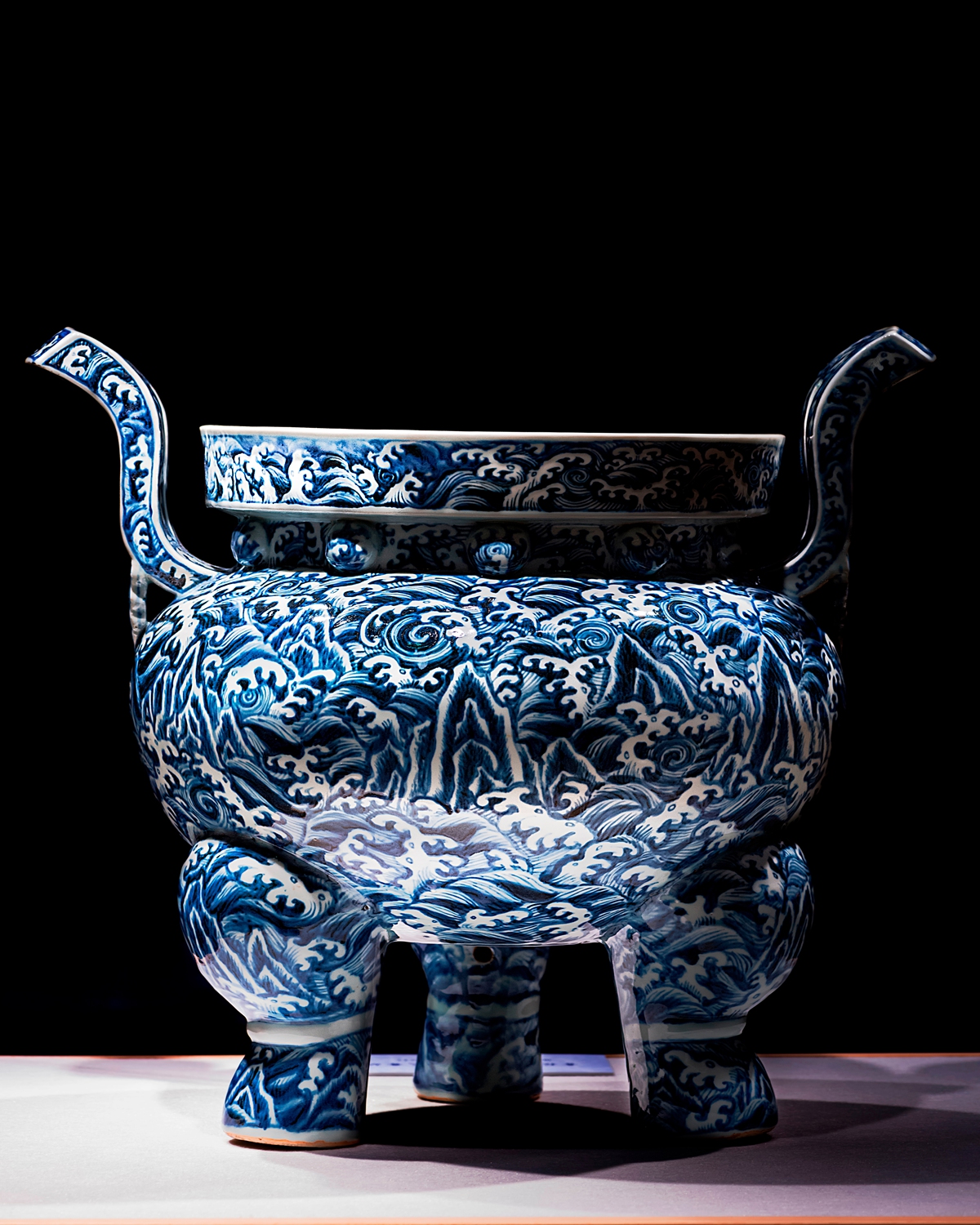
A blue-and-white porcelain censer with mountain-sea patterns symbolizing longevity and fortune, made at the Jingdezhen imperial kiln in the Ming Dynasty Photo: VCG
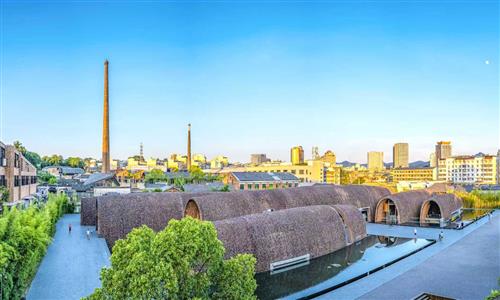
The Jingdezhen Handicraft Porcelain Industry Sites have been inscribed on UNESCO's World Heritage List, filling a long-standing gap in the list for porcelain heritage. Why are these sites so special?Located in East China's Jiangxi Province, the sites consist of five component areas that together showcase the evolution of Jingdezhen's handcrafted porcelain industry from the 10th to 19th century.
This intact, systematic relic chain fully documents the innovation and evolution of China's handmade porcelain technology, artistic aesthetics and industrial systems from the 10th to the 19th century, bearing witness to Jingdezhen's pivotal role as the world's preeminent porcelain hub in advancing global ceramic development and cross-cultural dialogue, the press release noted.
To many international observers, it is remarkable that a modest-sized city in inland China has secured such prestigious global recognition. The answer lies in its unparalleled dedication: One city, one millennium, one single pursuit - making porcelain.
Jingdezhen stood unrivaled as the global sacred land of porcelain craftsmanship in the pre-industrial era, setting universal industrial standards and leading global aesthetic trends for centuries. Its iconic blue-and-white porcelain once took the world by storm, evolving into a supreme luxury item sought after and collected by royal courts and noble families across Europe and beyond. Currently, the ancient porcelain capital has forged friendly ties with more than 80 cities worldwide, with its ceramic products circulating across dozens of countries and regions.
Unparalleled industrial chain
What distinguishes this UNESCO designation from other cultural heritage sites is its unparalleled complete industrial chain. From raw material mining and firewood supply to handmade production, waterway transportation and global sales, Jingdezhen preserves a full-fledged ancient porcelain manufacturing ecosystem rarely seen in global heritage records.
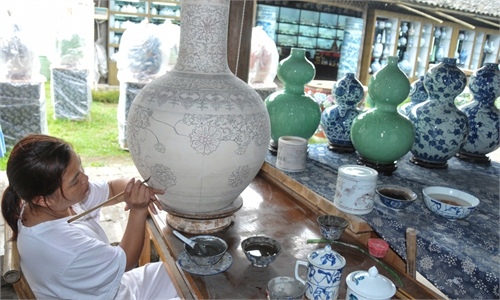
Recorded in the ancient Chinese technical encyclopedia Tiangong Kaiwu (Exploitation of the Works of Nature), Jingdezhen's porcelain-making techniques embody extraordinary precision and iterative innovation. From raw stone to refined clay, and finally to finished porcelain, the entire process involves 72 elaborate steps, categorized into six core stages: clay refining, wheel throwing, trimming, hand painting, glazing, and kiln firing. Such sophisticated segmented workflow has earned Jingdezhen the reputation of hosting the world's earliest example of industrialized division of labor in craftsmanship, per the People's Daily.
"No other heritage site in the world retains such a systematic and continuous handmade porcelain production system," Cheng Guoping, deputy director of Jingdezhen's porcelain heritage protection center, told the Global Times.
While most heritage sites feature concentrated cultural relics, Jingdezhen's dispersed yet interconnected sites form a dynamic, living industrial ecosystem that evolved continuously for over 900 years across the Song, Yuan, Ming and Qing dynasties (960-1911).
According to Cheng, introducing this scattered heritage to global experts once posed a major challenge.
Foreign evaluators struggled to grasp the subtle sophistication of ancient facilities like clay washing pools, each designed for specific procedures involving sedimentation, purification and drying.
"To bridge linguistic and cultural gaps, Jingdezhen adopted immersive digital solutions. VR, AR and MR technologies across heritage venues reconstruct the entire ancient porcelain-making process, turning silent relics into understandable history," Cheng said.
That approach left a deep impression during the crucial on-site evaluation. A South Korean expert spent four and a half days inspecting core sites and examining the real-time monitoring platform that tracks the condition of every heritage point through sensors and patrol records. "The Korean expert later said the integrated system left her stunned," Cheng recalled.
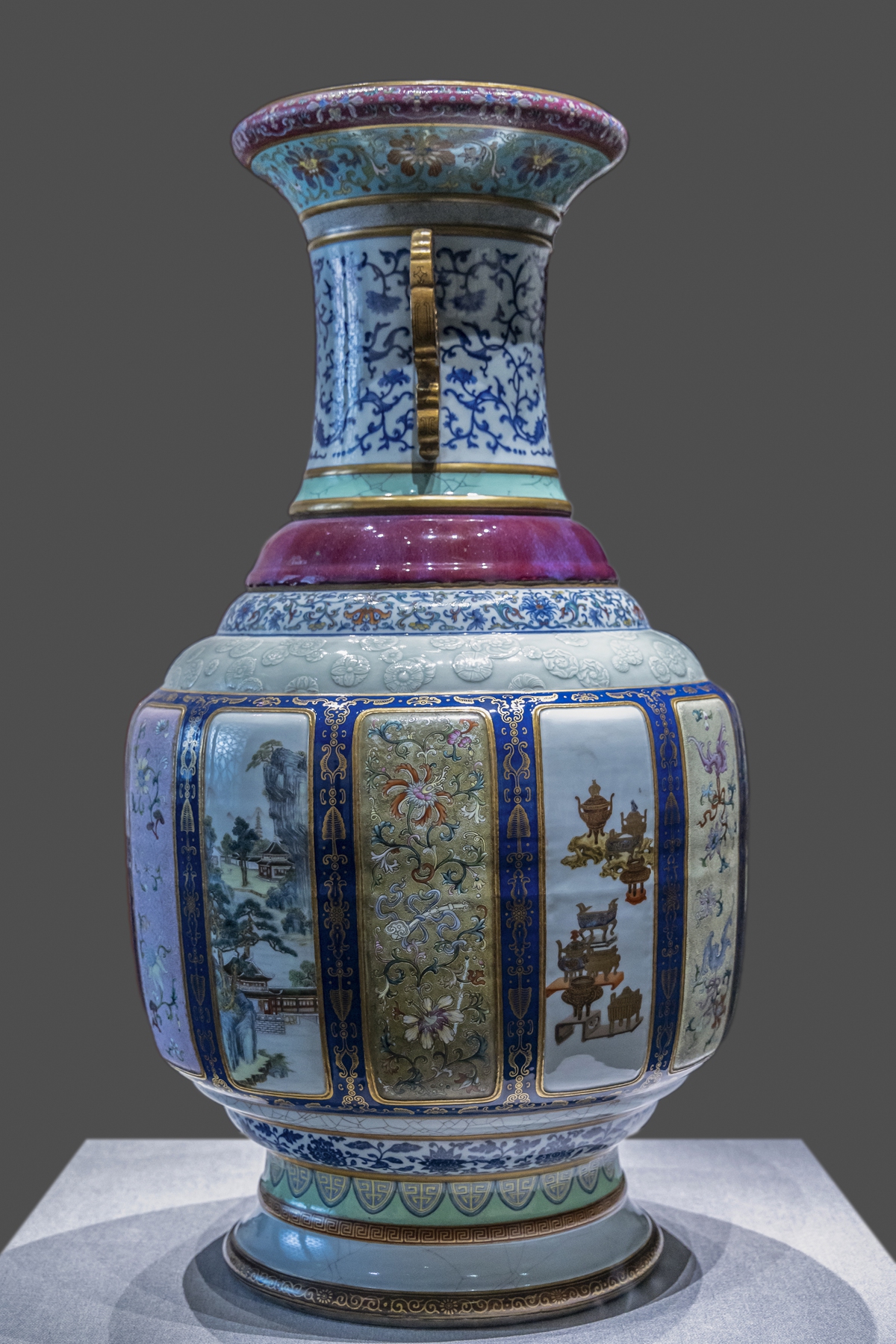
A large vase with various glazes and enamels made in the Qing Dynasty. Known as the "Mother of Porcelain," it was made with a combination of over 10 different glaze and enamel techniques. Photo: VCG
Continued inspirationRooted in profound traditions, Jingdezhen has embraced dynamic cross-cultural integration, emerging as a global hub for ceramic innovation and exchange. Thousands of artists from over 50 countries, known locally as foreign "Jingdezhen drifters," have settled here, blending international creativity with age-old Chinese craftsmanship to fuel the craft's modern revival.
Zhan Shaolin, a national master of ceramic craftsmanship, has witnessed this cross-cultural integration firsthand over more than a decade of international exchanges. His studio started receiving global art enthusiasts in 2011. Since then, learners from top institutions including Stanford University, the University of Cambridge and the University of the Arts London have flocked to his studio to study traditional Chinese ceramic techniques.
Zhan observed distinct yet complementary artistic priorities between young overseas and Chinese creators. International learners are most fascinated by Jingdezhen's unparalleled technical precision and diverse cultural symbols, from intricate landscape patterns and flower-and-bird motifs to ethnic minority clothing designs embedded in porcelain art. Young domestic craftsmen, by contrast, excel at integrating traditional aesthetics with contemporary international trends, innovating modern lines and shapes while retaining core cultural roots.
"Innovation never betrays tradition," Zhan told the Global Times. "Every dynasty revitalized porcelain craftsmanship. We upgrade ancient kiln technology and adapt classic aesthetics to modern tastes, ensuring our heritage stays rooted and relevant."
For many foreign creators, Jingdezhen is far more than a tourist destination or training base. British artist Phil Read, who has traveled back and forth to China for 36 years and now lives long-term in Jingdezhen, rejects the term "drifter" for its negative Western connotations of instability.
"Jingdezhen is already my stable home." He prefers a phrase some locals are now using: "Jing zhu" - Jingdezhen residents - and the metaphor of trees with roots.
Holding degrees in the fine arts, microbial engineering and education, and having studied Chinese ink painting for over 40 years, Read is perhaps the very image of the multicultural creative community that Jingdezhen has nurtured. "Most foreign creators arrive knowing only its ceramic history, but they quickly find like-minded friends," he said. "The sincere bonds forged during a short stay here linger long after you leave."
He noted that the city's UNESCO recognition will dismantle global stereotypes that frame Jingdezhen as merely a craft hub, inspiring painters and cross-genre artists worldwide to explore its boundless creative potential.
Looking ahead, Jingdezhen has made a comprehensive roadmap for heritage activation and global communication. Local experts said the city will launch high-standard research and tourism programs, dig deeper into historical porcelain stories, cultivate professional multilingual interpreters, and expand international cultural exchange campaigns.
Lowercase "china" stands for porcelain, showing a profound linguistic bond between Jingdezhen and the nation forged through Jingdezhen's millennia-long ceramic legacy. Today, its artisans from all over the world continue to give clay and kiln fire new expressions and new narratives. In the name of "China," "china" is radiating the elegance of Eastern porcelain to the world.
RELATED ARTICLES