Chinese modernization promotes harmony between humanity and nature, shared benefits: Justin Yifu Lin

A view of the cityscape and river scenery in the Three Gorges reservoir area in Zigui County, Central China's Hubei Province, on April 22, 2026. Photo: VCG
However, compared with the Western modernization over the past two to three hundred years, Chinese modernization features five distinct characteristics.
First, Chinese modernization is the modernization of a country with a population of over 1.4 billion. As we know, the Western modernization from the Industrial Revolution to the present has brought merely 1.4 billion people into high-income countries with abundant material well-being. If China achieves modernization, the population living in high-income economies will effectively double. Of course, the challenges of achieving modernization for a country with such a large population and area will be the greatest, and so will be the difficulties.
Second, Chinese modernization aims to achieve modernization of common prosperity. We are aware that in the process of rising income and material abundance brought by the Western modernization, an intractable long-standing problem has persisted, which is the growing income disparity. Wealth has been concentrated in the hands of a small minority, while the majority have failed to share the fruits of modernization. China aims to avoid this.
Third, Chinese modernization features coordinated material and cultural-ethical advancement. We know that in the process of the Western modernization, material prosperity has become increasingly abundant, while people suffer growing spiritual emptiness. The inner turmoil stemming from such spiritual vacuum also gives rise to social contradictions. China aims to pursue coordinated progress in both material prosperity and cultural-ethical advancement in the course of modernization.
Fourth, Chinese modernization features harmony between humanity and nature. The ecological environment will keep improving alongside the advancement of modernization. This stands in contrast to the Western modernization, which has led to severe environmental damage and global warming, posing a threat to the very survival of mankind. China is determined to forge a new development path, one that enables the present generation to enjoy nature, and allows countless generations to come to access a sound and beautiful ecological environment in perpetuity.
Fifth, Chinese modernization is a path of peaceful development and win-win outcomes for all. I believe that the Western modernization, by contrast, was achieved through colonial expansion and plunder, coming at the cost of the decline of other nations and civilizations.
The five features of Chinese modernization are certainly valuable and desirable. At the 5th China Xizang Trans-Himalaya Forum for International Cooperation held recently, I chanced to sit beside Pakistan's Petroleum Minister Dr. Musadik Malik, and we exchanged views on China's development philosophies and experiences. He noted that China's visions and experiences are excellent and Pakistan hopes to learn from them. The key point, however, is how to put them into practice.

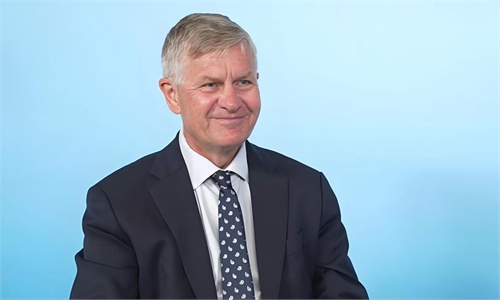
Justin Yifu Lin, dean of the Institute of New Structural Economics at Peking University, and former chief economist and senior vice president of the World Bank
High-quality development
In fact, the key approach to achieve the five features of Chinese modernization is to follow the guidance on developing new quality productive forces: all localities should, under the synergy of an efficient market and a facilitating government, select industries and pursue economic development in accordance with comparative advantages determined by their respective endowments, so that new quality productive forces can keep emerging steadily. This is China's methodology, and it is also possibly the way for other countries to achieve modernization with the five aforementioned features in Chinese modernization.
China covers a land area of 9.6 million square kilometers and has a population of over 1.4 billion, yet every region possesses its unique resource endowments and comparative advantages. When local resource endowments are fully tapped through the synergy between an efficient market and a facilitating government, each region can develop industries suited to its conditions - develop manufacturing where conditions permit, agriculture where farming is viable, and commerce where trade can thrive.
Take Nyingchi, Southwest China's Xizang Autonomous Region, as an example. Blessed with snow-capped mountains, alpine meadows and the surging Yarlung Tsangpo River, this region can develop tourism, hydropower, and forest understory economy, materializing the vision that lucid waters and lush mountains are invaluable assets.
Therefore, regardless of the size of a country's land territory or the wide disparities in local conditions across regions, all areas can develop economies according to their own comparative advantages. Moreover, economic development based on comparative advantages can not only deliver continuous enrichment of material goods, but also create the most employment opportunities, enabling the people to share the fruits of development and ultimately achieve the goal of common prosperity.
Meanwhile, when the people enjoy widespread prosperity, as an ancient Chinese saying goes,"Only when the granary is full will people learn etiquette; only when people are well-fed and clothed will they know honor and shame." Naturally, with material affluence continuously improved, cultural and ethical progress will flourish as well.
At the same time, as people's living standards improve and incomes increase, as stated in the Report to the 20th National Congress of the Communist Party of China, the people's aspiration for a better life is constantly growing. And a key component of the people's aspiration for a better life lies in improved living and ecological environments. To meet public demands, the people-centered government will introduce improved ecological governance and protection policies, thereby realizing harmonious coexistence between humanity and nature.
Comparative advantages
Finally, development of all regions based on their own comparative advantages inherently follows the path of peaceful development. Regions endowed with comparative advantages will concentrate on developing such industries and fully leverage both domestic and international markets through trade. Areas lacking such comparative advantages will import products and production factors from regions with comparative advantages, thereby making full use of both domestic and overseas resources. This trade-linked modernization model enables each region to achieve self-driven development. More importantly, it delivers mutually beneficial win-win results via trade and propels economic growth in other countries and regions alike.
Therefore, guided by the important vision on developing new quality productive forces, we will unswervingly take the path of Chinese modernization and realize the great rejuvenation of the Chinese nation. In this process, we will inevitably fulfill the vision of harmonious coexistence between humanity and nature, and enable all parties to share the fruits of development and cooperation.
At the same time, other countries and regions can draw on China's ideas, philosophies and experiences. Every country and region are endowed with their own unique resource endowments and comparative advantages. As long as they can leverage their comparative advantages, and turn them into domestic and international market competitive advantages through the synergy of an efficient market and a facilitating government, every country is able to achieve modernization, and in the process of modernization, they can also realize common prosperity, the coordinated material and cultural-ethical advancement, harmony coexistence between humanity and nature, and make contributions to world peace and global development.
Justin Yifu Lin is the dean of the Institute of New Structural Economics at Peking University and former chief economist of the World Bank. bizopinion@globaltimes. com.cn
RELATED ARTICLES