ARTS / CULTURE & LEISURE
China to open state-owned cultural relics data for booming domestic cultural IPs
Excessive renovation banned at revolutionary sites
By Published: Jul 28, 2026 10:05 PM

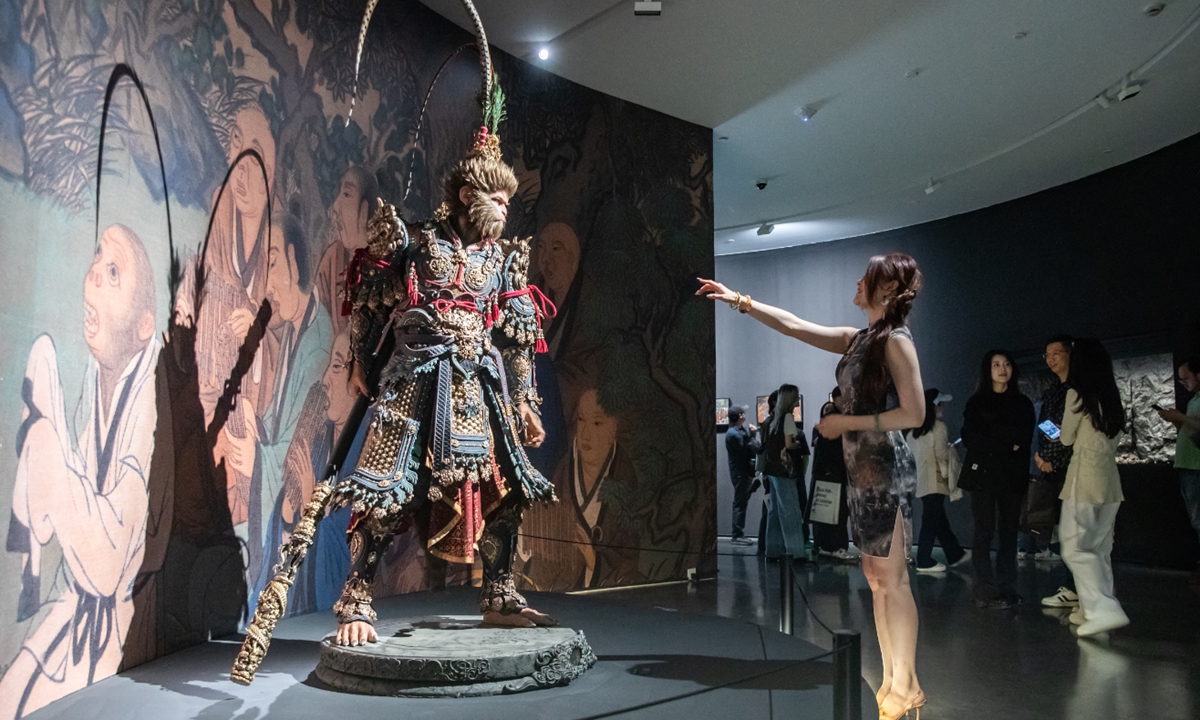
Visitors explore the Black Myth: Wukong Art Exhibition in Hangzhou, East China's Zhejiang Province. Photo: VCG
"We are building a system where data is controllable and measurable," Luo Jing, director general of the NCHA Department of Science, Technology and Education, said at the press conference.
Luo cited Black Myth: Wukong, a globally successful video game that faithfully recreated ancient Chinese temples and sculptures using real-world scans, as proof that authoritative cultural data is "the genuine wellspring of cultural innovation." The game became an international sensation in the past few years, triggering a surge of tourism to the religious sites it digitally reproduced.
Similarly, the historical drama Swords into Plowshares, which relied on solid research of excavated documents, has sparked public interest in China's Five Dynasties and Ten States period (907-979).
Both examples, Luo said, show why China needs a formal pipeline from museum vaults to the creative economy.
A core highlight of the regulations is their different tiered opening mechanism, which categorizes data application scenarios into public welfare, non-profit academic use and commercial licensing, striking a sophisticated balance between cultural openness, data security and industrial vitality.
Raw cultural relic data is strictly preserved in official secure storage systems and never released directly to the public. Only standardized, desensitized, non-confidential and clearly copyrighted processed data is available for external use, eliminating potential data risks while maximizing resource value, Luo noted.
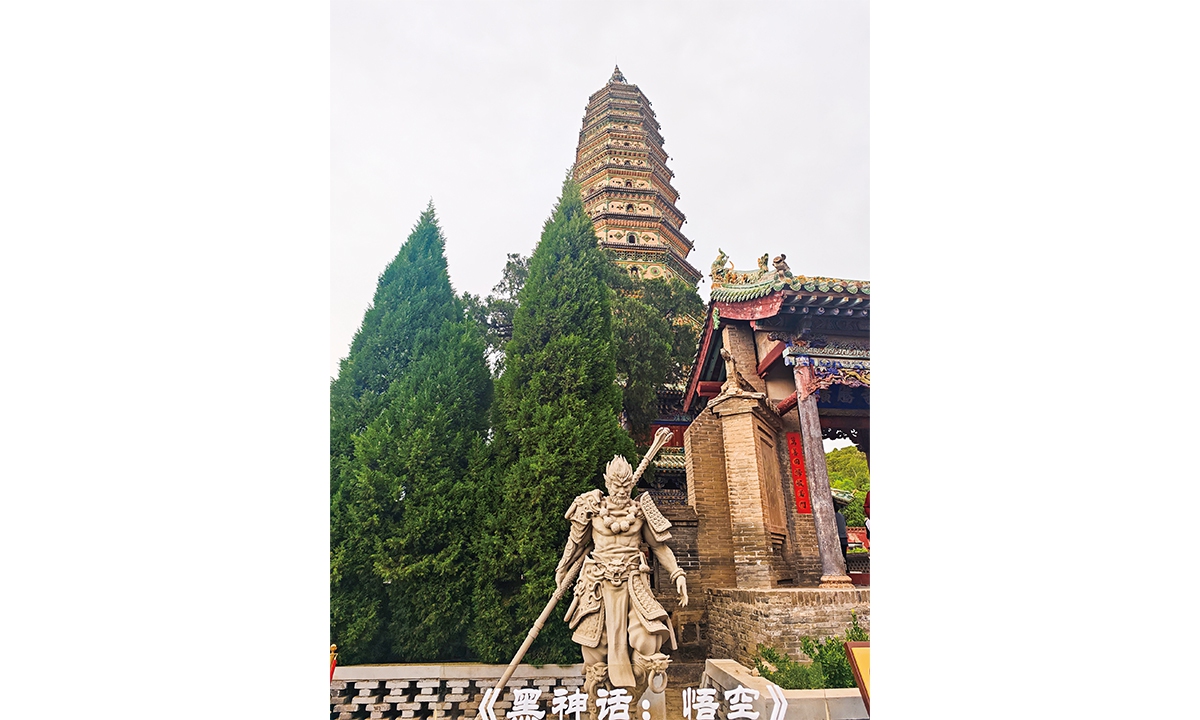
An exterior view of Guangsheng Temple in Linfen, North China's Shanxi Province Photo: Chen Xi/GT
For commercial activities, ranging from film production and advertising to souvenir design and game development, relic managers should negotiate "on a case-by-case basis" for the scope of use and service fees. The rules also explicitly encourage private companies to take part in data collection and processing, promising them priority access to resulting data services.
For the general public, the mechanism breaches the time and space limitations of physical museums. Cultural institutions are required to release high-definition relic images, digital exhibitions and open cultural resources via official platforms, providing 24/7 online public cultural services.
The Palace Museum's "Digital Forbidden City" initiative, for instance, has pioneered the release of vast high-definition archives of ancient paintings and artifacts to support public education and independent cultural research.
The Dunhuang Academy, a pioneer in China's digital heritage preservation, offers solid practical proof of how the new national rules will standardize and upgrade industry practices.

Black Myth: Wukong
Yu Tianxiu, a deputy director of the Dunhuang Academy, told the Global Times that the institution has accumulated more than 600 petabytes of high-precision digital heritage data through over three decades of continuous digital scanning, 3D reconstruction and image processing of grotto sites, murals and cultural relics.Aligning fully with the newly released national data management measures, the academy has established standardized whole-process mechanisms covering data collection, professional processing, secure distributed storage and classified external authorization. It will use blockchain-based traceability for licensed data to ensure "clear rights, orderly opening, and secure control."
Apart from data governance, NCHA has also released trial technical guidelines for revolutionary cultural relics protection, advocating a rigorous "minimum intervention" principle. It forbids excessive renovation, over-commercialization and blind scenic-style transformation of revolutionary sites and relics, forming a rigorous and human-centered Chinese paradigm for cultural heritage preservation.
Peng Yuehui, director general of NCHA's Department of Revolutionary Cultural Relics, said at the press conference that the guidelines explicitly ban the construction of "big plazas, big courtyards, big gardens, and big parking lots." It demands that renovation work preserve the "sense of time, history and rusticity" of revolutionary sites rather than turn them into manicured tourist attractions.
The official warned against "rough and crude construction methods" and vowed strict inspections to prevent the erasure of original historical traces.
RELATED ARTICLES