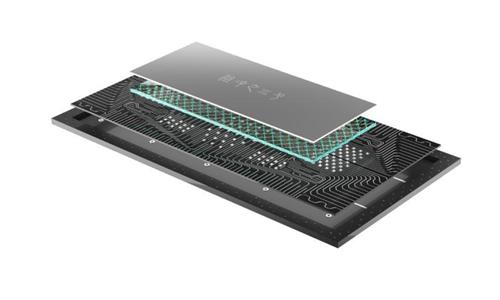
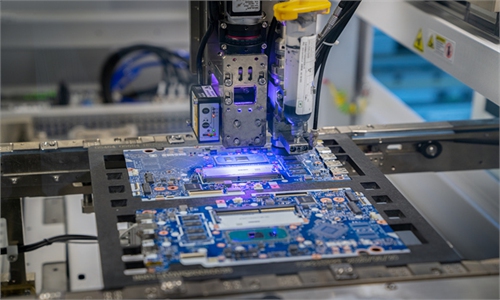
China’s first OLED TDDI chip enters mass production, boosting display chip self-reliance: company
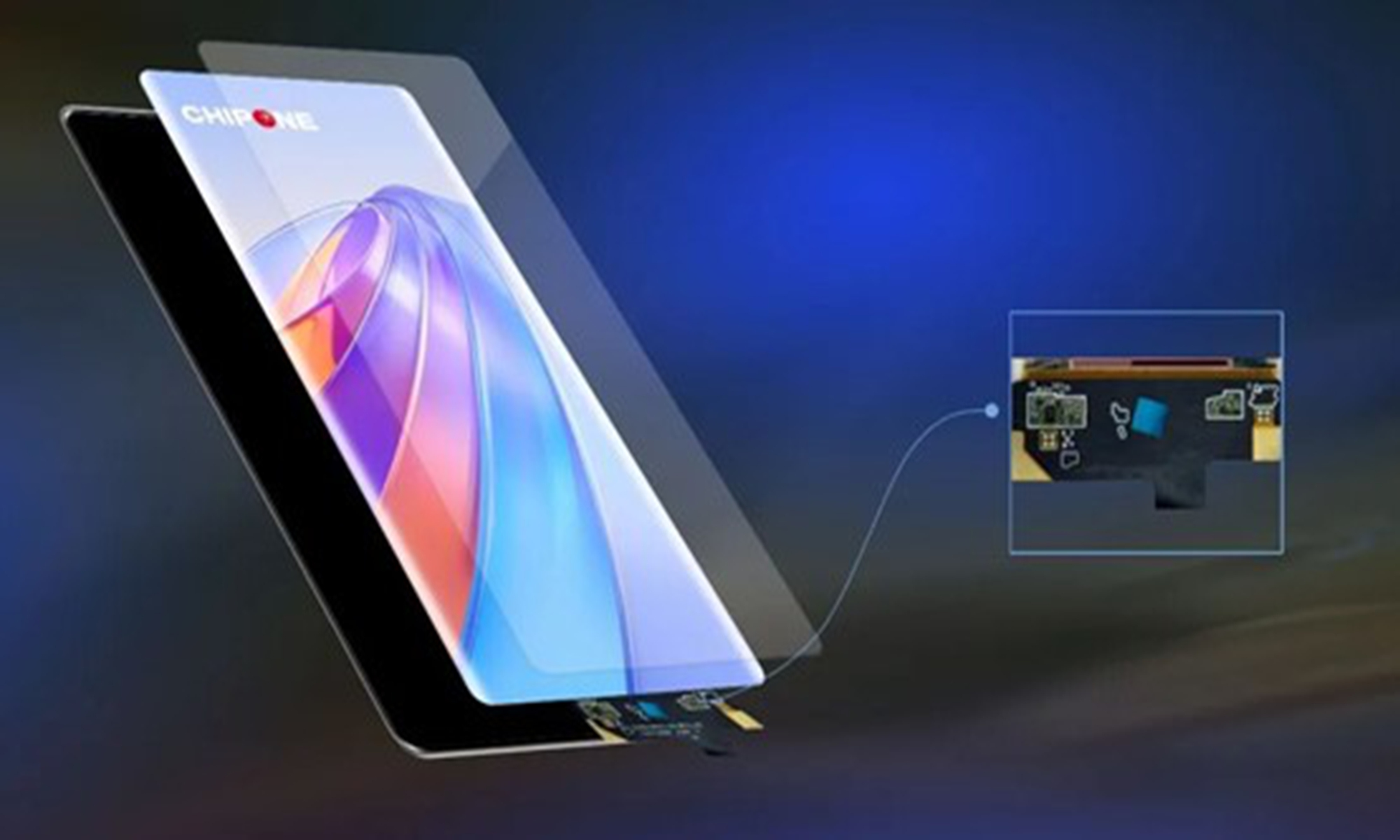
A concept image of Chipone's OLED TDDI chip. Photo: Chipone's official website
Leading Chinese display chip designer Chipone announced on Wednesday that its independently developed ICNA3611 — China's first OLED touch and display driver integration (TDDI) chip — has entered mass production for mainstream models made by a major domestic smartphone brand.In a statement, the company said the development marks a major step forward for China in both technological breakthroughs and commercial deployment of high-end display driver chips, helping accelerating import substitution and greater autonomy across the industrial chain.
According to the company, the ICNA3611 supports a 1.5K ultra-high-definition resolution, a refresh rate of up to 165 Hz and a dual-finger touch sampling rate of 360 Hz, delivering upgrades in both display clarity and touch responsiveness.
By integrating display and touch functions into a single chip, the ICNA3611 improves both performance and supply-chain security. Its single-chip architecture enhances image quality and touch response while addressing electromagnetic interference under high-refresh-rate conditions. The simplified component layout also creates more room for thinner and lighter device designs, helping handset makers develop slimmer smartphones, according to the company.
It further noted that the integration of packaging and testing processes shortens development cycles, reduces reliance on key overseas materials and helps mitigate geopolitical risks. These innovations allow the chip to maintain high performance while significantly lowering overall solution costs compared with conventional discrete designs, accelerating the adoption of OLED technology in mid- to high-end smartphone models.
Emerging display technologies such as OLED are a foundational and strategically important segment of the information industry, as well as a key area in China's efforts to strengthen weak links and enhance resilience across industrial chains.
Industry insiders said domestic demand for such chips remains strong. Mass production is expected to significantly enhance the competitiveness of Chinese terminal products by improving the user experience and reducing supply-chain costs.
"Display chips play a critical role in determining the performance of smart devices. They directly affect image quality, refresh rates, touch responsiveness and power efficiency, shaping the overall user experience. Greater domestic production can also reduce procurement and supply-chain costs, shorten product development cycles and strengthen the competitiveness of Chinese terminal manufacturers," Ma Jihua, a veteran technology industry analyst, told the Global Times on Wednesday.
Demand remains strong across a wide range of applications, including televisions, smartphones, in-vehicle displays, commercial screens and other large-format display systems. As display technologies continue to advance, high-performance domestic chips will become increasingly important to upgrading consumer electronics and improving the resilience of China's display industry chain, Ma added
The breakthrough was underpinned by sustained strategic guidance and policy support at the national level. The nation's top policies this year keep highlighting the importance of fostering a group of new growth engines, including new-generation information technology, artificial intelligence, biotechnology, new energy, new materials, high-end equipment and green industry during China's 15th Five-Year Plan period (2026-2030).
In line with the policy direction, patents for high-end information technology products, including chips, have also seen rapid growth.
New-generation information technology, including artificial intelligence, internet, cloud computing and big data, accounted for 16.5 percent of China's total valid invention patents as of the end of June this year, the country's top intellectual property regulator said on Wednesday.
RELATED ARTICLES