ARTS / CULTURE & LEISURE
Demand surges for AI video editors
China’s AI-powered film and TV revolution takes global lead: insiders
By Published: Jul 29, 2026 09:42 PM

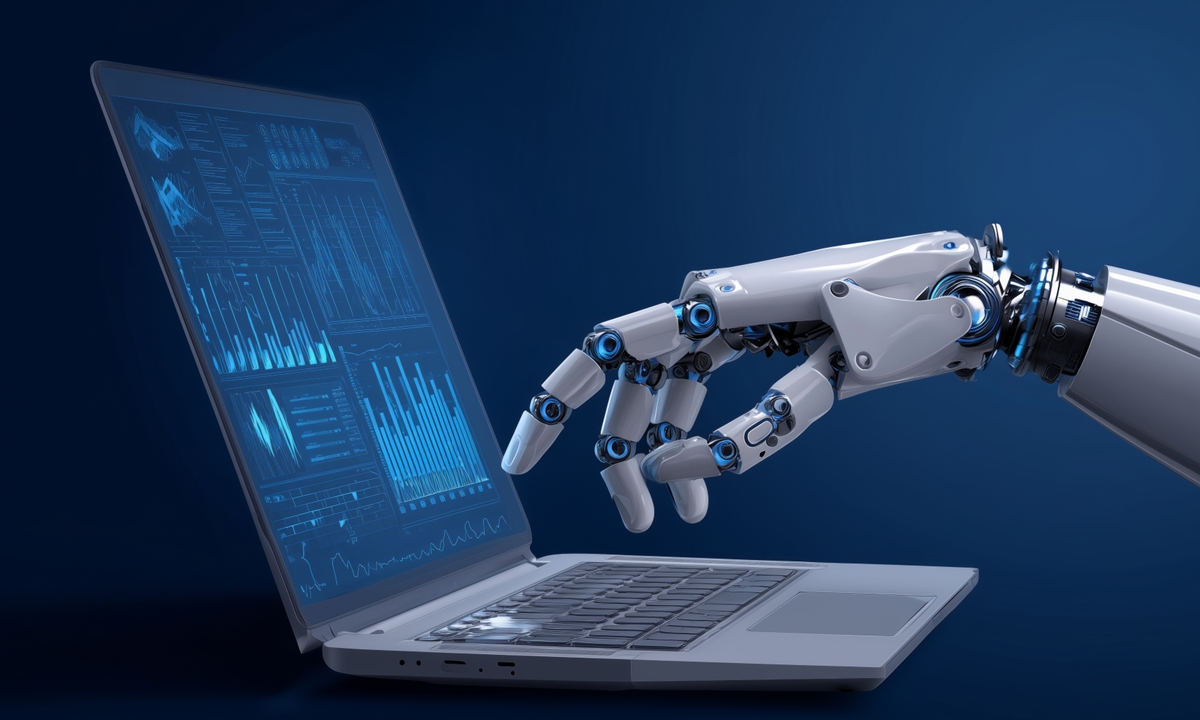
Photo: VCG
Demand for AI-assisted video editors in China has surged 179 percent year-on-year in June, state broadcaster CCTV has reported, a hiring boom that industry insiders said signals a permanent restructuring of the world's largest film and television market, which is being driven by Chinese AI video models that have taken a commanding global lead.The jump, which was accompanied by a 7 percent rise in demand for traditional editors, comes as AI tools compress production cycles from months to days, lifting efficiency in visual effects and pre-visualization three to 10 times. Short-drama studios that once produced a few titles a month can now turn out close to a hundred.
Monthly pay for AI-related film roles ranges from 8,000 to 20,000 yuan ($1,181-$2,954) depending on skills, with the overall talent shortfall for AI-literate film professionals already exceeding half a million, per CCTV.
Experts noted that the dominance of Chinese video-generation models is behind the transformation.
"Even the best overseas video platforms are now using Chinese-made large models," Feng Anrong, a 33-year-old former screenwriter and director who runs an AI production studio, told the Global Times.
Feng said China's video AI has moved decisively ahead of foreign rivals, giving studios a powerful cost-cutting engine. Productions that once required expensive location shoots and months of post-production can now be built entirely on a computer, from scene design to camera previews.
Fu Weiwei, another director who shifted from traditional filmmaking to AI-generated "simulated human" dramas, was equally blunt. Fu's six-person team, most of whom are in their 20s, produces one to one-and-a-half premium AI dramas a month.
"The transition from traditional film to AI is irreversible. It's like films once threatening stage dramas, or the internet crushing TV stations," he told the Global Times.
While Hollywood remains cautious amid union resistance, Fu noted that Netflix and Disney have quietly begun trialing AI for animation and large-scale sequences. By contrast, China has already achieved commercial-scale deployment. "Our AI short dramas and simulated human formats have rapidly spread to Japan, South Korea, Southeast Asia, the Middle East and North America, making China the core exporter of the global digital transformation in film and TV," he said.
Media has reported that in the first quarter of 2026, roughly 128,000 micro-dramas were released industry-wide, with AI-generated content accounting for more than 95 percent of them.
"This structural shift shows that AIGC has moved from experimental to mainstream, and the productive forces and relations in the broadcasting and television industry have undergone fundamental change," Zhu Xinmei, director of the Institute of International Communication at the Development Research Center of the National Radio and Television Administration, told the Global Times.
The technology boom is creating entirely new job categories. "AI clip curators" and "AI editors" have emerged rapidly. Feng described the core roles as that of a "translator" - someone who can turn a director's artistic intent into precise prompts that an AI model can execute.
The most sought-after professionals are no longer single-skill specialists but hybrid talents who understand screenwriting and directing while wielding AI tools fluently. "An AI director is a six-sided warrior: you need to write, direct, shoot, cut, have a strong sense of art, and master prompt engineering. Aesthetic judgment, a director's mind-set, and above all original creativity - these remain the highest capabilities," Fu said.
Yet the collapsing threshold for entry has not diluted the primacy of storytelling. "Everyone can write, but not everyone is a novelist," Feng said. He argued that behind every viral AI short drama in China is a compelling narrative and genuine creative insight, not just technical polish.
AI amplifies output but cannot replace human sensibility and emotional expression. Zhu made the same point: In an era when technology enables everyone to become a creator, the highest-value skills remain originality, narrative power, an understanding of the zeitgeist and refined aesthetic taste.
Looking ahead, Fu said the arrival of AI-generated feature films is "only a matter of time." With China's top video models expected to upgrade to a 3.0 version and deliver cinema-grade 4K resolution by year-end, AI productions will gradually extend from short dramas into theatrical releases.
"AI won't kill cinemas. It will enrich the forms of filmmaking, liberate the imagination of creators and bring more innovative, immersive content to the big screen," Fu said.
RELATED ARTICLES