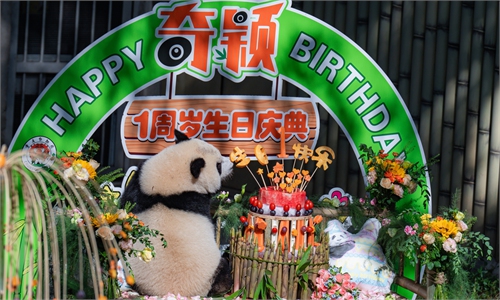
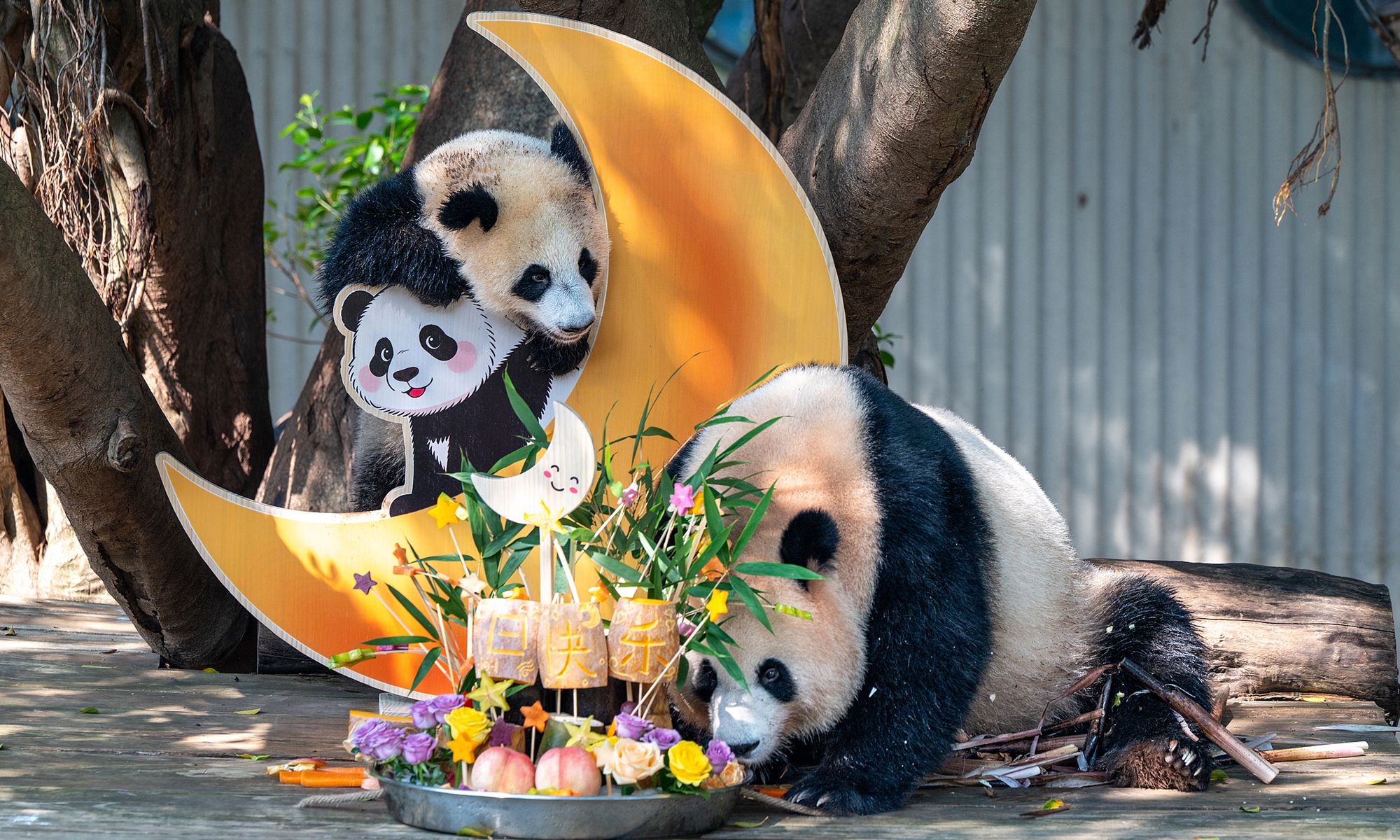
The female giant panda cub Wang Shu (left) celebrates her first birthday with mother Liang Yue (right) at Chongqing Zoo in Southwest China's Chongqing Municipality on July 12, 2026. Photo: VCG
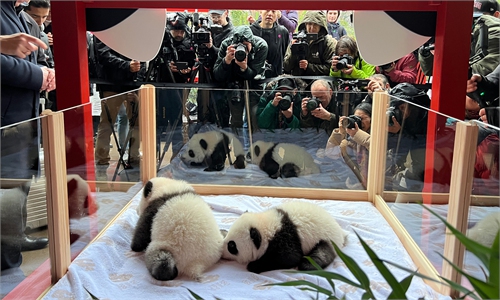
A birthday cake sat waiting to be eaten at Tianjin Zoo in North China's Tianjin Municipality on July 24, but it was not for a human guest.Visitors had gathered to celebrate the 13th birthday of giant panda Xi Le, watching and photographing the panda as they shared the occasion from outside the enclosure. Born in Ya'an, Southwest China's Sichuan Province, in 2013, the furry resident arrived at the Tianjin Zoo two years later, according to the Xinhua News Agency.
It was one moment in a summer filled with panda birthdays across China.
On July 12, the Chongqing Zoo held a first-birthday celebration for the female cub of giant panda Liang Yue and announced her official name: Wang Shu. Weighing just 188 grams at birth, the cub had grown to 36.5 kilograms by her first birthday, according to Xinhua.
Netizens welcomed the cub's beautiful new name, Wang Shu, which evokes the moon in classical Chinese imagery. The cub had previously been affectionately nicknamed Little Moon after her mother, Liang Yue, whose name means "beautiful moon" in Chinese.
In Hong Kong, Ocean Park has turned the season into a birthday program running from June 26 through August 31 for all six of its giant pandas. The celebrations include those for June-born An An and Ke Ke, Ying Ying and Le Le, whose birthdays fall in August, and their twin cubs Jia Jia and De De, who will turn 2 that month, the park said.
For zoo visitors and panda fans, the season brings cameras, homemade cards, online messages and themed birthday cakes. For animal care teams, however, a panda birthday is also another day of preparing food, monitoring behavior, checking health and adjusting the animals' environment.
At Ocean Park, animal care staff prepared ice birthday cakes and specially designed enrichment items for An An and Ke Ke's June birthdays, the park said in a June press release. Such treats are not simply decorative. They are part of enrichment designed around what the animals can safely eat and how they explore their surroundings.
Food enrichment can include ice, bamboo, fruit and puzzle-like feeders that encourage animals to search, manipulate or work for food. Environmental enrichment can include changes to climbing structures, pools, logs and other features in an enclosure. The goal is to give captive animals opportunities to display more natural behavior, rather than merely to create a spectacle for visitors.
Across the sea in South Korea, the birthday season carries a more bittersweet note. On July 7, keepers and invited visitors at Everland in Yongin celebrated the third birthday of twin sisters Rui Bao and Hui Bao with a giant bamboo cake and a wooden bench made for the pair to sit side by side.
Born in 2023 to Ai Bao (Hua Ni) and Le Bao (Yuan Xin), the twins now each weigh more than 80 kilograms. Under the terms of the international cooperation agreement, they are expected to return to China before reaching breeding age, making this potentially their last birthday in South Korea, the Yonhap News Agency reported.
However, panda care depends on far more than an attractive enclosure or a carefully designed birthday treat.
"Keepers, veterinarians and management teams can tell quite accurately what stage a panda is in through its behavior," Li Desheng, deputy director of the China Conservation and Research Center for the Giant Panda, told the Global Times in a previous interview. Sensitive individuals may react differently to changes in sound, environment or caregivers, he noted, requiring tailored care plans.
For pandas involved in international conservation cooperation, those plans are backed by a formal system. Li said partner institutions are assessed for their husbandry teams, veterinary capacity, research resources and facilities before cooperation begins. They are expected to submit regular health reports and annual physical examination reports, while diet, bamboo supply and disease prevention are also monitored.
That attention also reflects the difficulty of panda breeding.
According to the National Forestry and Grassland Administration, a female giant panda may be able to conceive for only about three or four days a year. Panda cubs are also exceptionally small and vulnerable at birth, weighing around 100 grams. Low mating rates, low pregnancy rates and low cub survival rates once made captive breeding a global challenge, the administration said in a public science guide.
By the end of 2025, China's captive giant panda population had reached 808, with improving genetic diversity, according to the administration.
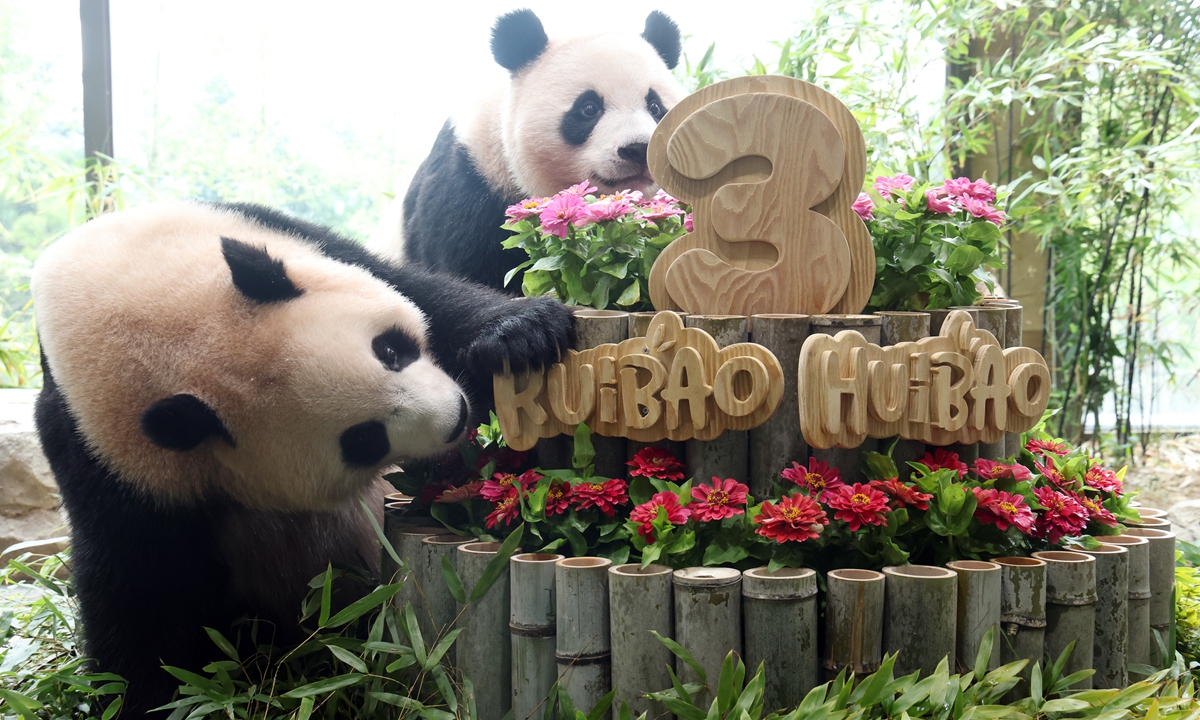
Giant panda twins Rui Bao and Hui Bao, both born in South Korea, celebrate their third birthday in Yongin, South Korea, on July 7, 2026. Photo: VCG
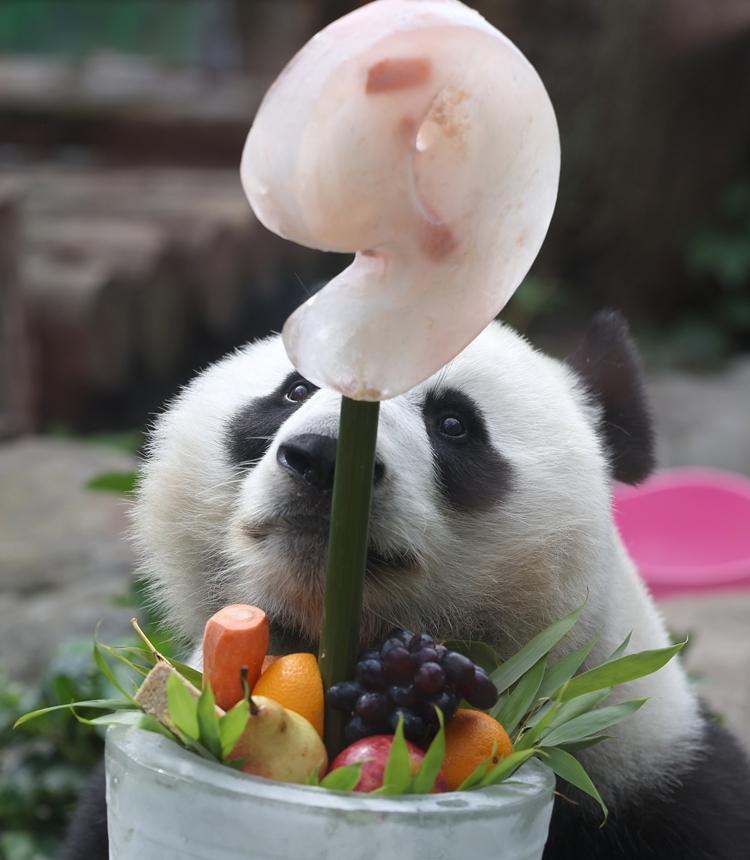
Giant panda Katyusha tries the birthday cake prepared for her mother Ding Ding at Moscow Zoo on July 30, 2026. Ding Ding missed her ninth-birthday celebration, so Katyusha, the first giant panda born in Russia, enjoyed the feast instead. Photo: IC
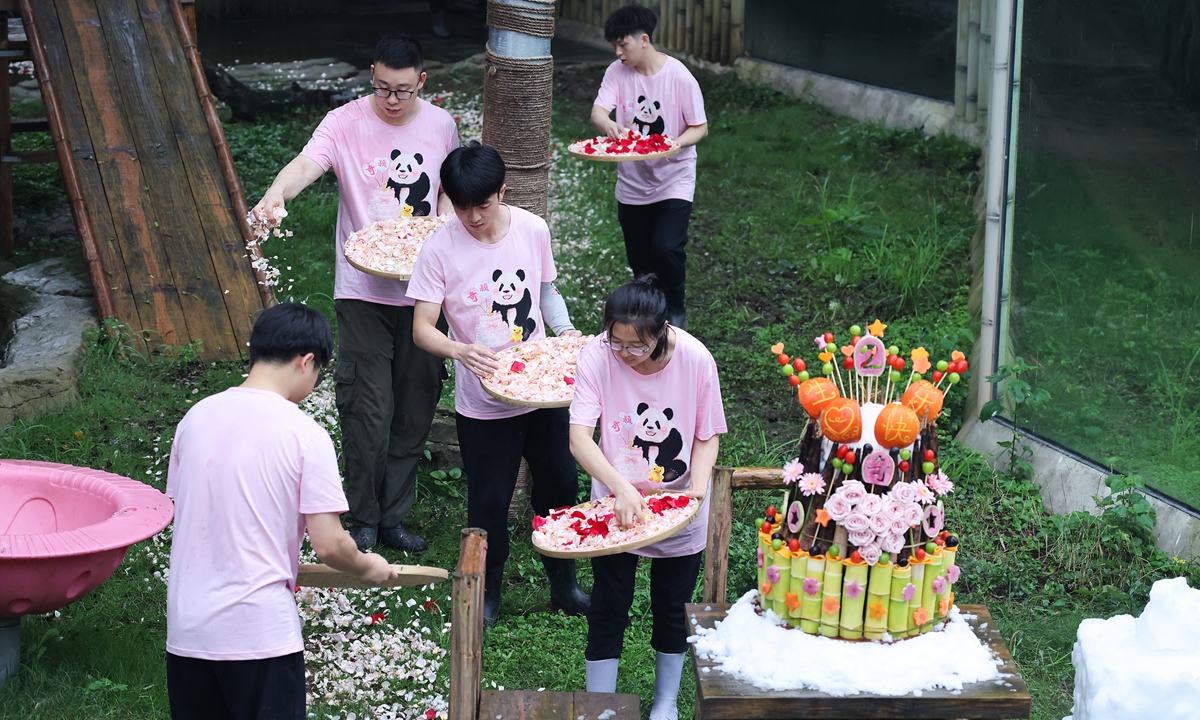
Zoo staff prepare a fruit-and-vegetable cake and decorate the enclosure with flower petals for giant panda Qi Ying's second birthday at Chongqing Zoo on June 28, 2026. Photo: VCG
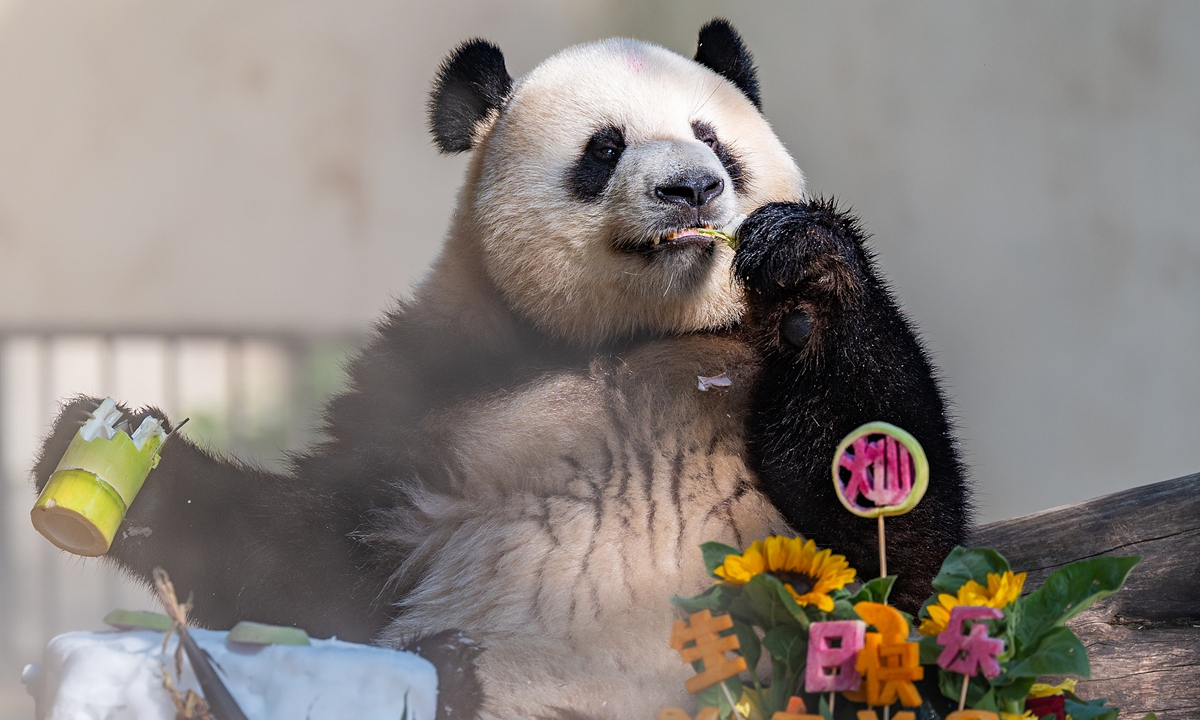
Giant panda Mang Cancan enjoys a birthday cake made of fruit and fresh bamboo during its third-birthday celebration at Chongqing Zoo on July 6, 2026. Photo: VCG
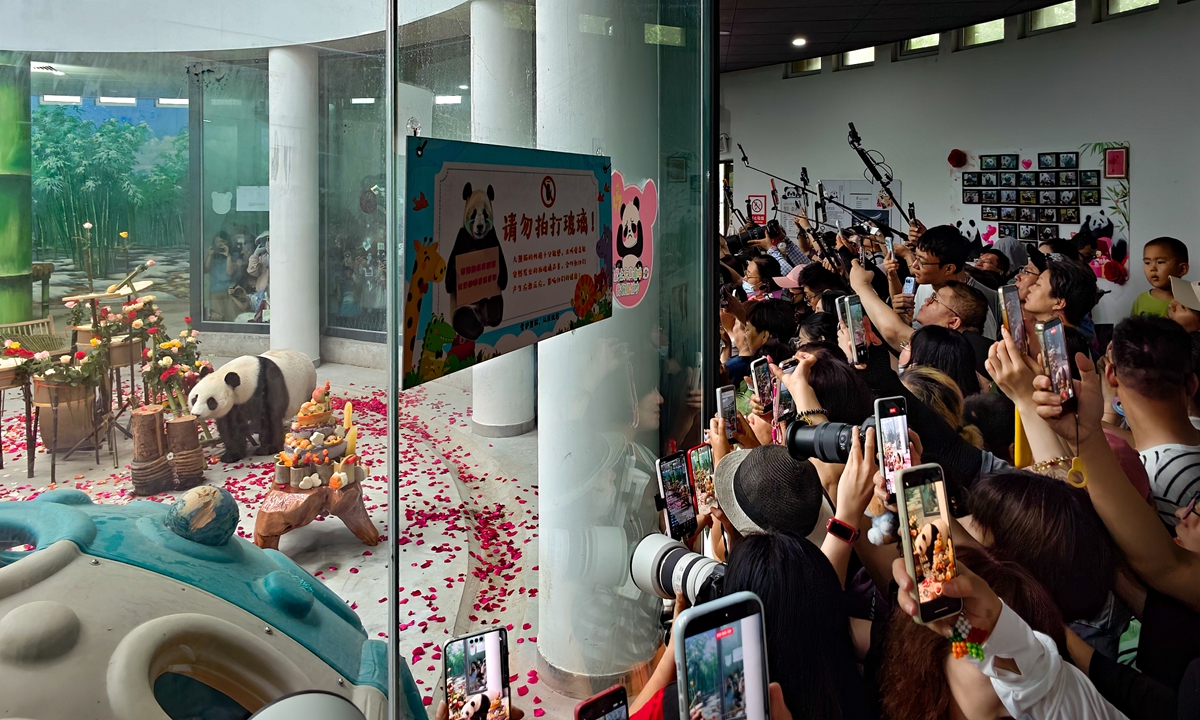
Giant panda Xi Le plays as visitors gather for its 13th-birthday celebration at Tianjin Zoo in North China's Tianjin Municipality on July 24, 2026. Photo: VCG