ARTS / BOOKS
Migrant worker poet finds his voice amid China’s grassroots literary surge
Migrant worker poet finds his voice as grassroots literary surges
By Li Xundian and Published: Aug 02, 2026 10:21 PM
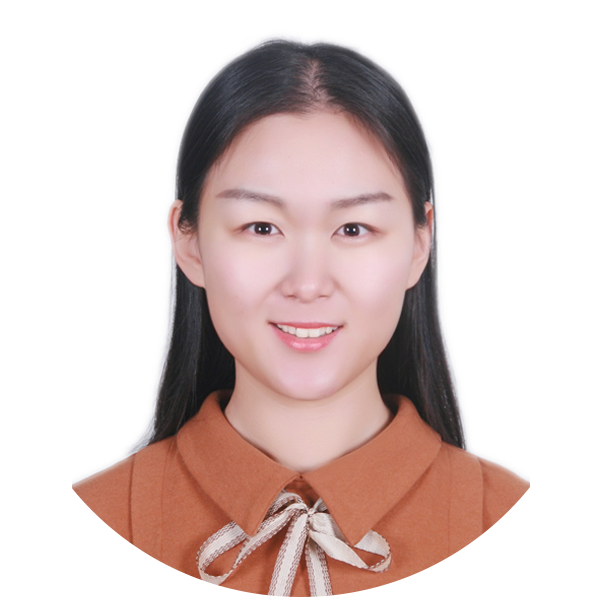
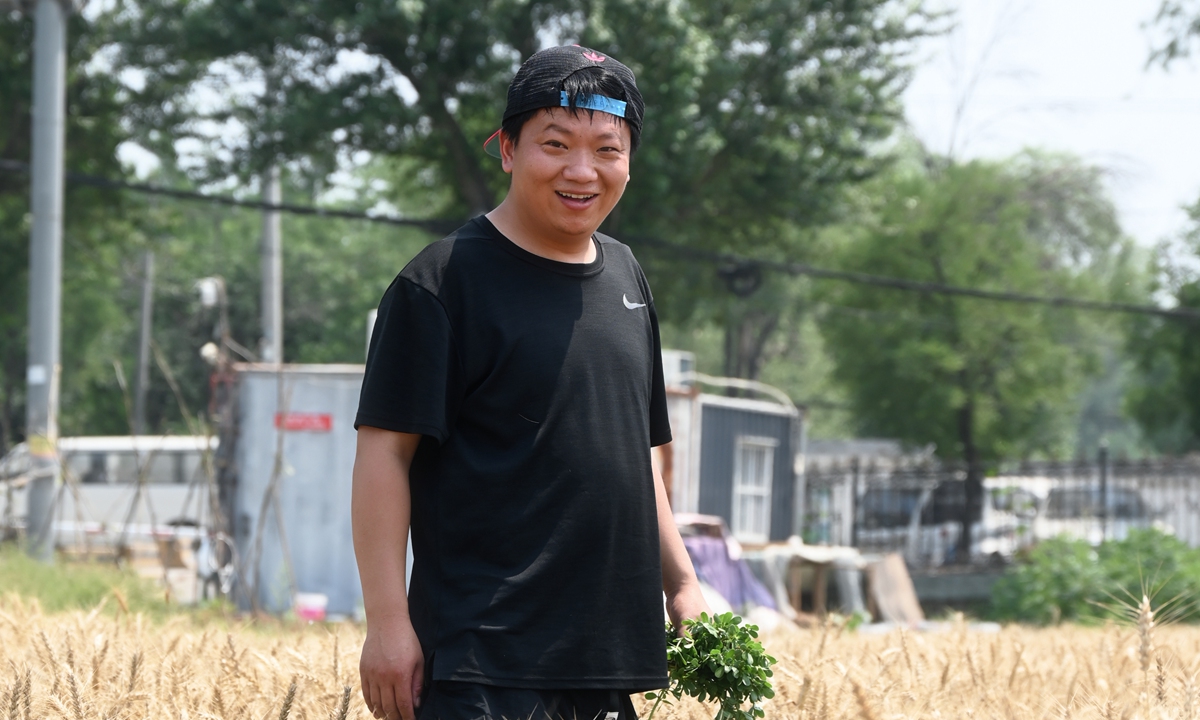
Worker-poet Hu Liushuai or Xiaohai Photos on this page: Courtesy of Hu Liushuai
A new wave of grassroots literary creation is flourishing across China, as ordinary workers, rural residents and frontline practitioners start writing to record real life, express spiritual aspirations and depict the evolving times. As a representative figure of China's emerging mass literary creators, Henan-born worker-poet Hu Liushuai, known as his pen name Xiaohai, has blended decades of migrant labor experiences with literary creation.In an exclusive interview with the Global Times, Xiaohai shared his unique insights into how ordinary people like him are seeking spiritual redemption through writing, embracing self-awakening amid mundane toil, and contributing to the vibrant growth of grassroots literature that mirrors the profound spiritual progress of ordinary individuals amid China's modernization drive.
'A life jacket'
In November 2025, his poetry collection Sisyphus on the Wenyu River was selected for the "New Mass Literature: Beijing Creation Plan," and in January 2026 he became a student in the mentorship program at the prestigious Lao She Literary Academy in Beijing.
Now in his 30s, Xiaohai has been a migrant laborer for 23 years, working in 40 to 50 different jobs in more than 10 cities. From the clothing factories of Dongguan in South China's Guangdong Province and Ningbo in East China's Zhejiang Province to a second-hand clothing shop in a gritty urban village on Beijing's outskirts, writing has been his constant companion.
"The monotonous, 'three-point-one-line' factory life left me feeling lost, so I started thinking, and started searching," he told the Global Times. "Poetry became a tranquilizer for my soul, a life jacket that stopped me from drowning in the roaring workshop."
Xiaohai traces his literary awakening to 2008, when he worked at a garment factory in Ningbo. He would murmur Tang Dynasty (618-907) poems to himself while operating his sewing machine, the ancient verses a quiet rebellion against the mechanical din.
"The worker next to me thought I was humming songs. In truth, I was conversing with Li Bai [a prestigious poet from the Tang Dynasty]," he recalled. "My loneliness found solace in Tang poetry. My heart could dance with the spirits of Li Bai and Du Fu [another famous Tang poet] right there in the workshop, and I was no longer a lonely migrant worker."
That realization sparked a creative outpouring. In 2013, while working at a Suzhou clothing factory in East China's Jiangsu Province, he wrote "Chinese Worker," a poem that channeled his raw reflections on labor, dignity and survival. Xiaohai insists that this authenticity, born of lived experience, not literary training, is what distinguishes the new mass literature.
"I firmly believe that our own narratives, yours and mine, are the best kind of new mass literature," he said. "Your writing materials are forged in real life, and life itself is raw and fierce, with the life force of wild grass."
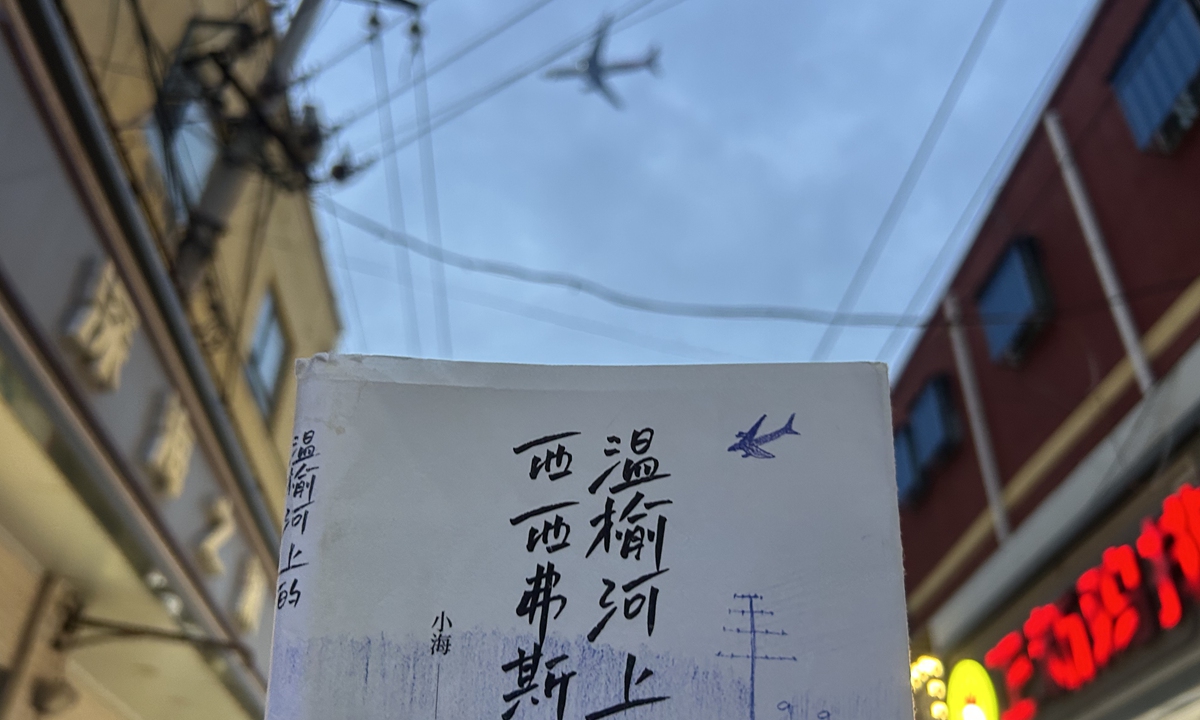
Sisyphus on the Wenyu River, the poetry collection by Hu Liushuai
Experimental fieldIn 2016, Xiaohai moved to Picun village, a crowded urban village beyond Beijing's Fifth Ring Road that has become an unlikely literary hub. The neighborhood gained national attention through the work of Fan Yusu, a former nanny whose autobiographical writing became a sensation, and the Picun Literature Group she helped foster. Currently, the group draws nannies, security guards, delivery workers and factory workers who gather after work to share their writing.
Xiaohai runs a tiny second-hand clothing shop there with a hand-painted sign that reads "Poetry Shop." The clothes are for fellow migrant workers; the poetry, he said, is for everyone and is the real offering.
"Places like Picun village are so precious because they give people who share a passion for literature a spiritual home," Xiaohai said. "Materially, it might not change anything. But spiritually, it gives everyone encouragement, like a utopia. I call the Picun Literature Group a piece of reclaimed wasteland in reality, and an experimental field for our dreams."
The shop also serves as a rehearsal space for the "Poetry Shop" band, whose members set their verses to music and perform for neighbors. The songs — about factory life, homesickness, the ache of drifting from city to city — resonate deeply with audiences who share those experiences.
Xiaohai's collection Sisyphus on the Wenyu River takes its name from the river near Picun where he often walks, and from the Greek mythological figure condemned to push a boulder uphill for eternity, a metaphor for the repetitive labor of the assembly line. But he draws a distinction.
"When Sisyphus becomes conscious of his fate, at that very moment he has already transcended it," Xiaohai said. Writing, for him, is that act of transcendence.
Despite his growing recognition, Xiaohai remains grounded. "For many people, literature is just a passion, a form of reflection between you and life. It rarely brings material change," he said, adding that he prefers to keep working while writing because "your material is tempered in real life."
The rise of grassroots literary voices like Xiaohai's reflects what observers describe as a broader cultural dimension of China's modernization. As material living standards have improved, more ordinary people have found the space and support to pursue spiritual enrichment and creative expression.
"Loving literature is a life attitude," he said. "It means that in the midst of hurried, humdrum existence, you can still sense the beauty of literature and nature. It's like a farmer who, when he sees a beautiful sunset while working the fields, can pause and look a little longer. If he didn't love literature, he probably wouldn't have that habit."
RELATED ARTICLES