ARTS / CULTURE & LEISURE
Beijing named UNESCO-UIA World Capital of Architecture 2029 for its rich heritage and sustainable vision
By Wu Jie and Published: Aug 06, 2026 09:53 AM

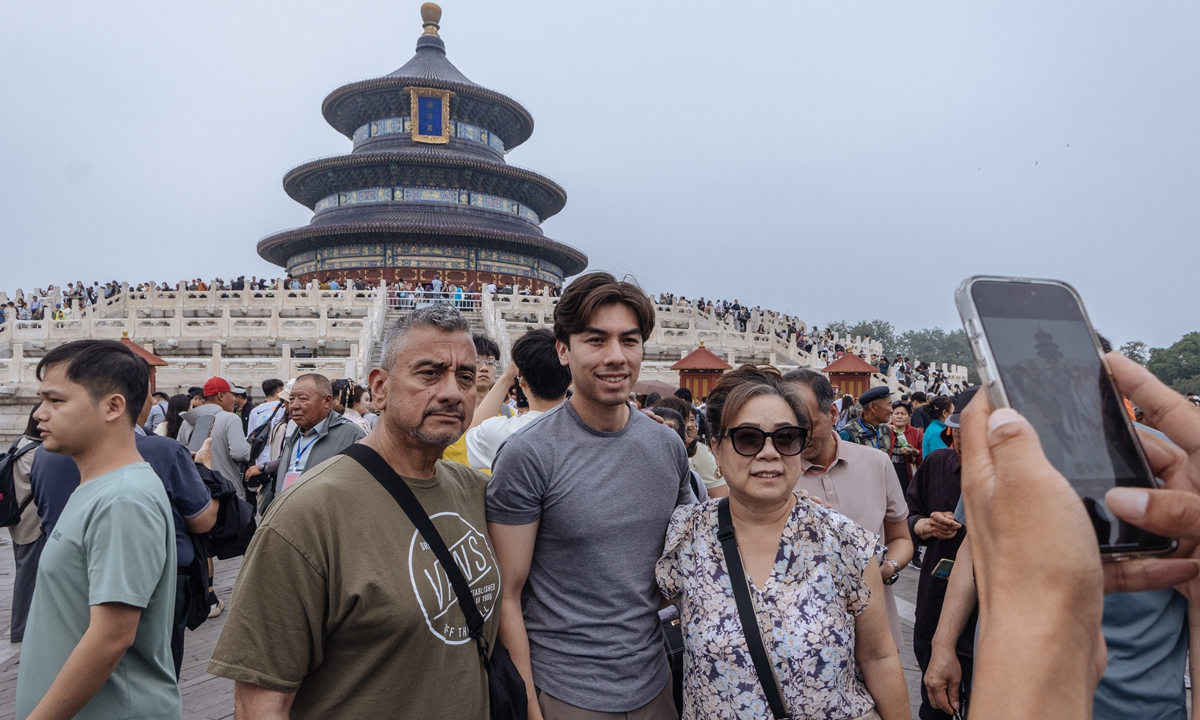
The Temple of Heaven in Beijing attracts a large number of tourists for visits and photos on May 15, 2026. Photo: Li Hao/GT
Beijing has been designated as the UNESCO-UIA (International Union of Architects) World Capital of Architecture 2029, UNESCO announced in a press release on Wednesday.
Beijing was selected for its exceptional ability to bring together one of the world's richest architectural heritages with a forward-looking vision of sustainable urban development. Its historic urban fabric, successful regeneration projects and vibrant architectural culture demonstrate how heritage, innovation and community life can reinforce one another in shaping resilient and livable cities, according to the press release.
Established jointly by UNESCO and UIA, the World Capital of Architecture program highlights the transformative role of architecture, urban planning, culture and heritage in advancing sustainable urban development. Every three years, UNESCO designates the host city of the UIA World Congress as the UNESCO-UIA World Capital of Architecture.
Chinese architect Ma Yansong told the Global Times that Beijing is a beautiful city because it seamlessly blends tradition with modernity. "Historic and contemporary architecture coexist in a very harmonious way, which is one of the reasons UNESCO selected Beijing," he said.
"For me, the most beautiful landmark in the city is the Temple of Heaven. Its charm comes from the entire setting. As you walk along the elevated pathways surrounded by rows of trees, you naturally develop a sense of ceremony. Then, at the end of the route, the Hall of Prayer for Good Harvests comes into view. The proportions and composition are so perfectly balanced that they remind me of a symphony," Ma said.
Landmarks ultimately express a city's unique cultural identity. A city is essentially a community with its own history, traditions, and values. Its landmarks help convey the distinct character and spirit of the people who live there, Ma noted.
In an era of globalization, cities around the world are becoming increasingly connected, making it even more important to preserve what makes each place unique. China, too, needs a recognizable image of its own, one that reflects its rich cultural heritage while presenting an identity to the world, Ma said.
Under the theme "Back to Balance," Beijing 2029 will promote architecture as a bridge between culture, nature and people. Through exhibitions, conferences, educational programs and public events, the city will foster international dialogue on how the built environment can contribute to more inclusive, sustainable and human-centered urban futures, said UNESCO.
Khaled El-Enany, director-general of UNESCO said that "as we look towards to Beijing 2029, we are confident that the city's extraordinary architectural heritage, dynamic urban transformation, and forward-looking vision will inspire new international dialogue on the power of architecture in improving people's lives and in safeguarding shared heritage for future generations."
Rio de Janeiro, Brazil, became the first city to be designated the UNESCO-UIA World Capital of Architecture in 2020, followed by Copenhagen in 2023 and Barcelona in 2026.
RELATED ARTICLES