ARTS / CULTURE & LEISURE
UNESCO confirms with GT: it urges protection of cultural heritage, shares sites' coordinates with US, Israel and Iran
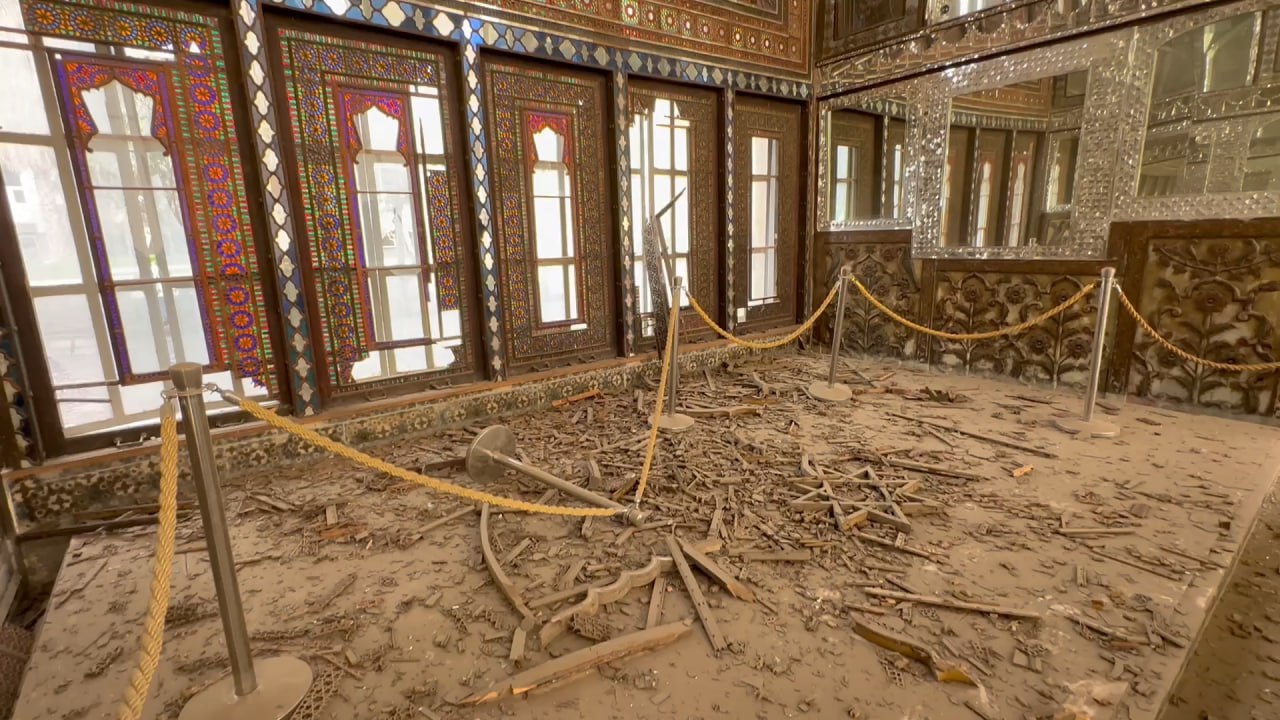
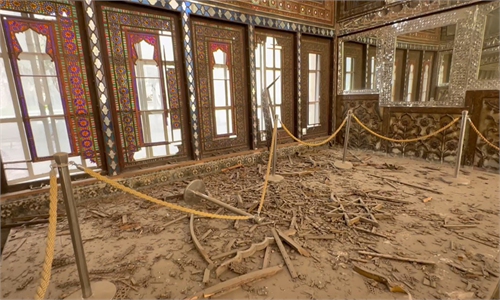
Damage caused to the World Heritage site of Golestan Palace by the US-Israeli airstrike Photo: @Iran_GOV on X
The United Nations Educational, Scientific and Cultural Organization (UNESCO) has acknowledged reports of damage to the Golestan Palace, a UNESCO World Heritage site in Tehran, following airstrikes in the Iranian capital. In an exclusive response to Global Times inquiries, the UN cultural agency detailed its ongoing monitoring efforts and reiterated the obligations of all parties under international law to protect cultural property during armed conflict.Golestan Palace was reportedly damaged on March 2 by debris and the shock wave following the US-Israeli airstrike to Arag Square, located in the buffer zone of the site in the Iranian capital.
"UNESCO is not currently in a position to independently confirm the extent or precise nature of any reported damage to the World Heritage property 'Golestan Palace'," it said.
In a detailed written statement sent to the Global Times, UNESCO stated that it is conducting a first level of assessment using all available and credible information, including public reporting and satellite imagery, to prioritize sites that may require further verification. A detailed, on-the-ground assessment is anticipated to proceed in successive phases, subject to security conditions and access. This process typically involves remote sensing to map suspected damage, followed, where feasible, by the deployment of qualified experts for physical verification using recognized methodologies, it said.
The organization also confirmed to the Global Times that it has transmitted the geographical coordinates of sites inscribed on the World Heritage List, the Tentative List, and the International List of Cultural Property under Enhanced Protection to the governments of Iran, the US and Israel. This action is intended to support compliance with relevant international obligations by all parties involved in the regional tensions, namely the 1954 Hague Convention for the Protection of Cultural Property in the Event of Armed Conflict and the 1972 World Heritage Convention.
UNESCO is actively engaging with competent national authorities, including those in Iran, to identify response measures. The agency stands ready to offer on-site assistance to support the protection of cultural heritage, "as and if the security conditions on the ground permit" and at the national authorities' request.
If requested, UNESCO may provide technical advice and support through available assistance mechanisms, which could include expert missions, capacity building, and the mobilization of international assistance for recovery or restoration efforts, subject to resource availability, the organization said in the email response to the Global Times.
From ancient ruins to the lush Hyrcanian Forests, Iran now has 29 UNESCO World Heritage sites - 26 cultural and 3 natural sites, which reflect the country's cultural legacy and landscapes. Among the most famous sites are Persepolis, the historic city of Yazd, and the Persian Gardens.
According to the UNESCO official introduction, the lavish Golestan Palace is a masterpiece of the Qajar era, embodying the successful integration of earlier Persian crafts and architecture with Western influences. The walled Palace, one of the oldest groups of buildings in Tehran, became the seat of government of the Qajar family, which came into power in 1779 and made Tehran the capital of the country. Built around a garden featuring pools as well as planted areas, the Palace's most characteristic features and rich ornaments date from the 19th century. Its exquisite gardens, intricate tile work, and stunning mirror halls have earned it a place on UNESCO's World Heritage List since 2013.
RELATED ARTICLES