DPP’s rant against China-Indonesia drill exposes secessionist nature, reliance on external forces and deep-seated fears: expert
By Published: Aug 12, 2026 08:54 PM

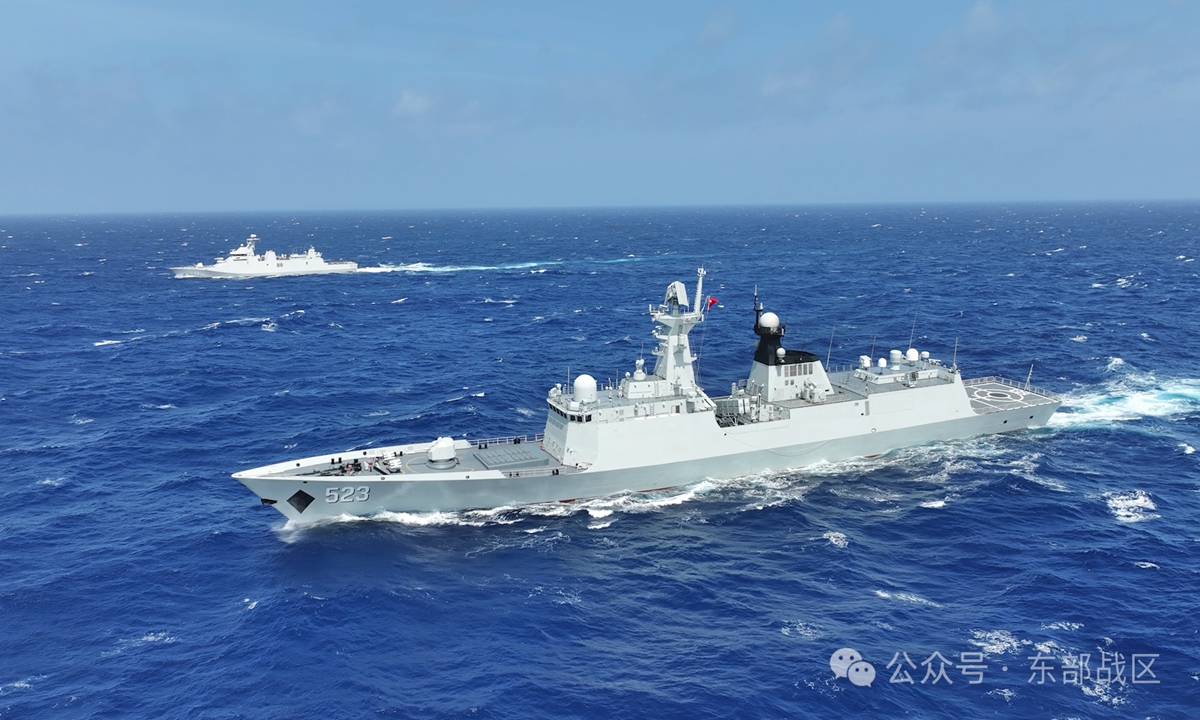
Chinese Navy's guided-missile frigate Honghe (Hull 523) and the Indonesian Navy frigate KRI I Gusti Ngurah Rai conduct a replenishment-at-sea exercise in waters east of China's Taiwan Island in August 2026. Photo: official WeChat account of the PLA Eastern Theater Command
Following China's Ministry of National Defense's announcement on Tuesday that the Chinese and Indonesian navies will hold a navigation exercise in waters east of Taiwan island in mid‑August, Democratic Progressive Party (DPP) authorities on the island fiercely opposed and smeared this legitimate maritime military cooperation, while hyping up the so‑called "China threat" narrative. Their provocative response stands in stark contrast to their weak, accommodating stance toward Japan and the Philippines, whose illegal maritime delimitation in waters east of Taiwan has undermined China's legitimate maritime rights and interests.
Analysts pointed out that such reactions lay bare the DPP's secessionist mentality, its reliance on external forces to back "Taiwan independence" schemes, and its deep‑seated fear of the mainland's growing military capabilities to safeguard national sovereignty and territorial integrity.
The Chinese Navy's Honghe guided-missile frigate (Hull 523) and Indonesia's frigate KRI I Gusti Ngurah Rai completed all scheduled exercises in waters east of China's Taiwan island on Wednesday morning, concluding a joint maritime passage exercise, according to the PLA Eastern Theater Command. The two vessels conducted drills including maritime communications, formation maneuvering, replenishment at sea and a farewell ceremony, demonstrating practical cooperation and their shared commitment to regional peace and stability.
In a statement on Wednesday, the DPP authorities' "external affairs" department smeared the drill as a "malicious provocation, irresponsible unilateral act that brings unrest and threats to the region." It claimed that it would vigorously safeguard its so‑called "sovereignty" over the waters east of Taiwan island.
On Tuesday evening, the so-called Mainland Affairs Council on the island also smeared the exercises as an act "undermining regional peace and stability and challenging the international order," claiming that the exercises had seriously infringed upon its so‑called "national sovereignty" and maritime rights and interests.
Some media outlets have noted that choosing waters east of Taiwan island for the drill may relate to the Japan‑Philippines maritime delimitation issue. Observers meanwhile highlighted a stark contrast between the DPP authorities' willingness to endorse Japan and the Philippines' illegal maritime‑delimitation moves in waters east of Taiwan and their fiery rhetoric over the legitimate maritime drill between the Chinese mainland and Indonesia.
Some Taiwan‑based netizens also condemned the DPP's conduct. One user wrote beneath a Mainland Affairs Council Facebook post: "They would rather act as vassals to foreign states than let compatriots defend our maritime territory - the DPP are traitors to the nation."
"The Taiwan authorities simply have no so‑called 'national sovereignty.' Such remarks reflect the DPP authorities' secessionist ideology," said Wang Jianmin, a senior cross-Straits expert at Minnan Normal University in Fujian. He noted the stark contrast in the DPP authorities' positions also shows that they have never cared about genuine maritime rights and interests.
According to Wang, on one hand, the DPP authorities pin their hopes on external forces to back their Taiwan secession schemes and choose to compromise and yield on actual maritime interests. On the other hand, they deliberately fabricate the narrative of "the Chinese mainland unilaterally changing the status quo," in a bid to garner more attention and support for external forces.
In addition, as local elections on the island draw near, the DPP authorities seek to hype up the so‑called "military threat from the mainland" rhetoric, stoke anti‑mainland sentiment on the island and shift blame for various livelihood‑related social problems against the DPP, Wang noted.
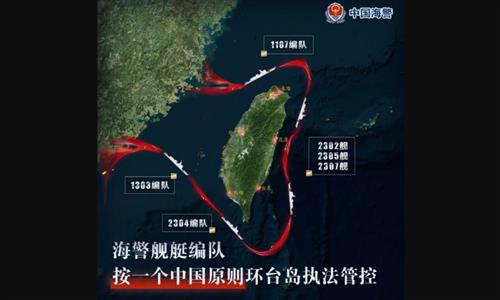
Since June this year, China Coast Guard (CCG) vessels have conducted regular law-enforcement patrols in waters east of Taiwan island, with the aim of exercising jurisdiction in accordance with the law and safeguarding China's territorial sovereignty and maritime rights and interests. The patrol came in response to Japan-Philippines' unilateral announcement of so-called "maritime delimitation negotiations" concerning waters east of Taiwan island in May, according to CCG's statement.
Previously, the PLA Eastern Theater Command conducted joint exercises codenamed "Justice Mission 2025" in the Taiwan Straits and in waters to the north, southwest, southeast, and east of the island.
For a long time, secessionists have clung to the illusion that the waters east of Taiwan island serve as a "security buffer zone," from which outside forces could intervene in the Taiwan Straits from this direction, said Wang.
"However, the China-Indonesia naval drill in the waters east of Taiwan island further shatters secessionists' illusions," Wang said. "It demonstrates China's firm stance in safeguarding national sovereignty and territorial integrity, and constitutes a stern warning to secessionists and external forces."
According to the expert, the reaction of the DPP authorities also lays bare the deep‑seated fear harbored by secessionists.
"They are acutely mindful of the real possibility that the Chinese mainland may impose maritime containment around Taiwan island when necessary… Confronted with this scenario, the DPP authorities resort to nothing but loud rhetoric and empty posturing, which fully exposes the true nature of Taiwan secessionists: feigning ferocity while being fundamentally feeble and helpless," Wang said.
RELATED ARTICLES