China extends anti-dumping measures on single-mode optical fibers from India for another 5 years
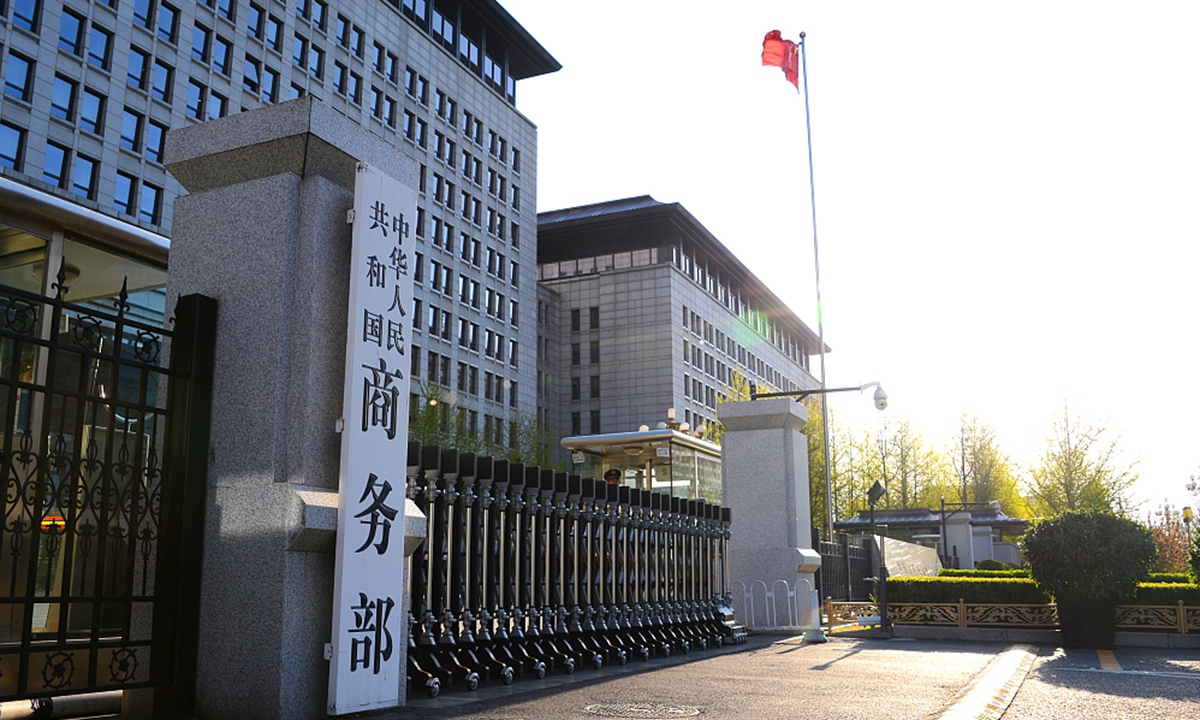
Ministry of Commerce
China will continue to levy anti-dumping duties on imports of single-mode optical fibers from India for another five years, China's Ministry of Commerce (MOFCOM) said on Thursday.
The extension will take effect on Friday, the MOFCOM said in a statement, adding that the decision was made following an expiry review launched at the request of the domestic industry in August last year.
According to the statement, operators importing single-mode optical fiber originating in India shall pay the corresponding anti-dumping duties to the Chinese customs, with the tariff rates ranging from 7.4 percent to 30.6 percent.
The ministry has ruled that if the anti-dumping measures are terminated, the dumping of single-mode optical fiber originating in India and imported into China would likely continue or recur, and the injury caused to China's single-mode optical fiber industry would likely continue or recur.
China started to impose anti-dumping duties on imported single-mode optical fibers from India in August 2014, featuring tariff rates ranging from 7.4 percent to 30.6 percent. The duties were reviewed and extended for five years in 2020.
Single-mode optical fiber is the core medium for high-speed and long-distance telecommunications, widely used in long-haul trunk lines, metropolitan area networks, and cable TV systems.
"The MOFCOM's ruling against single-mode optical fibers from India, reached through a series of thorough and evidence-based investigations, is a normal market-oriented practice that fully complies with WTO rules," Qian Feng, director of the Research Department at Tsinghua University's National Strategy Institute, told the Global Times on Thursday.
The overall demand for single-mode optical fibers in India is on a downward trend and remains far below its production capacity and output, indicating a marked shortfall in domestic absorption. More than 60 percent of India's annual production capacity of single-mode optical fibers must be channeled to international markets each year, according to the MOFCOM document.
China is the world's largest single-mode optical fiber market, accounting for an average share of more than 50 percent of global demand between 2021 and 2025. Should the anti-dumping measures be terminated, Indian producers could divert exports originally destined for other markets to China, according to the document.
In line with China's regulation on anti-dumping, this measure is necessary to prevent low-priced Indian single-mode optical fibers from flooding in, which would disrupt the normal market order in China, while averting serious damage to the incentive of domestic enterprises to upgrade their technology, Ma Jihua, a veteran industry analyst, told the Global Times on Thursday.
This move also reflects a responsible attitude toward safeguarding the long-term stability and high-quality development of the global optical communications supply chain, Ma said.
China's investigation was conducted in a transparent manner, with the views of all interested parties fully taken into account. The MOFCOM said on July 9 that the investigation authority shared with all interested parties the key facts on which the ruling was based and invited their comments. No submissions were received by the deadline.
"Some friction in individual sectors will not alter the underlying logic of the increasingly warming China-India economic and trade relationship. The two economies are naturally complementary, and this complementarity constitutes a fundamental convergence of interests," Qian said.
"Looking ahead, so long as each side respects the other's core industrial concerns, bilateral economic cooperation can continue to advance steadily and send a clear, predictable signal of positive momentum," he said.
RELATED ARTICLES