J-10C fighter jet takes on latest overseas deployment as China-Thailand joint air force exercise officially begins
By and Liang Rui Published: Aug 13, 2026 09:42 PM

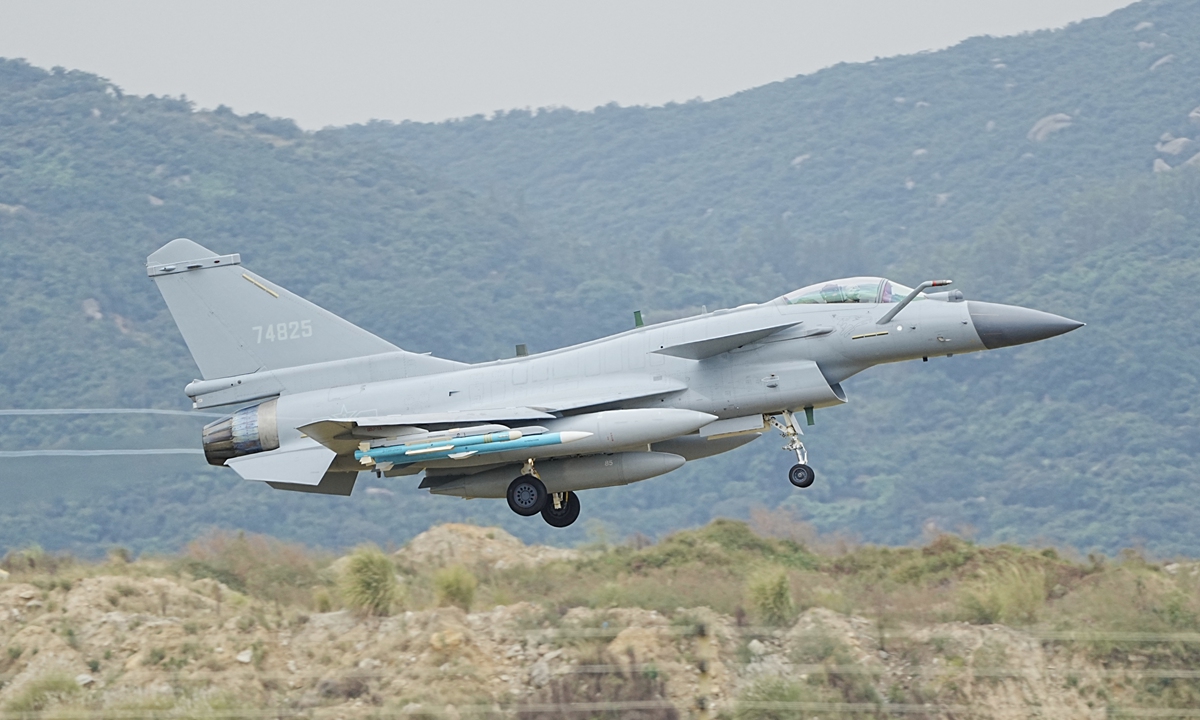
A J-10C fighter jet Photo: VCG
China has deployed multiple types of aircraft, including fighter jets, fighter-bombers, early-warning aircraft and aerial refueling tankers, as well as ground-based air defense equipment, for the joint air force exercise "Falcon Strike-2026" in Thailand, the state broadcaster China Central Television (CCTV) reported on Thursday.An expert highlighted the involvement of China's J-10C fighter jet, saying it again demonstrates the aircraft's maturity and combat capability.
The two sides will conduct training in a range of areas, including force deployment, joint air defense and humanitarian medical rescue, according to the report.
China's Y-20 transport aircraft, J-10C fighter jet and J-10S fighter-trainer, and JAS 39 Gripen fighter jet and Alpha Jet light attack/trainer aircraft from Thailand participate in a drill in a video posted by CCTV.
In terms of aircraft configuration, the J-10C is one of the PLA Air Force's main combat assets.
Its deployment overseas once again demonstrates its mature and reliable combat capability, Wang Yanan, editor-in-chief of Aerospace Knowledge magazine, told the Global Times on Thursday.
The Y-20 undertakes large-scale transport missions, ensuring the long-range delivery of air defense equipment, aviation materials and other technical support needed for the exercise.
The combination of fighter jets, early warning aircraft, tankers and large transport aircraft forms a complete small-scale overseas deployment and combat validation system, the expert said.
In terms of exercise subjects, joint air defense holds practical significance in the current international context, as low-altitude or medium-to-high-altitude, low-speed or high-speed targets pose significant threats to cities and specific protected assets, Wang said.
Through the joint air defense drills, China and Thailand can further coordinate task allocation and target identification, as well as strengthen coordination between different participating forces.
Humanitarian relief is a routine subject in which the Chinese military has long participated and accumulated considerable experience.
This joint exercise not only tests long-range delivery and deployment capabilities but also reflects the practical defense cooperation between the two countries, Wang added.
In July, Jiang Bin, a spokesperson for the Ministry of National Defense, said China will send multiple types of aircraft and units to the exercise, including ground-based air defense forces to the joint air exercise, per the Xinhua News Agency.
The two sides will carry out air defense, humanitarian assistance and disaster relief exercises, Jiang added.
It is the ninth training event of its kind between the two air forces and is aimed at further deepening traditional friendship and practical cooperation between China and Thailand, he said.
More broadly, Wang said, recent joint exercises between the PLA Air Force and foreign militaries have yielded multiple benefits, primarily on two levels.
"First, they lay the groundwork for potential future joint operations. Second, joint exercises themselves contribute to regional stability," he said.
"When friendly countries in the region reach consensus on security issues and conduct regular military cooperation, it has a stabilizing effect on regional security."
This exercise marks the fifth consecutive year that China and Thailand hold the "Falcon Strike" series joint air force training in Thailand.
RELATED ARTICLES