China, Australia renew bilateral currency swap agreement for fourth time, expanding to $32.7 billion
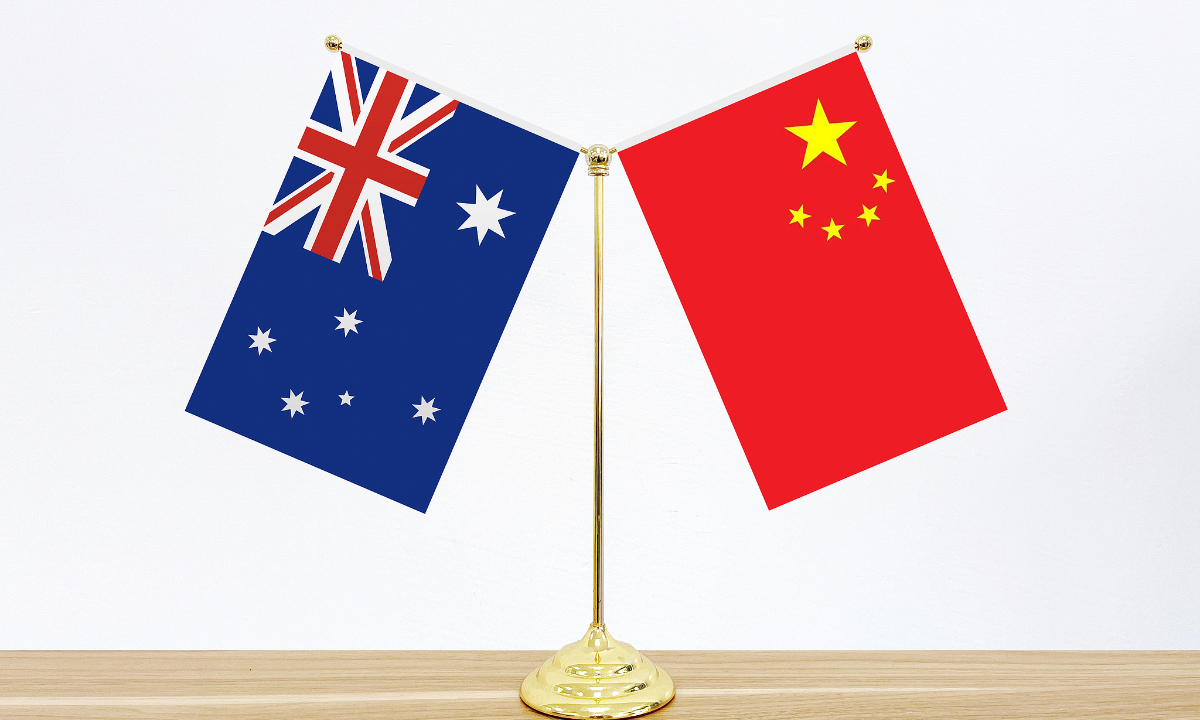
China Australia photo: VCG
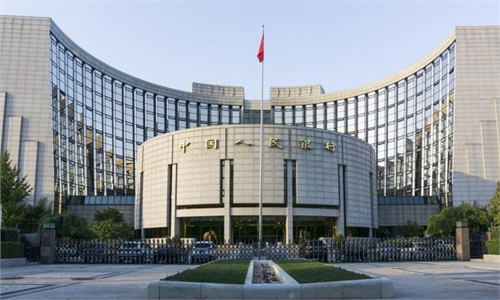
China and Australia have renewed their bilateral local currency swap agreement, expanding it to 220 billion yuan ($32.7 billion)/A$46 billion for five years, the People's Bank of China (PBC) announced on Wednesday. This marks the fourth renewal of the agreement since it was first signed in 2012.
With the approval of the State Council, the PBC and the Reserve Bank of Australia recently extended the pact. The swap size has been increased from 200 billion yuan/A$41 billion to 220 billion yuan/A$46 billion. The agreement is valid for five years and can be extended by mutual consent, the PBC said.
The renewal and expansion of the arrangement will further deepen monetary and financial cooperation between the two countries, facilitate bilateral trade and investment, and help maintain financial-market stability, China's central bank said.
In a previous statement, Australia's central bank said that "the main purposes of the (local currency swap) agreement are to support trade and investment between Australia and China, particularly in local-currency terms, and to strengthen bilateral financial cooperation."
"The Chinese and Australian economies are highly complementary. China is the largest importer of Australia's commodities, including iron ore, coal and natural gas, and Australia has long maintained a trade surplus with China. Such massive trade volumes have historically relied on the US dollar as an intermediary currency. The local currency swap agreement can facilitate bilateral trade," Hu Qimu, a professor at the Maritime Silk Road Institute of Huaqiao University, told the Global Times on Wednesday.
In 2011, China's imports from Australia totaled $82.5 billion, rising to $130.25 billion last year, customs data showed.
For import and export companies, this means they can settle transactions directly in yuan or Australian dollars, completely avoiding the exchange-rate risks and conversion costs associated with US dollar fluctuations, said Hu.
The core function of a local currency swap mechanism is to allow the two central banks to exchange each other's currencies when needed, thereby providing liquidity in the partner's currency to their domestic commercial banks.
"Moreover, the China-Australia agreement has lasted 14 years and been renewed four times. It has evolved beyond a simple crisis response tool into an institutional framework for monetary and financial cooperation.
"In recent years, China-Australia relations have experienced ups and downs, from trade disputes to diplomatic frictions. Throughout this period, the bilateral local currency swap agreement has remained in place, demonstrating that economic rationality can transcend political cycles," said Hu.
The China-Australia currency swap agreement was the first of its kind signed by China with a major developed country, according to the Xinhua News Agency.
As of the end of 2025, China's central bank had signed bilateral local currency swap agreements with the central banks or monetary authorities of 32 countries and regions. The outstanding balance of yuan drawn by overseas central banks or monetary authorities stood at 94.2 billion yuan, according to statistics from the PBC.
Global Times
RELATED ARTICLES