ARTS / CULTURE & LEISURE
F1 investigates Chinese boy group's concert logo over alleged trademark infringement
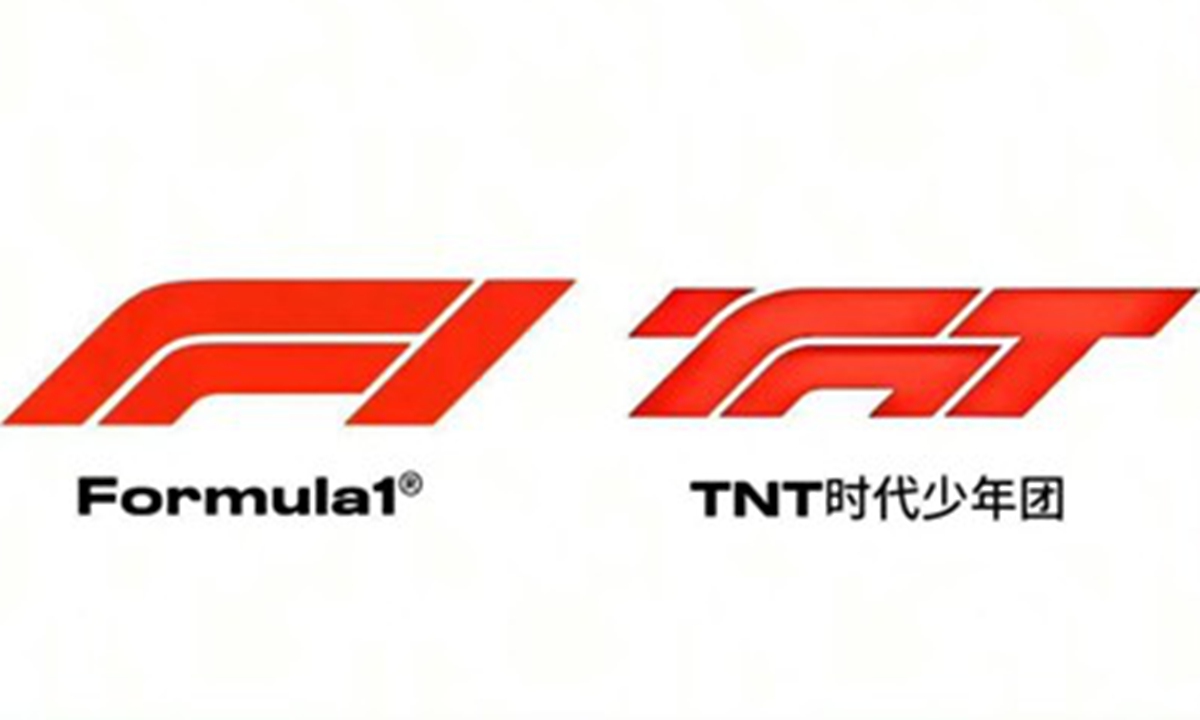
A screenshot circulating on Chinese social media compares the Formula One (F1) logo (left) with the logo used for the Teens in Times concert tour
Formula 1 (F1) has referred information about the logo used for a concert tour by Chinese boy group Teens in Times (TNT) to the appropriate team for review and investigation, after motorsport fans said that the design closely resembles F1's trademark, multiple Chinese media outlets reported.
According to Beijing Youth Entertainment, F1 said in a formal response that "the information provided had been referred to the appropriate team and was currently under review and investigation."
Time Fengjun, a Beijing-based talent agency that manages popular idol groups including TNT, has meanwhile blurred the logo in its official concert videos, according to a report by Beijing Youth Entertainment.
Time Fengjun designed the promotional logo for TNT's racing-themed concert in May. Some motorsport fans said that the logo's red, three-part slanted design with a concave curve in the middle closely resembles the outline of F1's current trademark, which was introduced in 2017, with the original "F1" lettering replaced by "TNT."
The concert's stage screens, official footage and merchandise also feature elements resembling F1's visual style, which were used in ticket sales, performances and other commercial promotions, according to reports. No authorization from F1 has been reported.
Motorsport fans had reportedly raised concerns with Times Fengjun through official communication channels as early as July, but the company did not initially take action, Beijing Youth Entertainment reported.
Li Yunkai, an intellectual property lawyer at Beijing-based Beijing Tianyuan Law Firm, cautioned that F1's response does not mean that trademark infringement has been established already.
From a Trademark Law perspective, it would be premature to conclude that TNT has infringed F1's trademark based solely on the two images circulating online. More accurately, if the logo was indeed used without authorization from F1 and was used as a source-identifying mark in connection with the concert and its commercial promotion, there could be a relatively high risk of trademark infringement, he said.
F1's rights holder has registered relevant figurative trademarks in China, including No. 76729750 in Class 41, covering entertainment and performance-related services, according to Li. The case would be assessed based on factors including the similarity of the marks and services and the likelihood of consumer confusion, in line with China's trademark infringement standards.
The two logos are not identical but share similarities in their overall shape, slant, lines and visual style. The concert's broader racing-themed imagery could also be relevant in assessing whether consumers might believe there was an affiliation, sponsorship or authorization by F1, said the lawyer.
If the concert also used F1-associated elements such as "RACETRACK," racing and track imagery, or checkered flags, those elements could be relevant to assessing the likelihood of consumer confusion and the intent behind the use. Courts would consider the broader context in which the logo was used, rather than comparing the two logos as isolated graphic designs, including whether consumers might believe the concert had an authorization, partnership or sponsorship relationship with F1.
"A final determination would depend on the specific F1 trademark at issue, the scope of services covered by the registration, how the logo was actually used and the evidence presented by both sides," Li told the Global Times.
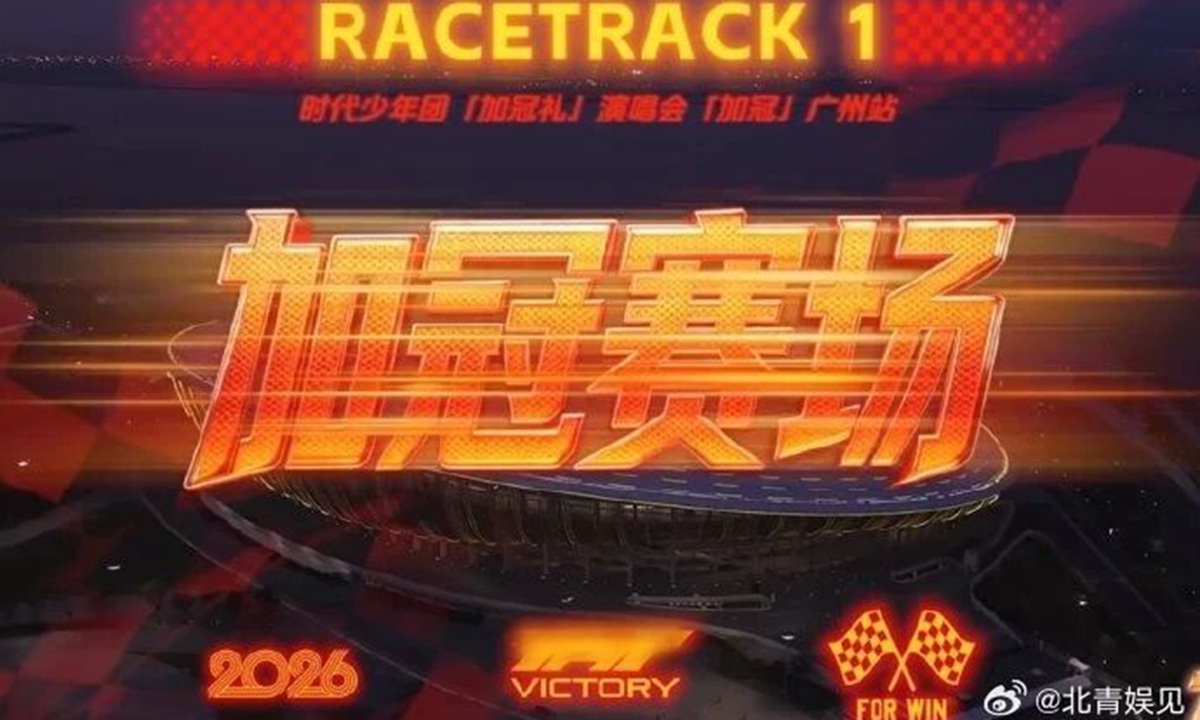
Photo: Screenshot from website
Yang Xun, an intellectual property lawyer and partner at Shanghai-based Llinks Law Office who specializes in intellectual property, told the Global Times that copyright and trademark claims should be analyzed separately.
He said a copyright claim focuses on whether a later work copied the original work's creative expression, rather than merely borrowing ideas or concepts. Proving both originality and copying of those original elements "remains an uphill battle," he noted.
Trademark analysis, by contrast, depends on factors including the similarity of the marks, the goods or services involved, and the reputation of the trademarks, Yang said.
"F1 is a sports event brand, while Times Fengjun falls within the performance industry; the two do not necessarily fall within identical industries, so infringement cannot be readily determined," Yang said. "However, the greater reputation a trademark bears, the greater scope of protection it receives."
Yang added that beyond trademark infringement, unfair competition should also be considered if the overall visual presentation closely imitates F1.
"Even if consumers know that the two parties have no cooperative relationship, the overall visual impression naturally brings F1 to mind, which is tantamount to borrowing F1's established commercial goodwill to endorse one's own event," he said.
RELATED ARTICLES