South Korea, India eye Arctic route after China’s regular service launch
Asian economies seek more resilient shipping lanes amid rising uncertainty
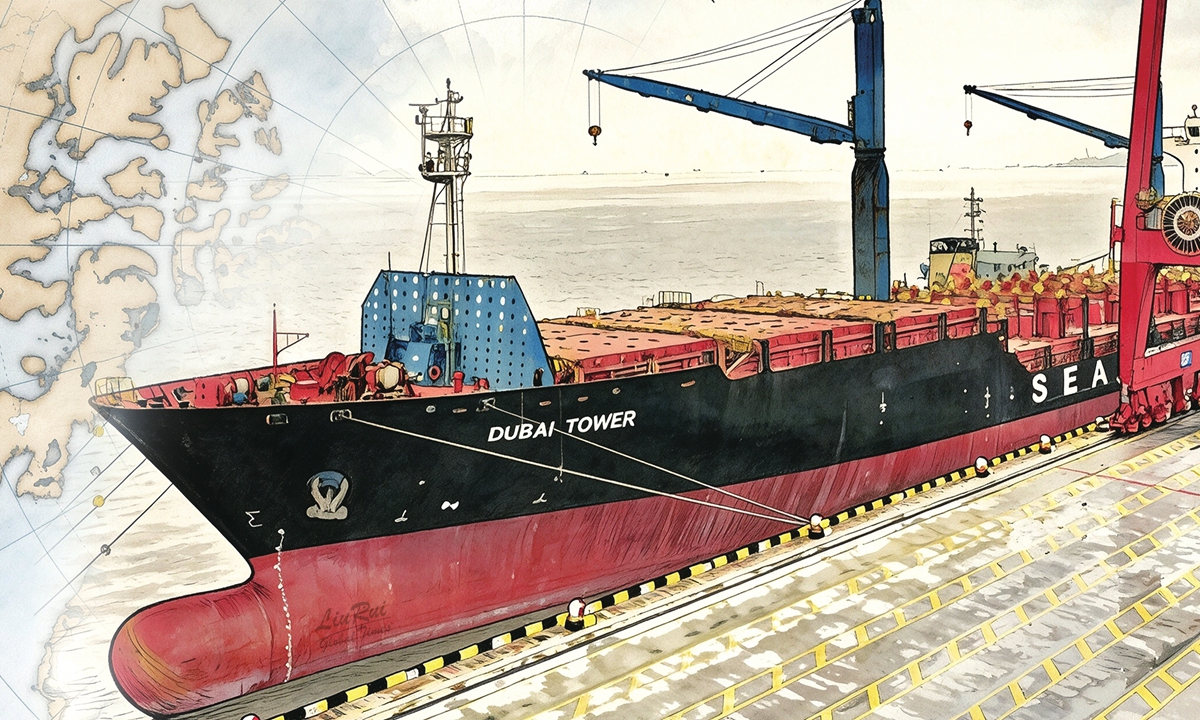
The China-Europe Arctic container express route enters regular weekly operations during the summer season in 2026. Illustration: Liu Rui/GT
South Korea's first container ship trial voyage through the Arctic, together with reports that India plans to send its first pilot vessel along the same route next year, adds to mounting signs that major Asian trading economies are shifting from watching Arctic shipping to testing its commercial potential.
China has progressed from a trial voyage last year to weekly regular service on the China-Europe Arctic Express this summer, a shift that analysts say underscores how the Northern Sea Route is being tested not just as an alternative, but as a potentially viable commercial link between Asia and Europe, analysts said.
The PanStar Acro, a 2,758 20-foot equivalent unit (TEU) ice-class container ship operated by Busan-based PanStar Line, departed Busan for Europe on Saturday evening, the Yonhap News Agency reported, citing South Korea's Ministry of Oceans and Fisheries. The voyage marks the first Arctic trial by a South Korean container ship and the first South Korean vessel to use the route since 2016.
The vessel is carrying 837 TEUs of cargo, including chemical products, used cars and auto parts. It is expected to sail about 6,400 kilometers through Arctic waters before calling at major European ports, including Felixstowe in the UK, Rotterdam in the Netherlands and Gdansk in Poland, with the round trip taking about 45 days.
The voyage is intended to test the route's commercial viability and build operational experience. Reuters reported that the South Korean government has made Arctic shipping a policy priority, with Seoul hoping to develop it into a more regular trade route by 2030 and strengthen Busan's role as a global maritime hub.
South Korea, as a major manufacturing and shipping economy, has a practical incentive to seek more diversified transport links, Song Ding, a research fellow at the China Development Institute, told the Global Times on Sunday.
"The trial voyage shows that South Korea is looking for an additional maritime option for its trade and energy needs amid rising risks to traditional shipping routes," Song said, adding that the move also reflects growing interest in Arctic shipping among major Asian economies.
The commercial appeal of the Arctic route comes with a practical constraint: Much of it runs along Russia's Arctic coast, making coordination with Moscow difficult to avoid. "The route's long-term operation will also depend on cooperation with Russia over port access, refueling, supplies and other services along the route," Song added.
South Korea's Oceans Ministry said recently that "consultations with key relevant countries and agencies" have been completed to "implement administrative procedures necessary" for the voyage, AFP reported on Saturday.
At the same time, China is moving to test the route through more regular operations.
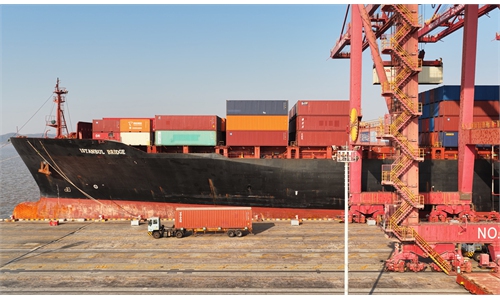
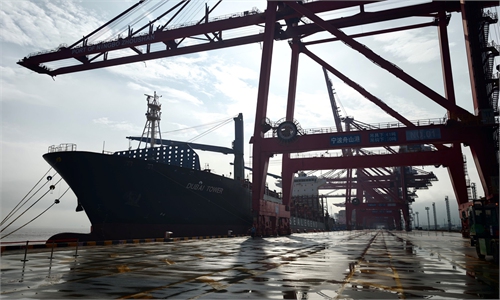
Chinese container shipping company Sea Legend Shipping's vessel Dubai Tower departed Ningbo-Zhoushan Port in East China's Zhejiang Province on August 15, launching weekly China-Europe Arctic route services for the 2026 summer navigation season. The service includes eight fixed weekly sailings through October 3, with target transit times of about 20 to 22 days.
Unlike earlier Arctic container voyages that were mostly one-off sailings, the new service features fixed departure dates, dedicated vessels and scheduled transit times, providing a stronger test of the route's commercial viability.
Song said that China has gained more experiences in operating Arctic container services, while South Korea's latest voyage is an important step in assessing the route's commercial potential.
As Arctic shipping develops, challenges will go beyond completing individual voyages, with ice-capable vessels, refueling and resupply facilities, and reliable port services becoming increasingly important, Song noted. "China's experience in shipbuilding, port operations and maritime logistics gives it advantages in developing Arctic shipping capacity," he said.
India could become the next major Asian economy to test the route. The South China Morning Post reported on Saturday that India plans to send its first pilot vessel along the Northern Sea Route in 2027. S. Venkatesapathy, a joint secretary in India's shipping ministry, told the Arctic-Regions Forum in Arkhangelsk, Russia on August 13 that India saw "huge possibilities" in the route.
Rising geopolitical tensions and security risks around key shipping passages are prompting governments and businesses to explore alternative routes, according to Song.
"While land corridors and multimodal transport can enhance supply-chain resilience, maritime shipping remains the most cost-effective option for much of global trade, making additional sea routes increasingly valuable amid greater uncertainty," he added.
For some Asia-Europe journeys, the Arctic route can cut about 7,000 kilometers and about 10 days compared with the Suez Canal route, the Gulf Times reported, citing the Korea Institute for International Economic Policy.
Meanwhile, the Northern Sea Route still faces substantial constraints, including seasonal ice, specialized vessel requirements, rescue capacity, infrastructure and geopolitical risks.
But Song said that the route is of significant long-term commercial value as countries seek additional maritime options. Provided navigation conditions, supporting infrastructure and cooperation with countries along the route remain stable, Arctic shipping could take on a larger role in Asia-Europe trade.
RELATED ARTICLES