China vows to do 'what is necessary' to safeguard rights after Bessent threatens secondary sanctions on Iran's trading partners
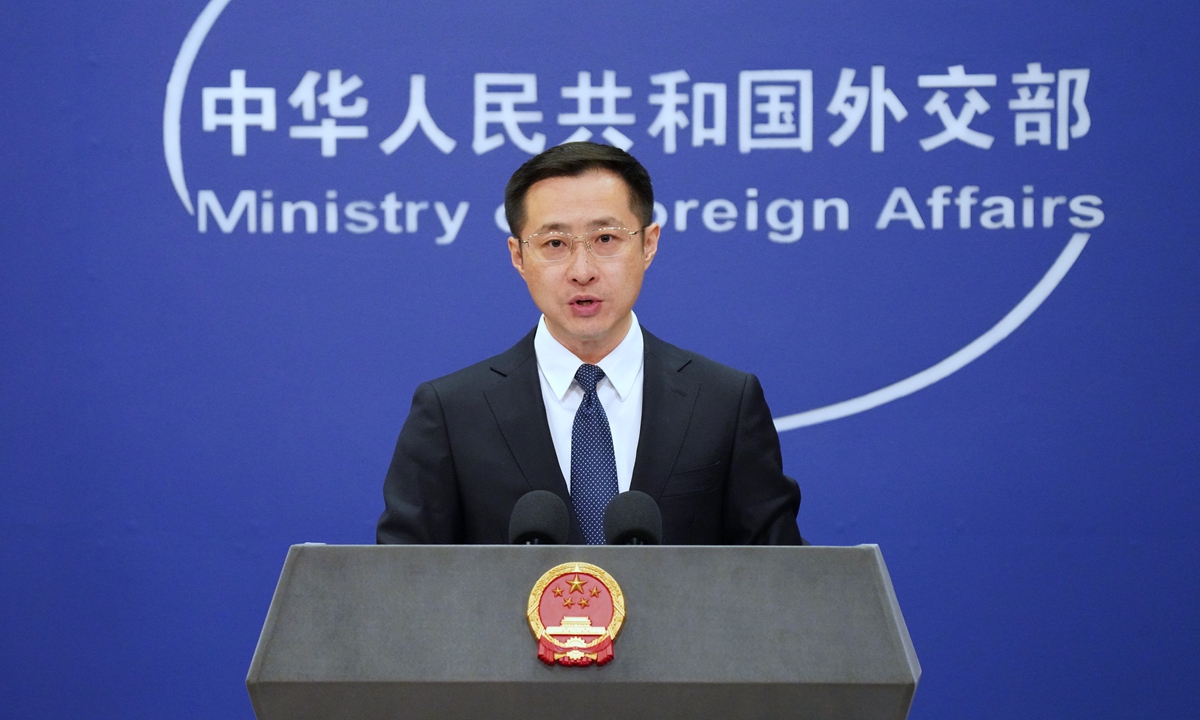
Chinese Foreign Ministry spokesperson Lin Jian
China will closely watch relevant developments and do what is necessary to protect our legitimate rights and interests, Lin Jian, spokesperson from China's Foreign Ministry, told a press conference on Monday, noting that sanctions and pressure tactics do no help in resolving issues. They will only lead to escalation that serves no one's interest.
Lin made the remarks in reply to a question on how China would respond if the US were to impose secondary sanctions tomorrow, as US Treasury Secretary Scott Bessent has threatened secondary sanctions against countries that trade or deal with Iran, and China has historically been a major buyer of Iranian oil.
China calls on parties to act rationally and with restraint, and avoid taking any measure that may further escalate tensions or deal a blow to global economic growth and financial stability. They need to return to the right track of political settlement through dialogue and negotiation at an early date, Lin said during the press conference.
Bessent has said to reveal severe measures on Iran when he gives a press conference at 1 pm EDT on Monday, Reuters reported. On Sunday, Bessent wrote in an opinion piece published in the Financial Times that "At dawn begins an economic D-Day - the single greatest financial offensive ever marshalled against an adversary."
Without detailing specific measures, Bessent signaled the US would target nations that engaged with Iran's economy and financial system. "They would do well to consider the consequences of sustaining it," he wrote in the Financial Times, according to the report.
"The US has few effective options left on the Iran issue and can only resort to stigmatizing normal trade between other countries — including China — and Iran, using the threat of secondary sanctions in an attempt to turn military strikes into blackmail and extortion against countries associated with Iran," Zhu Yongbiao, director of the Center for Afghanistan Studies at Lanzhou University, told the Global Times on Monday.
Zhu said that the US military offensive has failed to achieve the expected results, and Washington is unwilling to continue bearing the high costs and unpredictable consequences of large-scale ground military operations. The US side views economic sanctions and secondary sanctions as currently available tools that are effective in the short term, and it can shift some of the pressure onto third countries.
Bessent's opinion piece came after he claimed the US was to impose the "toughest" ever sanctions on Iran, urging China to cooperate, Reuters reported on August 20.
Zhu said that Washington is trying to drag Beijing into the issue. However, China has consistently promoted talks and peace in the US-Iran conflict, advocating the resolution of issues through political dialogue rather than the use of force or sanctions. "It also firmly safeguards its own rights to economic development and opposes any country disrupting the normal trade order," Zhu noted.
Mohsen Rezaei, secretary of Iran's Supreme National Security Council, on Sunday suggested economic retaliation. "If the economic war continues, not a single drop of oil will be exported, neither through the Strait of Hormuz nor from anywhere in the Persian Gulf," Rezaei wrote in a social media post, according to Reuters.
Fewer than 20 commodity vessels transited the Strait of Hormuz at the weekend, shipping data showed on Monday, as Iranian and US blockades restrict traffic through the chokepoint for energy shipments, according to Reuters.
RELATED ARTICLES