Vietnam approves additional $3.36b for China-linked railway, highlighting closer economic ties, connectivity: expert
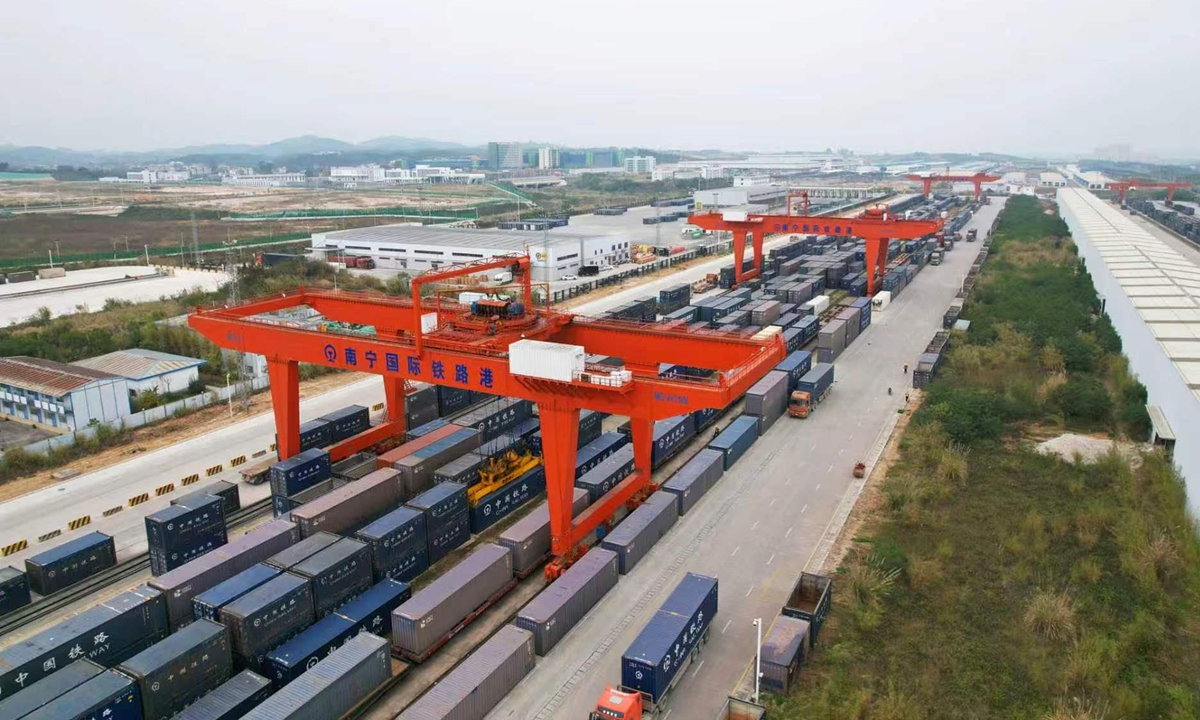
Nanning International Railway Port in South China's Guangxi Zhuang Autonomous Region Photo: CCTV News
Vietnam's National Assembly on Monday approved a resolution adjusting the investment policy for the Lao Cai-Hanoi-Hai Phong railway, raising the planned investment by more than 86 trillion Vietnamese dong (about $3.36 billion), the Xinhua News Agency reported, citing local media reports.
A Chinese expert said that the move underscores the prospects for closer economic and trade ties between China and Vietnam and other Southeast Asian countries as regional connectivity expands.
The 363-kilometer main line, plus 63 kilometers of branch lines, will run from the northern province of Lao Cai bordering China through the capital city of Hanoi to the northern port city of Hai Phong, with a design speed of up to 160 kilometers per hour, Xinhua reported.
The preliminary total investment for the 1,435-millimeter standard-gauge railway is estimated at more than 289.3 trillion Vietnamese dong, with the additional funding mainly covering construction and equipment, compensation and resettlement, as well as other project-related costs, according to the report.
According to a government report, about 148.48 trillion Vietnamese dong has been allocated so far. The government aims to complete the railway by 2030, Xinhua reported.
The railway will connect Hekou in Southwest China's Yunnan Province with Lao Cai in Vietnam and extend to Hai Phong Port, Peng Bo, a research fellow at the Chinese Academy of International Trade and Economic Cooperation under the Ministry of Commerce, told the Global Times on Monday.
Peng noted that the project will help strengthen Yunnan's strategic role in connecting Southeast Asia and South Asia, boost Yunnan's economic development and further open up Southwest China, while also contributing to the development of a major opening-up corridor in the region.
Notably, the new railway will use the 1,435-millimeter standard gauge, facilitating direct connections with China's railway network and reducing transportation costs, Peng said, adding that the standardized gauge is important as it saves both time and costs for goods delivery.
Trade between China and Vietnam has grown despite a complex global environment. In the first seven months of the year, bilateral trade reached $215.18 billion, up 33.7 percent year-on-year, according to data from China's General Administration of Customs. Both imports and exports recorded double-digit growth.
Vietnam's adoption of the standard gauge reflects closer China-Vietnam ties and greater connectivity between the two countries, the Chinese expert said, noting that "for Vietnam, the railway will strengthen its economic and trade ties with China and enhance its role as a regional trade and transportation hub."
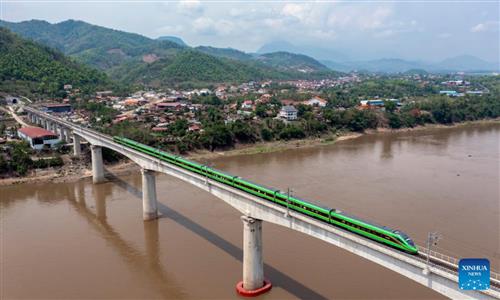
With the China-Laos Railway already in operation, the China-Thailand Railway continuing to advance, and China-Vietnam railway cooperation progressing, railway connectivity between China and Southeast Asia is expanding, providing additional transport links for regional trade and logistics.
In addition to cargo trade, increased transport connectivity could facilitate people-to-people exchanges and economic interactions between China and neighboring countries, with further connectivity expected to create more opportunities for mutually beneficial cooperation, Peng said.
RELATED ARTICLES