US’ cancellation of marine drills with South Korea highlights declining US security commitment to allies: expert
By Published: Aug 25, 2026 11:45 AM

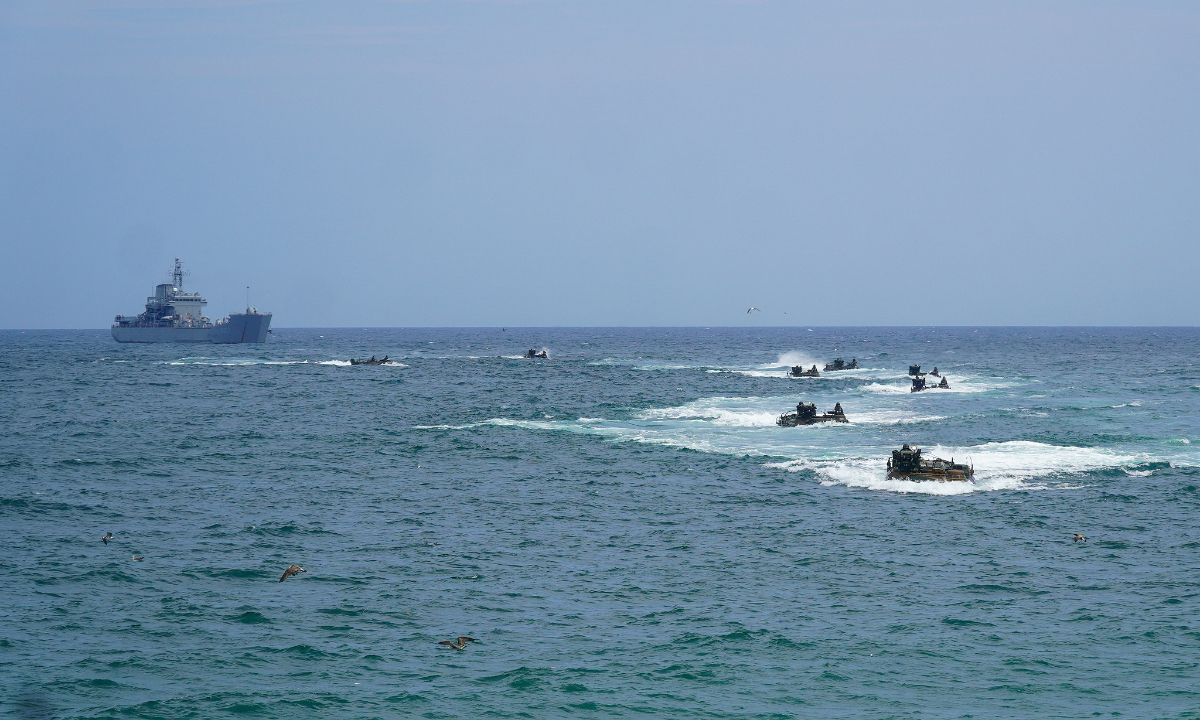
The Ssangyong major amphibious assault drills held by the South Korean and the US Navy and Marine Corps in September, 2024. Photo: VCG
After scaling down the annual Ulchi Freedom Shield exercises with South Korea, the US has reportedly canceled a large-scale joint amphibious landing exercise with South Korean forces scheduled for September, with Seoul citing resource constraints linked to the US-Israeli war in Iran.
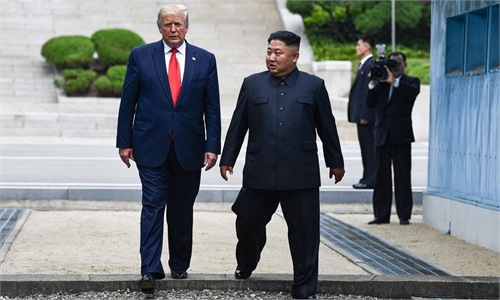
Beyond the Iran war-related force constraints, Chinese experts said the cancellation could also be aimed at supporting US President Donald Trump's intention to resume direct diplomacy with North Korea. The move, nonetheless, highlights declining US security commitment to its allies, a military expert noted.
"The US Marine Corps formally notified our forces in June that its ability to deploy forces during this year's Ssangyong exercise would be constrained due to the situation in the Middle East," a spokesperson for the South Korean marine corps told reporters, according to Reuters.
Ssangyong exercise, or "Twin Dragons," is a biennial exercise that involves US and South Korean marines rehearsing amphibious landings with the use of warships, aircraft and ground forces. It has taken place for decades and involves more than 10,000 marines from both countries, according to media reports.
While Ssangyong was previously shelved during Trump's first term — when he dismissed major exercises as "provocative" and too expensive amid his personal diplomacy with the North Korean leader — it was revived in 2023, according to the New York Times.
This cancellation follows Trump's surprise announcement last week to cut back a separate joint military drill with South Korea known as Ulchi Freedom Shield. The exercise, which began August 17 and ended Friday, was slashed from 11 days to five over what Trump claimed was a desire to resume diplomatic talks with North Korea and Seoul's refusal to help the US in the Iran war.
The main reason for canceling Ssangyong may not be the war in Iran, but rather Trump's intention to send a goodwill signal to Pyongyang and pave the way for the resumption of direct diplomacy, Chinese military affairs expert Song Zhongping told the Global Times.
However, Song noted that it remains to be seen whether such a move would elicit a similar gesture of goodwill from North Korea, saying that Pyongyang would expect sincere and substantive steps from the US on issues concerning its core interests rather than gestures.
Kim Yo Jong, department director of the Central Committee of the Workers' Party of North Korea, said on August 19 that "as for the reduction of the US-ROK joint military drill abruptly announced by the US president a few days ago, we regard it as the one unworthy of comment and have no interest in it at all. The reduction of the scale and duration of the drill does not mean the change of the nature of the military drill with a provocative and offensive feature," according to the official Korean Central News Agency.
Asked about the "substantially reduced" joint military exercises between the US and South Korea and whether China supports renewed dialogue between the US and the DPRK at a regular press briefing on August 17, Lin Jian, a spokesperson for the Chinese Foreign Ministry, said that "we noticed relevant reports. A peaceful and stable Peninsula and a political settlement of the Korean Peninsula issue are in the interest of all parties."
Meanwhile, the US' approach could further strain Washington's relations with its allies. One trend is becoming increasingly clear: the era in which the US was willing to shoulder a substantial share of the security burden for its allies is fading; on that broader shift, US Republicans and Democrats have increasingly moved in the same direction, Song noted.
RELATED ARTICLES