Chinese automaker XPeng’s robotics business raises $900 mln in first funding round
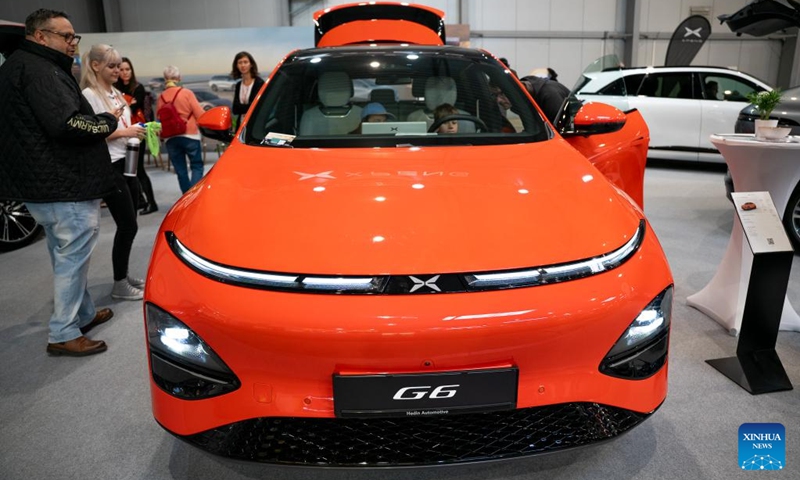
People visit the exhibition area of Xpeng at the 7th e-SALON in Prague, the Czech Republic, Nov. 14, 2025. The e-SALON, a trade fair for passenger and commercial vehicles with alternative propulsion, opened to public on Friday and will last until Sunday. Photo: Xinhua
Chinese automaker XPeng announced on Monday that its humanoid robotics business has signed equity financing agreements with investors, raising more than $900 million in its first funding round at a total company valuation of $6.3 billion.
The company said the funding marks the largest single-round private financing and the highest valuation ever recorded in China's embodied artificial intelligence (AI) sector, setting a new industry benchmark, the Global Times learned.
The round was initiated by top global investors, led by IDG Capital, with participation from Gaorong Ventures and strategic backing from Tencent and Alibaba.
According to XPeng, the raised capital will be used to accelerate research and development in robotics hardware and software, physical AI model training and iteration, high-quality data collection, construction of a full-chain mass production base, and global commercial expansion.
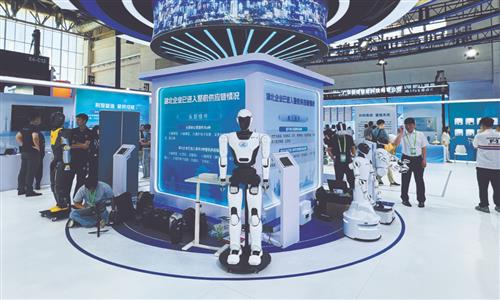
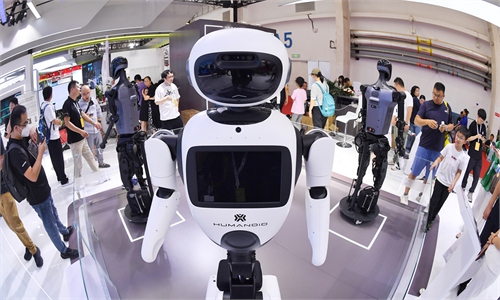
XPeng also said its humanoid robot program, IRON, is scheduled to enter mass production by the end of 2026. The company plans to begin deployment in commercial settings such as XPeng's stores and campuses before officially launching and delivering the robots to both Chinese and overseas markets in 2027.
The financing announcement came alongside XPeng's second-quarter earnings report, which showed total revenue of 19.74 billion yuan, up 51.5 percent quarter-on-quarter and 8.0 percent year-on-year.
During the earnings call, He Xiaopeng, chairman and CEO of XPeng, said that developing humanoid robots requires integrated innovation across design, hardware and chips, software and AI, data and management, as well as quality control and manufacturing. He noted that the price of a single high-end general-purpose robot will be significantly higher than the current average selling price of a vehicle in the automotive business.
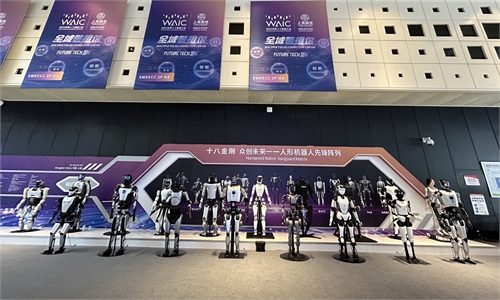
The move comes as automakers in China increasingly enter the humanoid robotics sector. Industry observers said that with automakers bringing supply-chain resources and engineering expertise into the field, the transition of humanoid robots from prototypes to mass production could be accelerate, while domestic substitution in core components may also speed up.
According to incomplete statistics, nearly 20 major global automakers have now entered the humanoid robotics race through self-developed projects, investment, or partnerships, the People's Daily reported.
In China, major automakers, including XPeng, Chery, Xiaomi, and SAIC, have all launched their own robotics initiatives or invested in related technologies and products. Analysts noted that carmakers have an advantage in applying automotive engineering capabilities to robotics, and factory settings also provide a practical environment for testing and validation, helping reduce development costs and speed up commercialization, according to Xinhua News Agency.
Meanwhile, companies across the automotive supply chain are also expanding into robotics. Joyson Electronics recently unveiled a range of robotics-related products and solutions, including dexterous hands, a third-generation AI head module, embodied intelligence brain systems, electronic skin, and hybrid solid-liquid batteries, the Securities Times reported on Monday.
German management consultancy Roland Berger projected that humanoid robot manufacturers could generate revenues of $300 billion by 2035 and in more optimistic scenarios, up to $750 billion. In the long term, the market could reach $4 trillion. The researchers believe it could therefore achieve a market size comparable to the automotive industry.
According to the Securities Times report, for industry participants, humanoid robotics is not just a new product category, but a platform market that could reshape the division of labor across electromechanical systems, auto parts, semiconductors, industrial software, systems integration, and manufacturing services.
RELATED ARTICLES