Equality principle sets SCO, BRI apart from traditional Western multilateral organizations: Russian scholar
By Published: Aug 25, 2026 09:40 PM
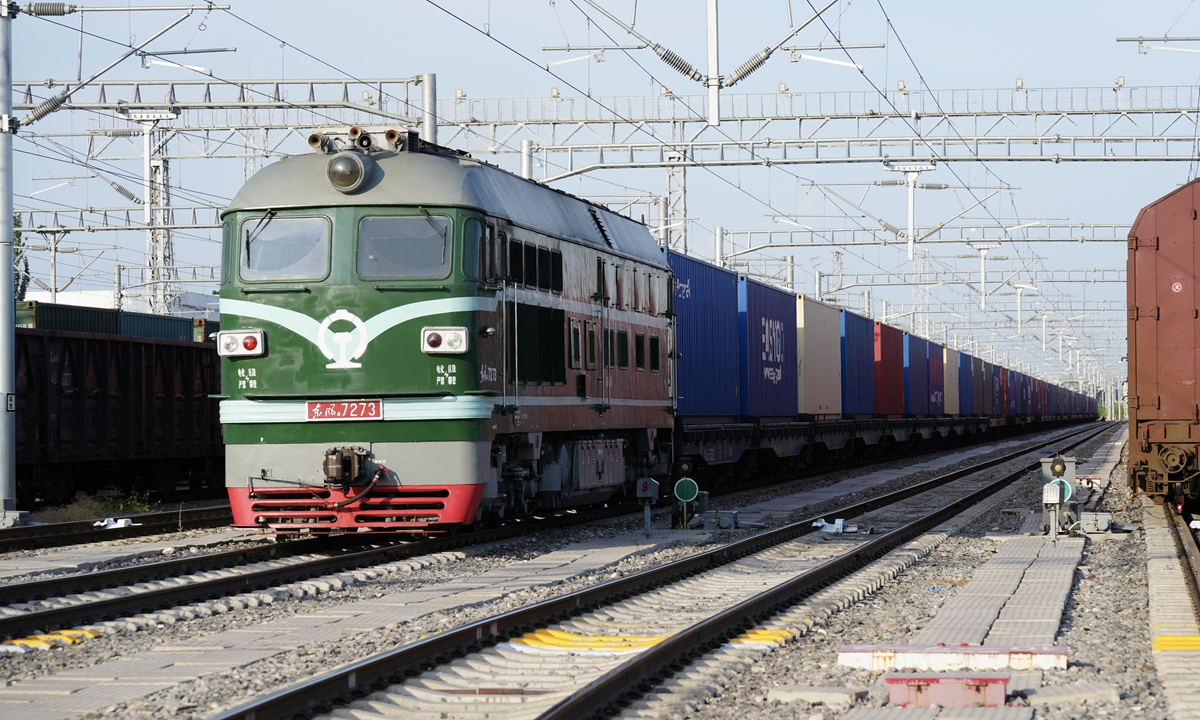
A freight train loaded with special equipment, pre-packaged food and other goods departs from the Horgos railway port in Northwest China's Xinjiang Uygur Autonomous Region for Moscow, on May 26, 2026, marking the passage of more than 4,000 China-Europe and China-Central Asia freight train trips through the railway port this year. Photo: VCG
The China-proposed Belt and Road Initiative (BRI) and the Shanghai Cooperation Organization (SCO) share overlapping strategic missions: to reconnect the currently fragmented Eurasian landmass and to strengthen cross-continental connectivity. While the SCO provides the overarching political and institutional framework for bringing Eurasian states closer, the BRI concentrates more on concrete development projects within that framework.
Russia, along with most Central Asian countries, is a founding member of the SCO and a participant and partner in the BRI, and has actively cooperated with China on Eurasian transport, energy, logistics, and infrastructure through the two platforms. From my personal perspective, the principle of equality is exactly what clearly distinguishes the SCO and the BRI from traditional Western multilateral organizations. These organizations formally declare collective decision-making, but in reality remain highly hierarchical with all the important decisions made by the most powerful members. Hierarchical institutions are easier to manage, consensus there is easier to reach by twisting the arms of relatively weaker members, but such institutions are not truly democratic and they can become very fragile if the leading participant gets weaker or loses legitimacy in the eyes of its junior partners.
In contrast, the SCO has no senior or junior partners. All members enjoy equal rights and responsibilities. This arrangement makes consensus more difficult to achieve, but once reached, it is easier to sustain.
This difference in approach reflects two fundamentally distinct foreign-policy mindsets. The West has long emphasized the "balance of power" within the international system, while China seeks to promote "harmony" among the system's members. This philosophical divergence helps explain why China's international initiatives receive such widespread recognition and appreciation. Both the SCO and the BRI are clear examples of this approach, which is applied not only in the Eurasian context but on a global scale as well.
An inclusive organization
While many international institutions still tend to artificially separate the two domains of security and development, focusing exclusively on either security or development, the SCO is different. It takes an inclusive approach to security and development agendas. If you look at the forthcoming SCO Summit in Bishkek, Kyrgyzstan in August 2026, you will see that most of the thematic priorities of the body combine both security and development dimensions.
The SCO is uniquely positioned to combine security and development priorities because the original SCO mandate has been kept purposely broad and flexible. This breadth and flexibility allow leaders meeting in Bishkek to examine diverse issues, ranging from strengthening regional stability, boosting economic cooperation, improving transportation links, accelerating digital transformation, and expanding cultural exchanges. Critics would say that the SCO lacks a clear focus, but this is not the case. I would define the SCO as a "problem-oriented" organization, one capable of adjusting its operational priorities in response to changing international challenges and opportunities.
At present, the overall volume of trade within the SCO amounts to approximately $1 trillion. The number looks very impressive and it is growing fast, but it is nonetheless much smaller than the aggregate volume of SCO member-states trade with non-SCO partners, including major Western nations. Numerous indicators demonstrate that the SCO is not an inward-looking alliance seeking to isolate itself from the external environment. Rather, it is inclusive rather than exclusive.
It is also important to note that the SCO does not position itself as an anti-Western bloc or alliance, as some Western politicians have claimed. The goal of the grouping is neither to push the US or the EU out of Eurasia, nor to undermine legitimate security or commercial interests of the West in any other way. The Eurasian continent, and the globe are big enough to accommodate all actors - large and small, developed and emerging. Nevertheless, the nations of the Eurasian continent, rather than external powers, should remain in the driver's seat. It is only fair to seek primarily Eurasian solutions to Eurasia's problems.
Founded in 2001, the SCO now has evolved into a broad-based organization covering security, economic cooperation, connectivity, digital development and cultural exchanges. As the organization marks its 25th anniversary this year, it has accumulated substantial experience and gained considerable international influence and stature over the past quarter-century.
At this stage, I would advocate a cautious evolutionary approach, which is likely to prove more productive and appropriate. For instance, recently the SCO increased the number of dialogue partners, and such form of cooperation contains a lot of untapped potential. Maybe the time has come to establish a SCO Development Bank and an Investment Fund in order to provide innovative financial mechanisms for economic integration.
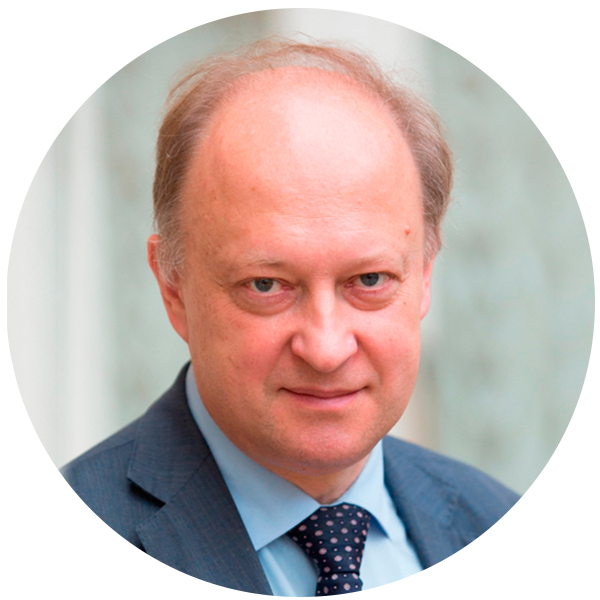
The author is a member of the Russian International Affairs Council.
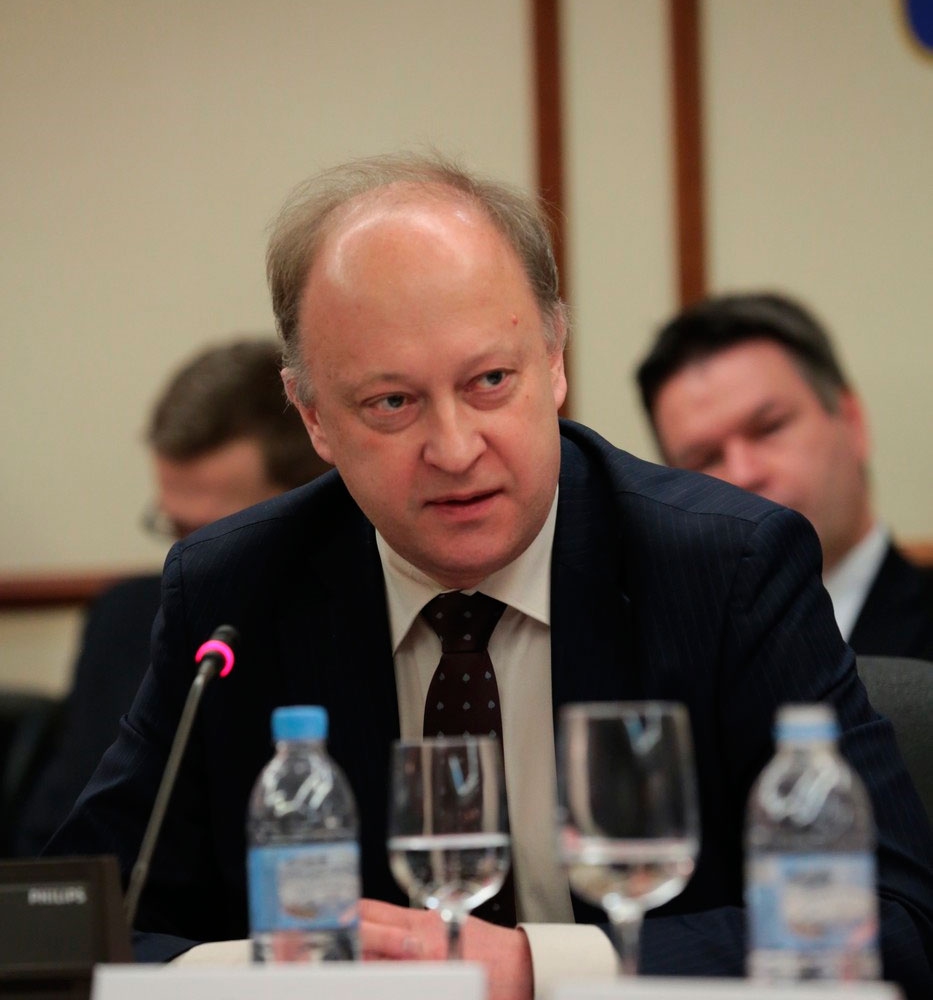
Andrey Kortunov Photo: Courtesy of Andrey Kortunov
RELATED ARTICLES