Renewable energy construction Illustration: Xia Qing/GT
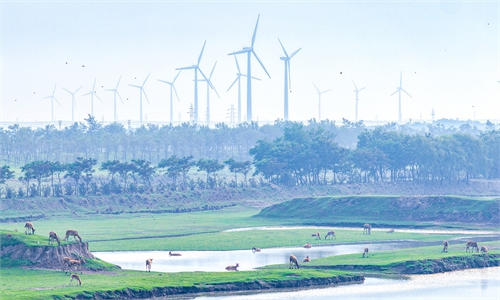
India's renewable energy expansion has reached a new milestone. Indian news agency PTI reported on Tuesday that India's installed non-fossil fuel power capacity has crossed the 300-gigawatt mark, accounting for more than 54 percent of its total installed electricity generation capacity.
This is a positive development. India has already come a long way toward its 2030 target of 500 gigawatts. But the next phase of the journey will require more than simply adding new capacity. It will depend on a stronger power system - one that can store and use renewable electricity more effectively. One important part of that effort will be battery storage.
The issue is drawing increasing attention. Bloomberg recently highlighted the challenge in an article headlined "India Needs Batteries to Keep Its Solar Boom Going."
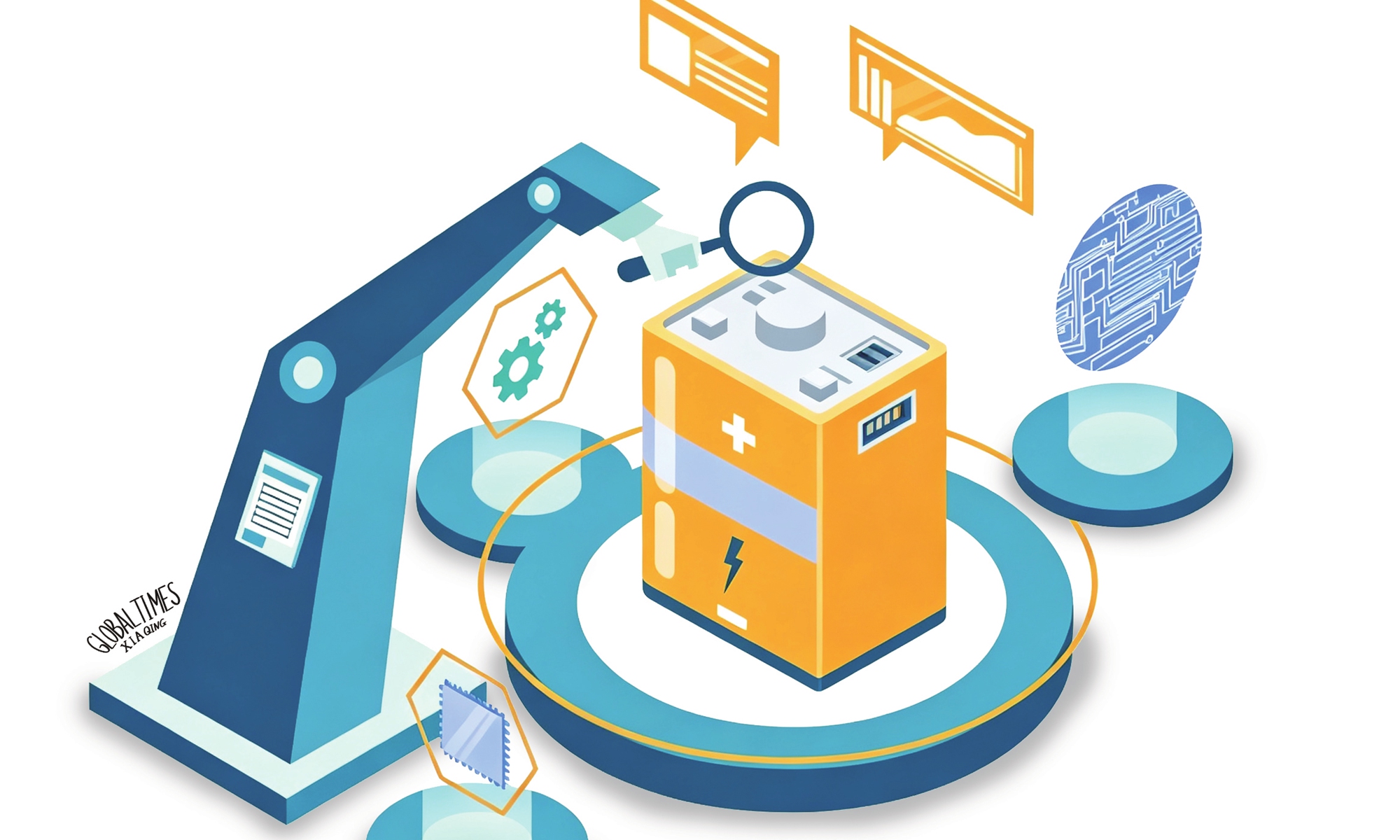
The importance of battery storage is straightforward. Large-scale storage acts like a giant "power bank" for renewable energy. When solar and wind generation is abundant, it can capture excess electricity that cannot be used immediately. When sunlight fades, winds weaken or demand rises, it can release that stored power back into the grid. This flexibility is what makes large-scale renewable energy possible.
India's renewable energy expansion is creating rising demand for energy storage. A report by JMK Research and Analytics and Institute for Energy Economics and Financial Analysis said that India's cumulative tendered energy storage capacity rose from 6.8 gigawatts in 2018 to 90.7 gigawatts in 2025.
This trend is likely to continue. As India continues to expand its non-fossil fuel capacity toward 2030, the need for storage will continue to grow. Storage is becoming an indispensable part of India's clean energy transition.
India has recognized the importance of developing its battery manufacturing industry. But this does not necessarily mean building the industry in isolation. Battery manufacturing depends on a broad ecosystem, from raw materials and processing to links with global supply chains.
Indian media reports have pointed out that India's battery manufacturing capacity remains very low compared with future needs. This gap means that imports from global markets, including China, play an important role in supporting the industry's growth.
Building a battery industry is not simply about setting up factories. It requires an ecosystem covering materials, equipment, manufacturing and system integration. This is where China has developed strong capabilities. China has built a broad industrial base across the battery storage supply chain. These capabilities have helped Chinese companies achieve scale and improve cost competitiveness in the global storage market.
For India, building domestic battery manufacturing capacity and working with international partners do not have to be seen as mutually conflicting goals. The two can reinforce each other as the country strengthens its energy storage industry. This creates room for broader cooperation between China and India in the storage sector. Such cooperation can take multiple forms across the supply chain, from trade to broader industrial cooperation.
Some Indian officials have expressed optimism about the growth potential of sodium-ion battery technology. But some industry participants have taken a more cautious view. The concern is that India's storage demand is running well ahead of what domestic manufacturing can supply, and that gap is a matter of years, not a few quarters.
However, India's 2030 target cannot wait for its storage industry to fully mature. Reaching the 300-gigawatt milestone is a positive development, but it also marks the start of a new phase, where deeper parts of the power system, including storage, will become increasingly important. If domestic capacity cannot meet demand, imports should be encouraged to fill the gap.
China's strengths in battery materials, manufacturing and related supply chains create opportunities for deeper cooperation with India. Closer links in these areas could help India accelerate the development of its clean energy capabilities and support the country as it moves through the next stage of its journey toward the 2030 target.
The author is a reporter with the Global Times. bizopinion@globaltimes.com.cn
RELATED ARTICLES