ARTS / ART
How reading turned a boy into a national treasure of traditional Chinese opera
How reading fuels Wuxi Opera performer Zhou Dongliang’s artistry
Editor's Note:
In an age of information overload, reading remains a necessary channel to invigorate the mind, provide inspiration and cultivate virtue. Whether it is childhood enlightenment or the pursuits of adulthood, everyone's reading journey carries unique emotions and life experiences. The Global Times has specially launched the "100 Avid Readers" series, inviting guests from various fields to share their connections with books, stories of growth and sparks of thought.
In this installment, Wuxi Opera artist Zhou Dongliang shares how reading has been a guiding light for his performing career.
Behind the glory of the stage lies a lifelong journey accompanied by the quiet fragrance of books. For Zhou, reading has never been merely a pastime.
As a national-level inheritor of China's intangible cultural heritage of Wuxi Opera, Zhou told the Global Times that reading has been a guiding light throughout his artistic training and a lifelong mentor in cultivating both his character and artistry. Along the way, books have nourished his original passion for this art form while shaping the poise, depth and spirit he brings to the stage.
Wuxi Opera is one of the three major opera genres in East China and a representative opera form of Jiangsu Province. It is known as "a plum blossom by Taihu Lake." In 2008, it was included on China's National Intangible Cultural Heritage list. As an art form named after the city of Wuxi, Xiju is one of the city's most representative symbols of traditional culture.
Wuxi Opera is known for its lyrical melodies, vibrant daily life scenes, and Jiangnan (south of the Yangtze River) charm. Together with Shanghai Opera, Ningbo Opera, and Suzhou Opera, it forms an integral part of Jiangnan opera art.
In 2001, Zhou received the 19th China Theatre Plum Blossom Award, China's most prestigious honor for theatrical and stage performance art, for his outstanding performance in one of the classic Wuxi Opera works The Pearl Tower.
He also earned the nickname "Prince of Wuxi Opera" for breathing new life into the traditional opera.
Zhou's reading journey began with the scent of books on his way home from school as a child. In his early years, he was most captivated by the small street stalls selling lianhuanhua, or traditional Chinese picture-story books. Laid out on these modest stalls were illustrated adaptations of classic Chinese tales, opening up a sweeping world of ancient stories to the young boy.
"I was particularly fond of The Investiture of the Gods, Romance of the Three Kingdoms, Water Margin and The Romance of the Sui and Tang Dynasties," 57-year-old Zhou recalled.
"The vivid heroes in these stories left a deep impression on me. [Charaters] Wu Song's chivalry and sense of justice, Guan Yu's loyalty, righteousness, courage and benevolence, and Zhuge Liang's wisdom and composure — these classic figures taught me the meaning of loyalty, perseverance and responsibility. They planted the earliest seeds of artistry that would later inspire me to portray a wide range of characters on stage," he noted.
If the popular books of his childhood planted the first seeds of his passion for opera, then the professional reading he pursued as an adult became a ladder for refining his craft. In his view, the growth of an artist is inseparable from the inspiration and guidance that books can provide.
"The autobiographies of opera masters such as Mei Lanfang, Zhou Xinfang, Sun Yumin and Gai Tian are among the books I return to time and again," Zhou said. "The artistic lives of these great predecessors have strengthened my determination to devote myself to honing my craft year after year, while instilling in me the artistic philosophy of constantly striving for excellence."
Lifelong practice
After decades of dedication to the stage, Zhou has portrayed a wide range of characters, each with distinct identity and personality. When taking on a new role, he constantly challenges himself to rethink and reshape his portrayal, refusing to be constrained by past performances or limited by his own established style.
"One example is Liu Bang, the character I played in The Gale Song. It was my first time taking on an emperor in a traditional historical drama, and also the first time Wuxi Opera had explored such a grand and powerful stage style," said Zhou, who is also the general manager of Jiangsu Performing Arts Group.
In the play, Liu Bang, founder of the Han Dynasty (206BC-AD220), is an aging emperor who spent half his life on the battlefield laying the foundations of his empire. He has the boldness and free-spiritedness of a founding ruler, but also the helplessness and sighs of a hero in his twilight years. He is a complex character with a rich inner world, Zhou recalled.
"To portray him convincingly, I carefully studied relevant books and audiovisual materials, delved deeply into the script and devoted myself to exploring the character's psychology," Zhou noted.
"I tried to infuse the role with my own emotions and thoughts, striving to create a character who was rich and fully developed. In terms of music and vocal performance, while preserving the traditional flavor of Xiju, I also drew on the singing techniques of genres such as Peking Opera, breaking away from the conventional perception of Xiju as gentle and lyrical. I adopted a more powerful and commanding singing style to reflect Liu Bang's status and personality, presenting a fuller portrayal of the emperor," Zhou said.
For Zhou, great stage performances are the result of years of painstaking craftsmanship.
To him, opera is a comprehensive art in which every gesture, glance and vocal inflection matters, and even the smallest lapse can affect the overall quality of a production.
Reading, he believes, is not simply a way to acquire knowledge, but a lifelong practice that continues to deepen his artistry, one that allows the wisdom of the past to find new expression on the contemporary stage.
In an age of information overload, reading remains a necessary channel to invigorate the mind, provide inspiration and cultivate virtue. Whether it is childhood enlightenment or the pursuits of adulthood, everyone's reading journey carries unique emotions and life experiences. The Global Times has specially launched the "100 Avid Readers" series, inviting guests from various fields to share their connections with books, stories of growth and sparks of thought.
In this installment, Wuxi Opera artist Zhou Dongliang shares how reading has been a guiding light for his performing career.
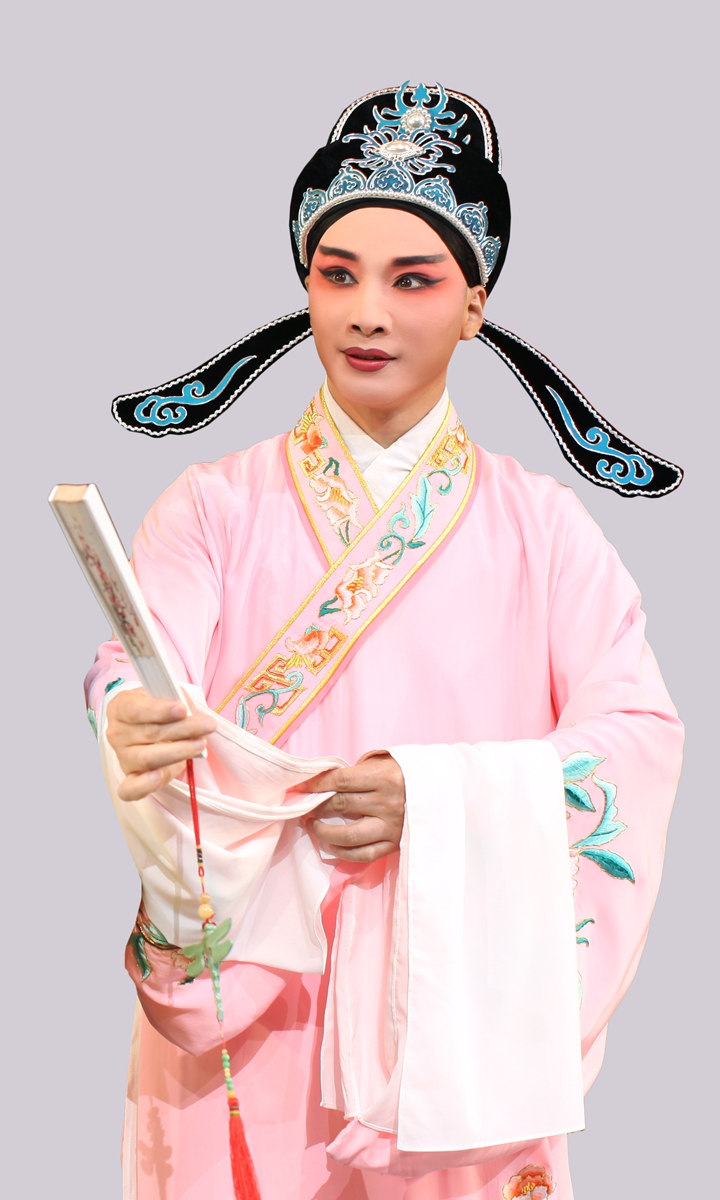
Zhou Dongliang Photo: Courtesy of Zhou Dongliang
During the past four decades, renowned Wuxi Opera (Xiju) performer Zhou Dongliang has dedicated himself to the melodies and traditions of this local Chinese opera.Behind the glory of the stage lies a lifelong journey accompanied by the quiet fragrance of books. For Zhou, reading has never been merely a pastime.
As a national-level inheritor of China's intangible cultural heritage of Wuxi Opera, Zhou told the Global Times that reading has been a guiding light throughout his artistic training and a lifelong mentor in cultivating both his character and artistry. Along the way, books have nourished his original passion for this art form while shaping the poise, depth and spirit he brings to the stage.
Wuxi Opera is one of the three major opera genres in East China and a representative opera form of Jiangsu Province. It is known as "a plum blossom by Taihu Lake." In 2008, it was included on China's National Intangible Cultural Heritage list. As an art form named after the city of Wuxi, Xiju is one of the city's most representative symbols of traditional culture.
Wuxi Opera is known for its lyrical melodies, vibrant daily life scenes, and Jiangnan (south of the Yangtze River) charm. Together with Shanghai Opera, Ningbo Opera, and Suzhou Opera, it forms an integral part of Jiangnan opera art.
In 2001, Zhou received the 19th China Theatre Plum Blossom Award, China's most prestigious honor for theatrical and stage performance art, for his outstanding performance in one of the classic Wuxi Opera works The Pearl Tower.
He also earned the nickname "Prince of Wuxi Opera" for breathing new life into the traditional opera.
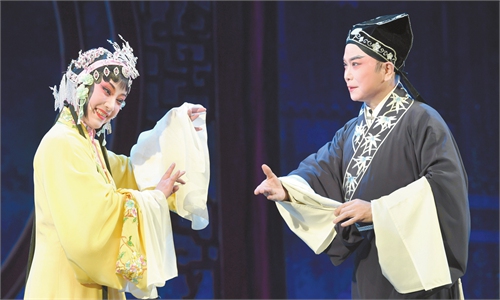
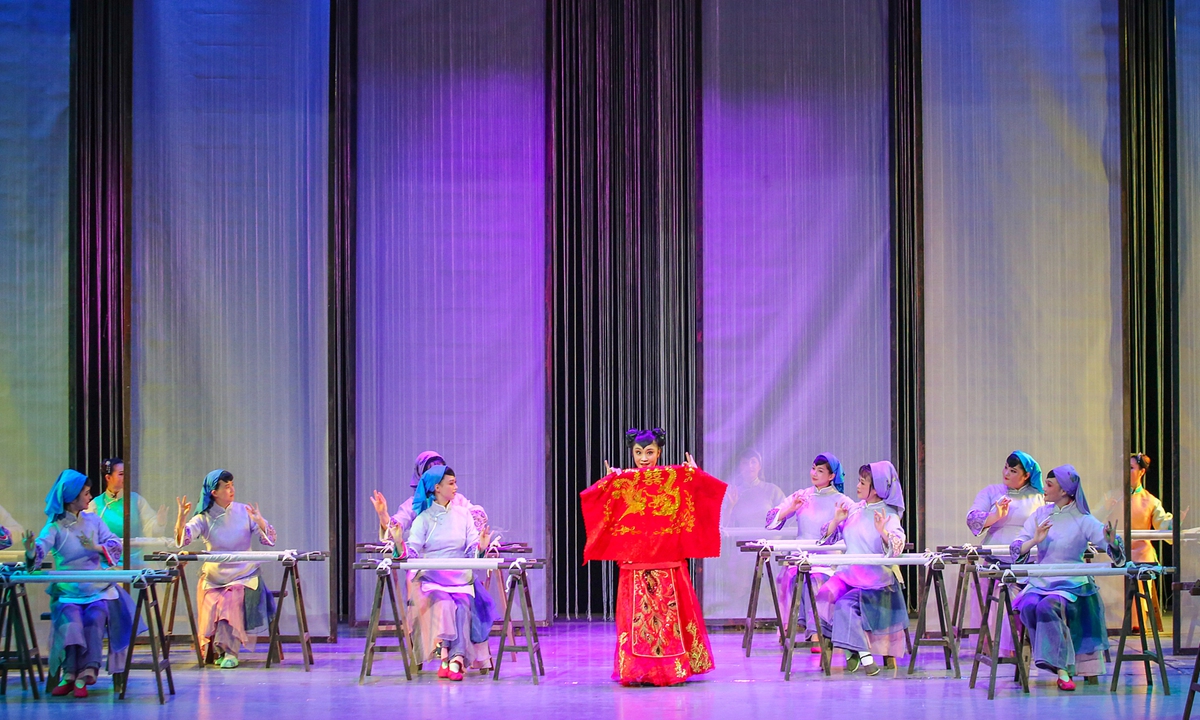
The original Wuxi Opera The Xueyi Embroidery Manual is staged at the Rugao Cultural Center in the city of Rugao, Nantong, East China's Jiangsu Province. Photo: VCG
Striving for excellenceZhou's reading journey began with the scent of books on his way home from school as a child. In his early years, he was most captivated by the small street stalls selling lianhuanhua, or traditional Chinese picture-story books. Laid out on these modest stalls were illustrated adaptations of classic Chinese tales, opening up a sweeping world of ancient stories to the young boy.
"I was particularly fond of The Investiture of the Gods, Romance of the Three Kingdoms, Water Margin and The Romance of the Sui and Tang Dynasties," 57-year-old Zhou recalled.
"The vivid heroes in these stories left a deep impression on me. [Charaters] Wu Song's chivalry and sense of justice, Guan Yu's loyalty, righteousness, courage and benevolence, and Zhuge Liang's wisdom and composure — these classic figures taught me the meaning of loyalty, perseverance and responsibility. They planted the earliest seeds of artistry that would later inspire me to portray a wide range of characters on stage," he noted.
If the popular books of his childhood planted the first seeds of his passion for opera, then the professional reading he pursued as an adult became a ladder for refining his craft. In his view, the growth of an artist is inseparable from the inspiration and guidance that books can provide.
"The autobiographies of opera masters such as Mei Lanfang, Zhou Xinfang, Sun Yumin and Gai Tian are among the books I return to time and again," Zhou said. "The artistic lives of these great predecessors have strengthened my determination to devote myself to honing my craft year after year, while instilling in me the artistic philosophy of constantly striving for excellence."
Lifelong practice
After decades of dedication to the stage, Zhou has portrayed a wide range of characters, each with distinct identity and personality. When taking on a new role, he constantly challenges himself to rethink and reshape his portrayal, refusing to be constrained by past performances or limited by his own established style.
"One example is Liu Bang, the character I played in The Gale Song. It was my first time taking on an emperor in a traditional historical drama, and also the first time Wuxi Opera had explored such a grand and powerful stage style," said Zhou, who is also the general manager of Jiangsu Performing Arts Group.
In the play, Liu Bang, founder of the Han Dynasty (206BC-AD220), is an aging emperor who spent half his life on the battlefield laying the foundations of his empire. He has the boldness and free-spiritedness of a founding ruler, but also the helplessness and sighs of a hero in his twilight years. He is a complex character with a rich inner world, Zhou recalled.
"To portray him convincingly, I carefully studied relevant books and audiovisual materials, delved deeply into the script and devoted myself to exploring the character's psychology," Zhou noted.
"I tried to infuse the role with my own emotions and thoughts, striving to create a character who was rich and fully developed. In terms of music and vocal performance, while preserving the traditional flavor of Xiju, I also drew on the singing techniques of genres such as Peking Opera, breaking away from the conventional perception of Xiju as gentle and lyrical. I adopted a more powerful and commanding singing style to reflect Liu Bang's status and personality, presenting a fuller portrayal of the emperor," Zhou said.
For Zhou, great stage performances are the result of years of painstaking craftsmanship.
To him, opera is a comprehensive art in which every gesture, glance and vocal inflection matters, and even the smallest lapse can affect the overall quality of a production.
Reading, he believes, is not simply a way to acquire knowledge, but a lifelong practice that continues to deepen his artistry, one that allows the wisdom of the past to find new expression on the contemporary stage.
RELATED ARTICLES