Reports of Tesla shutting down Shanghai data center ‘false,’ Tesla China tells GT
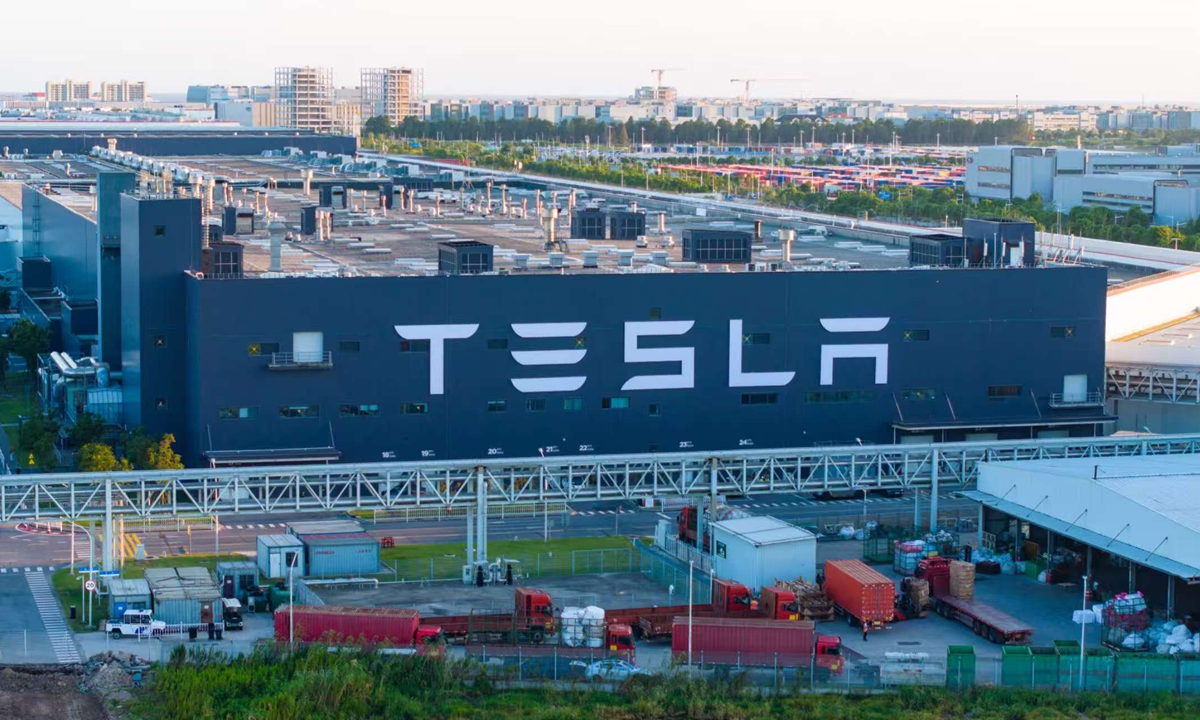
Tesla's Gigafactory in Lingang, Shanghai Photo: VCG
Tesla China on Wednesday denied reports that its Shanghai data center, which was built to support the rollout of the company's Full Self-Driving (FSD) system, also known as FSD Supervised, in China, had been shut down and that the relevant team had withdrawn from the site.A Tesla China staff member told the Global Times on Wednesday that the claims were "false rumors," adding that the "Shanghai data center is currently operating normally and that recruitment for related positions is still underway."
"The reported claims are false. We have reported the matter to the public security authorities. Our data center in Shanghai is operating normally, and recruitment for our assisted driving team is accelerating. All relevant work is progressing steadily," the Tesla China representative said.
The statement came after a social media post claimed that Tesla's Shanghai data center — set up specifically to prepare for the introduction of FSD Supervised in China — had been left "empty," with all related personnel pulled out, according to domestic media outlets, including National Business Daily and Beijing Daily.
Previous reports showed that Tesla completed its Shanghai data center in 2021, enabling local storage of data generated in China.
According to a report by the National Business Daily, Tesla's FSD data compliance and localization preparations in China remain on track. The Shanghai data center has achieved full onshore data retention, the Lingang AI training center began operations in February 2026, and the company has partnered with Baidu Maps to use compliant high-definition mapping. The report also said Tesla vehicles have previously passed four automotive data security standard certifications.
In May, Tesla said FSD Supervised supported multiple countries and regions, including China. According to Tesla's official website, China remains listed among the regions where its FSD Supervised is functionally available. Tesla has repeatedly signaled its intention to bring FSD-related capabilities to China.
In the company's first-quarter 2026 earnings call, CFO Vaibhav Taneja said Tesla had received partial approval in China, while broader approval was still pending. He added that the company was working with Chinese regulators and hoped to secure approval in the third quarter.
In February, Tesla China Vice President Grace Tao said the company would actively participate in the development of China's advanced driver-assistance sector. She noted that although Tesla had not officially pushed the "full" FSD version to Chinese users, the company had been adapting the system for the local market and had already established training capabilities in China, according to the National Business Daily.
Tesla has faced similar speculation before. Earlier this year, foreign media outlets claimed the company was considering spinning off its China business. The reports said Tesla advisers had discussed options including separation, sale, or closure of Chinese operations, including its Shanghai factory, citing potential conflicts involving SpaceX's role as a major US defense contractor. Tesla later dismissed those reports as untrue.
China remains Tesla's second-largest market, generating $20.96 billion last year, roughly 22 percent of total revenue, according to its annual report.
Recent reports also suggest Tesla is deepening its in-car AI ecosystem in China. On July 31, ByteDance's Doubao large-language-model assistant was integrated into some new Tesla vehicles in the country. Meanwhile, Alibaba's Qwen model has reportedly entered advanced testing in Tesla's in-car system in China and is expected to launch soon, Jiemian News reported.
Global Times
RELATED ARTICLES