Tesla denies report of considering selling China business, announces software update with Chinese LLM Doubao
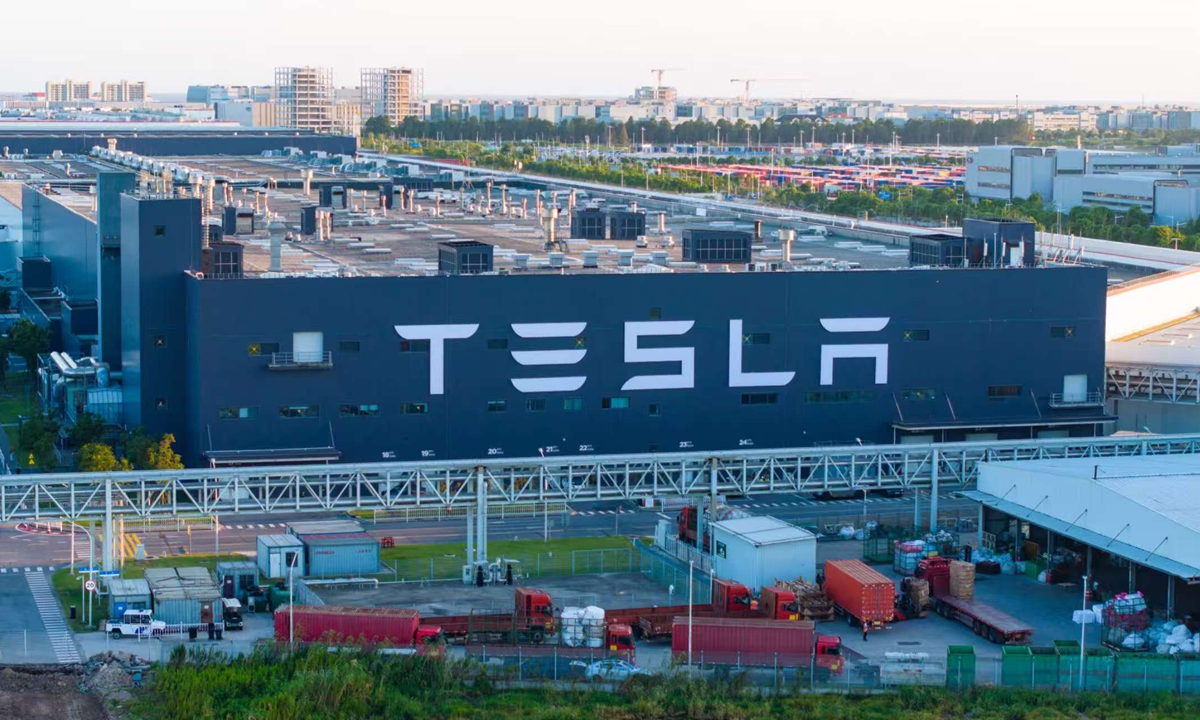
Tesla's Gigafactory in Lingang, Shanghai Photo: VCG
Tesla China told the Global Times on Friday that media reports claiming that Tesla is considering selling its China business to pave the way for a potential SpaceX merger is fake news. Notably, on the same day, Tesla China rolled out a software update for its Model 3, Model Y, Model S and Model X vehicles, integrating Chinese large language model Doubao as an intelligent voice assistant.
The Wall Street Journal (WSJ) reported on Thursday that Tesla executives have been told to prepare for a separation of the firm's China business ahead of a potential merger with SpaceX. The US company "could sell or spin off the business in its second-largest market over geopolitical concerns," the WSJ report claimed.
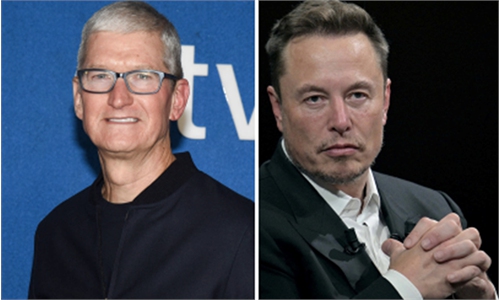
"This has never even come up in a discussion ever," Elon Musk, CEO of Tesla and SpaceX, wrote in response to a post about the report. "Absurdly fake news." Tesla China also said the media reports were fake news when reached by the Global Times for comment on Friday.
Reuters claimed that a merger between Tesla and SpaceX would raise geopolitical and regulatory hurdles, because SpaceX is a major US defense contractor involved in national security and satellite programs, while Tesla operates wholly owned manufacturing facilities in China.
Asked to comment on the WSJ report at a press briefing on Friday, Chinese Foreign Ministry spokesperson Mao Ning said that she was not aware of the situation. "China opposes any attempt to overstretch the concept of national security and take discriminatory measures against China," Mao said.
Notably, the US electric vehicle (EV) giant has been deepening its presence in China, the world's largest auto market. On Friday, Tesla China unveiled a fresh software update for its local lineup, encompassing the Model 3, Model Y, Model S, and Model X. This marks the automaker's inaugural effort to integrate a third-party large language model - ByteDance's Doubao - into its Chinese fleet as an AI-driven voice companion.
Promoted as a tool for delivering real-time information and carrying out natural and fluent dialogue, the system boasts a variety of high-end vocal profiles and customizable personas, such as "Know-It-All," "Music Lover" and "Storyteller." Access to this functionality requires a valid Premium Connectivity subscription, according to a notice on Tesla China's WeChat account.
"Tesla's operations in China serve as a cornerstone for the US company, contributing significantly to the steady growth of its revenue while generating substantial profits. Its China business acts as a crucial buffer against Tesla's sluggish sales in markets like Europe. Consequently, it is implausible for Tesla to divest its Chinese business," Cui Dongshu, secretary-general of the China Passenger Car Association, told the Global Times on Friday.
On Thursday, Tesla announced that its 10 millionth EV had rolled off the production line at its factory in Fremont, California, making Tesla the first EV company in the world to reach this milestone. Nearly half of Tesla's electric vehicles are manufactured in Shanghai. Since December 2019, the Shanghai factory has produced over 4.5 million EVs, accounting for more than 45 percent of Tesla's total global output.
China has become a global core production base and is the second-largest market for Tesla, and therefore any divestment would profoundly impact its global supply chain layout, Cui said.
Tesla has now established a complete closed-loop business operation in China. In addition to the Shanghai gigafactory and the energy storage megafactory, Tesla has also built a nationwide direct sales, delivery, and after-sales service network. It also operates a large-scale supercharger infrastructure, and has established a localized automotive R&D center.
On June 22, Tesla China participated in the fourth China International Supply Chain Expo (CISCE) in Beijing. At this year's expo, Tesla highlighted the importance of China's robust manufacturing capabilities, focusing on the high-efficiency mass production at the Shanghai factory, the synergy of its localized supply chain, the global export footprint of its energy storage products, and its sustainable practices in green manufacturing.
RELATED ARTICLES