Bangladesh reportedly advances J-10CE fighter purchase plan as experts cite combat-proven capability, cost-effectiveness
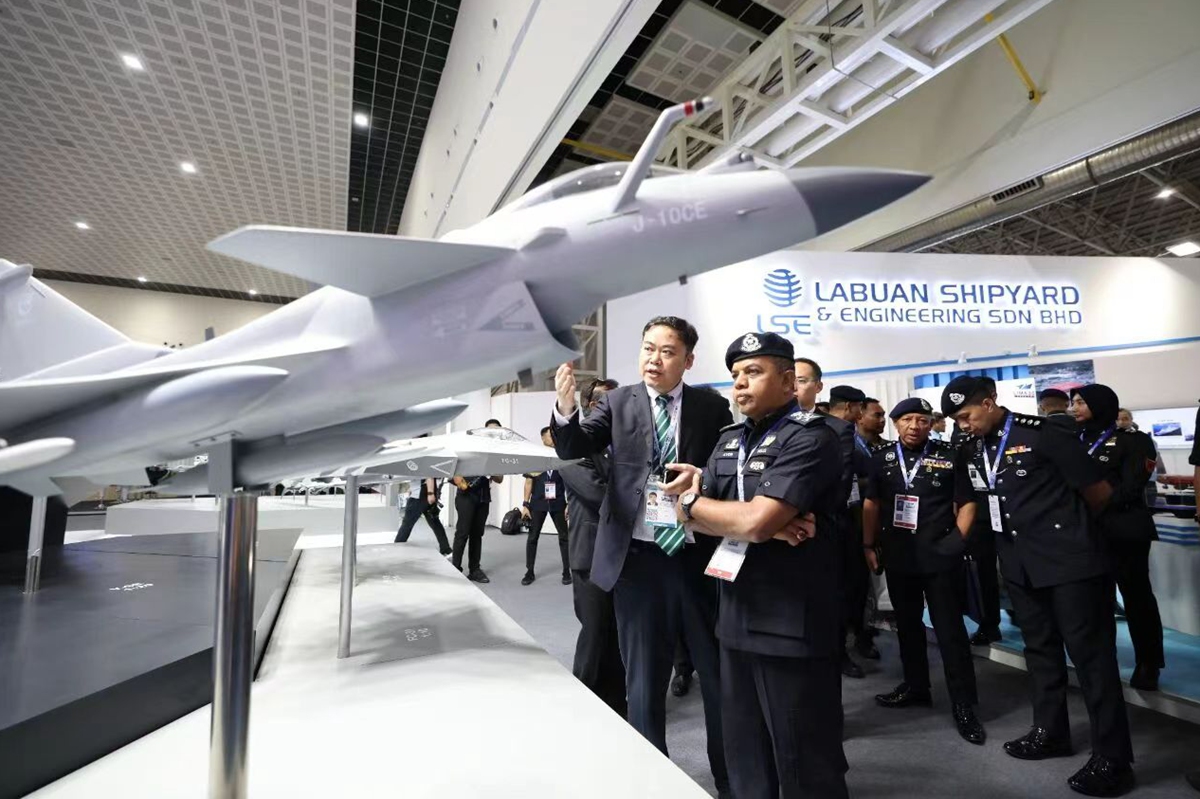
The J-10CE fighter jet model and related technology displays once again take center stage at the 2025 Langkawi International Maritime and Aerospace Exhibition in Kedah, Malaysia, on May 20, 2025. Photo: VCG
Bangladesh is advancing plans to purchase Chinese-made J-10CE fighter jets, attack helicopters and unmanned aerial vehicle systems, according to multiple media reports. Zahed Ur Rahman, the Bangladeshi prime minister's adviser on information and broadcasting, cited the fighter's "real-world experience" during the 2025 India-Pakistan military conflict as an important factor behind Dhaka's interest.Chinese military experts described the J-10CE as an advanced, combat-proven fighter that is typically offered with advanced weapons such as the PL-15E air-to-air missile. This combination provides a comprehensive system-of-systems solution that fully leverages the aircraft's long-range strike capabilities, making it attractive to many countries, they said.
Bloomberg reported on Tuesday that a government negotiating committee had finalized a draft contract for the procurement of the multi-role combat aircraft. Bangladeshi media outlet Daily Sabah also reported that draft agreements covering the J-10CE and attack helicopters had been prepared and submitted to relevant authorities for approval.
Zahed said the Chengdu J-10 has performed well against the Rafale, a modern 4.5-generation fighter manufactured by France's Dassault Aviation. "Bangladesh took note of that," he said, according to Bangladeshi media outlet The Daily Star.
Zahed also highlighted the aircraft's cost-effectiveness. "One thing should be mentioned. If we talk about similar-quality aircraft, whether Rafale or Eurofighter Typhoon, the Chinese variants, the Chinese fighter aircraft, are comparatively much cheaper than the European fighters," he said, according to The Daily Star.
The J-10CE is equipped with advanced avionics and radar systems and has strong beyond-visual-range strike capabilities, making it highly competitive in the international market, Fu Qianshao, a Chinese military affairs expert, told the Global Times.
When exported, the fighter is typically offered alongside advanced weapons such as the PL-15E, providing a complete system-of-systems solution that allows operators to fully exploit its long-range strike advantages. Many countries are therefore considering the J-10CE as a viable option for modernizing their fighter fleets, Fu said.
The J-10CE has attracted Bangladesh's interest for several reasons, including high cost-effectiveness and strong combat performance, Zhang Junshe, another Chinese military affairs expert, told the Global Times on Wednesday.
First, the aircraft offers strong cost-effectiveness and is less expensive than comparable Western fighters. Second, its reported combat performance has significantly increased its appeal in the region, Zhang said.
During the India-Pakistan conflict in 2025, Pakistan reportedly used J-10CE fighters equipped with active electronically scanned array radars and PL-15 long-range air-to-air missiles to shoot down Indian Rafale fighters, he noted.
Third, the J-10CE is compatible with Bangladesh's existing military systems. Bangladesh has operated Chinese equipment for many years and has developed logistics, training and command systems suited to Chinese-standard platforms. The fighter could therefore integrate smoothly into a Chinese-standard air-defense, early-warning and command network, Zhang said.
Beyond Bangladesh, several other countries have reportedly shown interest in the J-10CE. This summer, defense publications and analysts reported that Uzbekistan had allegedly received its first aircraft and could eventually acquire 24 fighters, The Times of Central Asia reported. However, neither Uzbekistan nor China has confirmed the reported deal.
Meta Defense also reported that Algeria was in discussions over the possible purchase of 40 Chengdu J-10 fighters and four to five Shaanxi KJ-500 airborne early-warning and control aircraft. The report has likewise not been officially confirmed by either Algeria or China.
Indonesia has also shown interest in China's J-10 fighter jets. In October 2025, the Indonesian defense minister said that the country is set to acquire J-10 fighter jets from China, though he had declined to provide details regarding the purchase timeline or the expected delivery of the aircraft, according to Indonesian news agency Antara.
Chinese fighter jets have recently made frequent appearances at international military exercises and air shows, attracting attention from countries and regions across the Middle East, North Africa, Central Asia and Southeast Asia, Zhang said, adding that this reflects growing international recognition of China's system-of-systems air combat capabilities.
The appeal of Chinese military aircraft lies not only in the performance of individual platforms, but also in their integration with early-warning aircraft, electronic warfare systems, aerial refueling and long-range deployment capabilities, Zhang noted.
For example, the Chinese Air Force's cross-continental deployment to Egypt for joint training demonstrated comprehensive long-range operational and system coordination capabilities, showcasing the maturity of China's modern air combat system.
With the introduction of advanced platforms such as the J-35 stealth fighter, Chinese military aircraft could also increasingly compete with high-end Western equipment in the international market, he added.
RELATED ARTICLES