China welcomes S&P's 'A+' rating, confident in maintaining strong sovereign creditworthiness: Finance Ministry

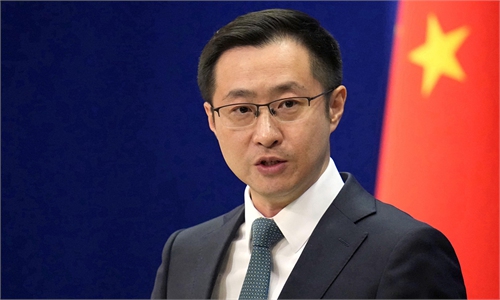
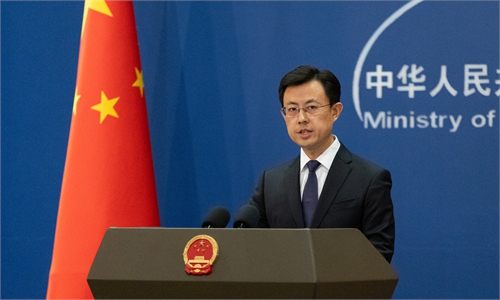
China's Ministry of Finance Photo: VCG
China's Ministry of Finance (MOF) on Friday welcomed S&P Global Ratings' decision to affirm China's sovereign credit rating at "A+" with a stable outlook, saying the country has the confidence and capacity to sustain its sound development momentum, maintain strong and reliable sovereign creditworthiness and continue to gain recognition from international markets.
On Friday, S&P Global Ratings affirmed its unsolicited "A+" long-term and "A-1" short-term foreign and local currency sovereign credit ratings on China. The outlook on the long-term rating is stable, according to its official statement.
Beyond the headline growth figures, S&P pointed to changes in the structure of the Chinese economy. The report attributed the rating to China's policy settings, which it said should continue to support stable economic growth of 4 percent or more. It also highlighted the country's decades of robust growth, significant improvements in living standards, the emergence of globally competitive companies across a range of industries, and greater resilience to supply-chain and energy shocks.
"The decision fully recognizes the resilience of China's macroeconomy, the soundness of its fiscal position and the effectiveness of its risk prevention and control, while reflecting international market confidence in the prospects for China's high-quality development," a MOF spokesperson said on Friday in response to the rating decision.
China's economy remained generally stable in the first half of 2026, demonstrating continued resilience. Its industrial structure continued to improve, the potential of domestic demand was steadily unlocked, support for key sectors remained strong, and new growth drivers played an increasingly important role. The economy achieved effective improvements in quality alongside reasonable growth in quantity, the spokesperson noted.
In addition, the IMF recently raised its forecast for China's 2026 economic growth to 4.6 percent, further underscoring the international community's positive assessment of the country's growth potential, the spokesperson said.
In the second half of the year, the Chinese government will continue to pursue more proactive and effective macroeconomic policies and step up implementation of a package of coordinated fiscal and financial measures aimed at boosting domestic demand, the spokesperson said, adding that China will make policies more forward-looking, targeted and coordinated, while further amplifying the combined impact of the policy mix.
The spokesperson further noted that the fundamentals of China's economy remain solid, with multiple strengths, strong resilience and considerable potential, and its long-term positive trajectory remains unchanged. China is confident in sustaining this momentum, maintaining sound sovereign creditworthiness and retaining the confidence of international markets, the spokesperson said.
As China's economic growth drivers continue to shift, the rapid expansion of sectors such as electric vehicles, renewable energy and artificial intelligence is injecting fresh momentum into the broader economy. Their development is not only creating new sources of growth, but also supporting the upgrading of traditional industries and strengthening the real economy, helping put the nation's economy on a more stable and sustainable footing, said Bian Yongzu, executive deputy editor-in-chief of Modernization of Management magazine.
Alongside policy support, financial backing is also being strengthened to help high-tech companies gain access to capital across different stages of development and overcome financing bottlenecks. This is particularly important for emerging industries, where long investment cycles and heavy upfront R&D spending often mean that technological breakthroughs take time to translate into commercial returns, Bian said. Such support could help turn technological innovation into more durable drivers of productivity and long-term growth, he added.
Global Times
RELATED ARTICLES