China rolls out world’s highest-capacity circular rail crane in major engineering breakthrough
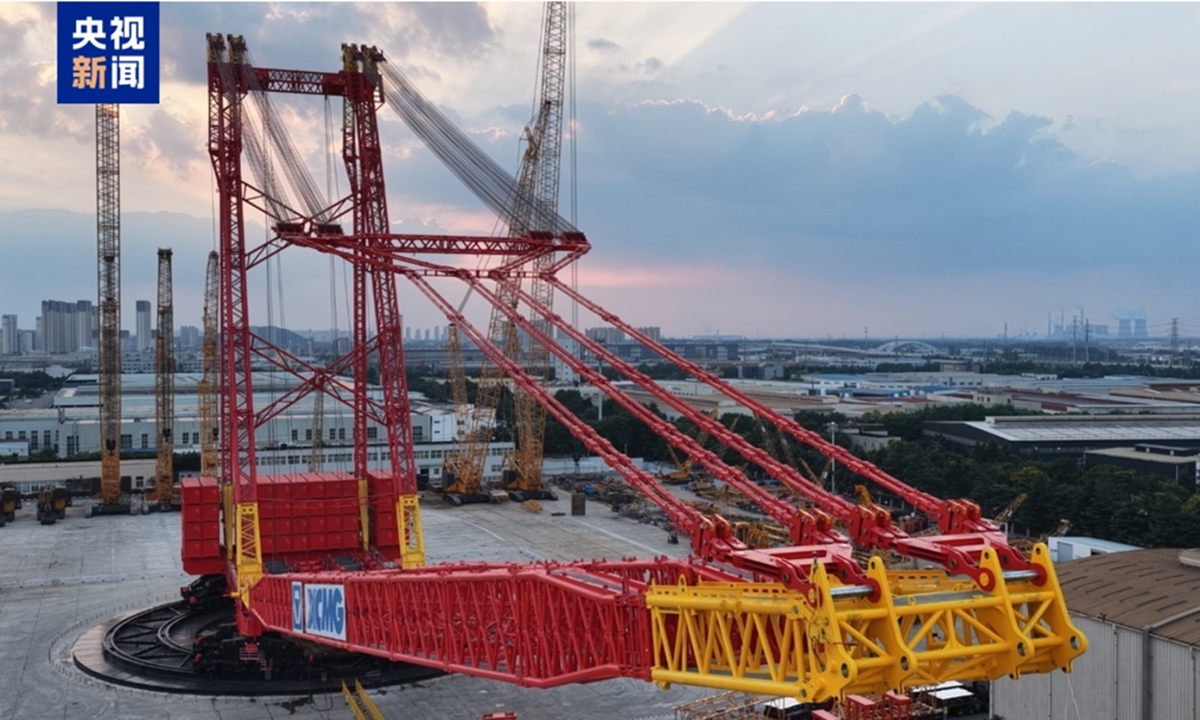
The world's first 14,000-ton-class circular rail crane stands at an XCMG facility in Xuzhou, East China's Jiangsu Province, on August 28, 2026. Photo: CCTV News
China on Friday rolled out the world's first 14,000-ton-class circular rail crane, the largest of its kind by lifting capacity, marking a major technological breakthrough in ultra-heavy lifting equipment designed for nuclear power, green marine engineering and large-scale wind power projects.
The crane came off the production line in Xuzhou, East China's Jiangsu Province, according to China Media Group (CMG), which said the equipment had achieved original breakthroughs in a number of key core technologies.
The project was jointly developed by Chinese construction machinery manufacturer XCMG and Sinopec Heavy Lifting & Transportation Co. The two companies began joint research and development in 2015 and signed a contract for the world's first 14,000-ton circular rail crane in October 2025, according to an earlier release by XCMG.
Often described as the "crown jewel" of the crane industry, the machine can synchronize more than 100 slewing motors with millimeter-level precision. It cuts overall energy consumption by more than 30 percent while boosting operating efficiency by 25 percent, with key performance indicators at an internationally leading level, according to CMG.
The crane has also achieved breakthroughs in coupled calculations for ultra-large systems, high-precision synchronous control of multiple mechanisms and intelligent safety protection.
XCMG said that the project pioneered electric direct-drive technology globally. Its multi-condition adaptation structure allows the crane to operate across both large and small working radii, enabling it to adapt to complex construction scenarios including chemical engineering and nuclear power.
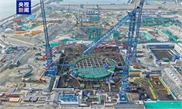
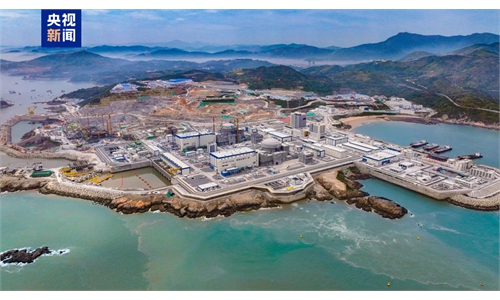
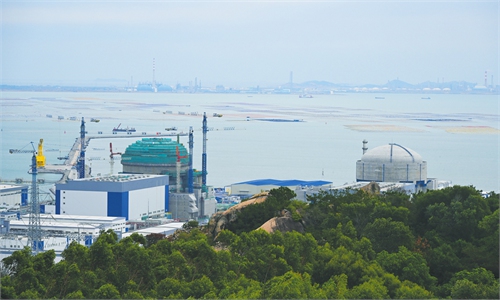
The advantages are particularly evident in nuclear power construction. At nuclear islands and other specialized projects, limits on crane reach and lifting capacity have traditionally restricted the area covered in a single operation, requiring cranes to be repeatedly repositioned as construction progresses.
The new crane can handle the lifting requirements of more modules from a single position, significantly improving construction efficiency, according the CMG report.
The breakthrough comes as China’s nuclear power sector enters a period of large-scale construction, driving stronger demand for ultra-heavy lifting equipment capable of handling increasingly large modules with greater precision and efficiency. China currently has 57 nuclear power units approved or under construction, accounting for more than half of the global total, while the combined installed capacity of operating and approved projects has reached 135 million kilowatts, according to the National Energy Administration.
That expansion is also increasing demand for equipment suited to modular construction, as nuclear projects seek to reduce repeated crane repositioning, improve installation efficiency and shorten critical construction schedules.
Global Times
RELATED ARTICLES