China tightens rules on home presales and fund supervision, strengthens protection of homebuyers
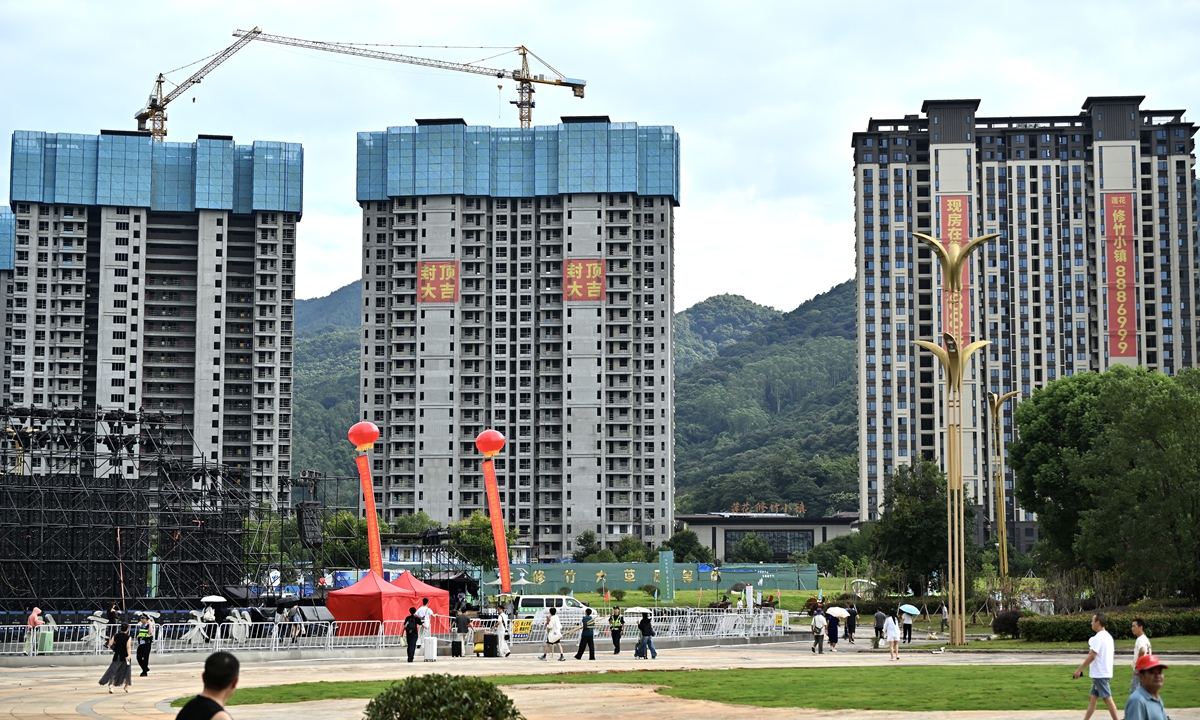
A residential property project under construction in Sanming, East China’s Fujian Province, on August 18, 2026. Photo: VCG
China on Friday moved to further reform its commercial housing sales system, aiming to expand completed-home sales in an orderly manner while tightening rules on presales and fund supervision. The policy aims to tackle pain points in the sector by reducing information asymmetry, improving market transparency, and giving homebuyers stronger protection against delivery risks, experts noted.
The Ministry of Housing and Urban-Rural Development, the Ministry of Natural Resources and the National Financial Regulatory Administration jointly issued a notice on improving the commercial housing sales system, as part of efforts to steadily advance reforms and accelerate the building of a new development model for the property sector.
Improving the management of commercial housing presales is a key focus of the notice. Local authorities are required to tighten presale requirements and strengthen oversight of presale funds to ensure their security, reduce the risk of delayed or failed home deliveries, and better protect homebuyers’ legitimate rights and interests.
For housing projects sold before completion, the main structure of each individual building must be topped out before presales can begin. Projects that obtained construction planning permits before the notice took effect will continue to follow the previous rules governing presale requirements and supervision of presale funds.
The notice also calls on local authorities to promote completed-home sales in a vigorous yet orderly manner, allowing buyers to see the finished property before making a purchase and helping reduce disputes over home delivery.
Meanwhile, local governments are also required to improve supporting policies covering land supply and financing for housing projects, streamline project development, sales and property registration, and promote the practice of issuing property ownership certificates upon home delivery.
The policy has been positively received by the property market, Yan Yuejin, deputy head of the Shanghai-based E-House China R&D Institute, told the Global Times. He said it reflects China’s push to build a new development model for the real estate sector and aligns with the priorities of the 15th Five-Year Plan (2026-30), while supporting developers’ transition in financing, development and sales and strengthening protection for homebuyers.
Yan said the timing is also important. Since the start of the year, more cities have increased land supply for completed-home projects, while such projects have begun entering the market, creating greater demand for supporting rules. He added that the reform is well suited to a market increasingly focused on housing quality and could help improve product standards and transaction security.
Stabilizing the property market requires both an orderly resolution of industry risks and a sustained recovery in financing, making changes on the financing side a key complement to the sales reform.
On Friday, the China Securities Regulatory Commission also unveiled measures to expand capital-market support for the property sector, with a greater focus on project-based financing and diversified funding channels for developers.
The measures call for shifting property financing from reliance on developers’ overall creditworthiness toward a more project-based approach, while expanding access to refinancing, corporate bonds and other asset-backed financing tools. They also tighten oversight of securities issuance, disclosure and use of proceeds, and strengthen mechanisms to identify and resolve property-related risks.
RELATED ARTICLES