'Light fasting' plan extended for over 300 Siberian tigers to mimic wild feeding patterns
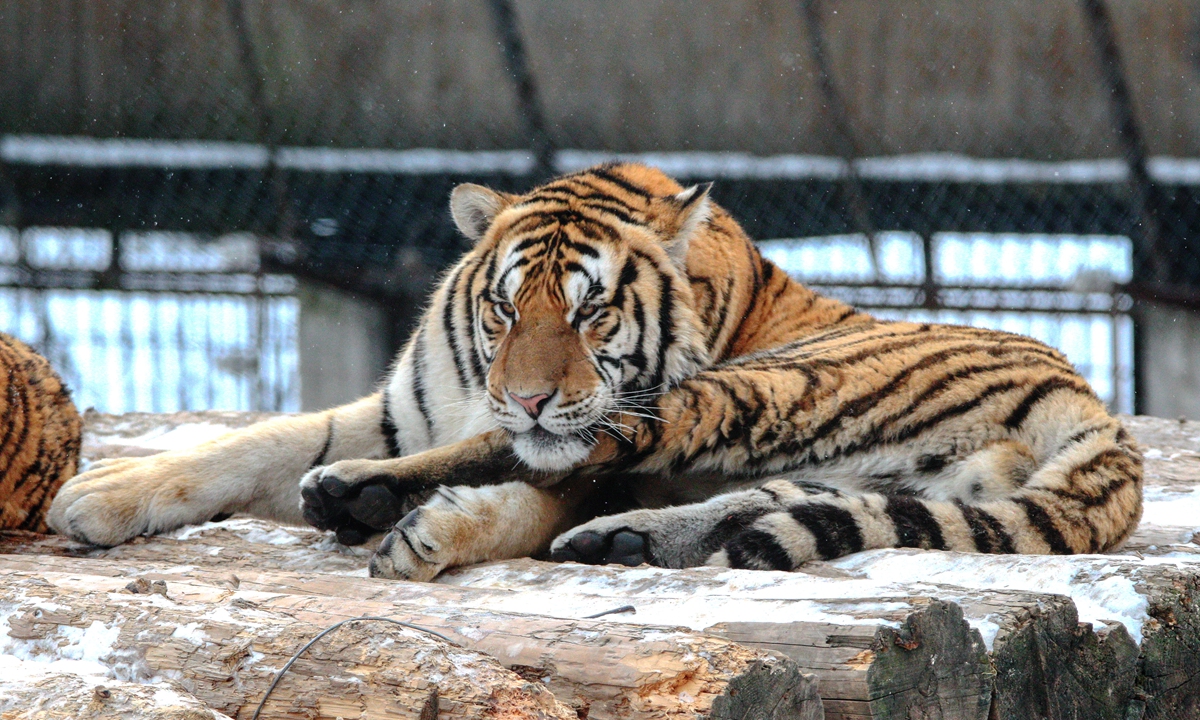
A Siberian tiger rests in Siberian Tiger Park in Harbin, Northeast China's Heilongjiang Province. Photo: VCG
"The tigers really can't eat anymore!" A post by a netizen recently claimed that Siberian tigers at Siberian Tiger Park in Harbin, Northeast China's Heilongjiang Province, were undergoing a "light fasting program," along with a notice issued by the park regarding a rotational "fasting" plan across its open-range areas.According to the notice, from July 1 to September 30, all 11 park areas will take turns banning visitors from feeding meat to the tigers, Jimu News reported.
Staff members at the park told Jimu News on August 25 that the "fasting" plan was indeed being implemented. Whether the program will continue after the National Day holiday is subject to an official announcement.
According to the previous report by China Business Journal, the park's "light fasting" plan was originally launched in response to the pressure caused by frequent tourist feeding during the 2026 Spring Festival holiday.
On January 20, 2026, the park issued a notice on the "fasting" plan for its open-range areas, announcing that from February 1 to March 31, different areas would take turns implementing the measure. Under the arrangement, one designated area would enter a "fasting day" each day, during which visitors would be prohibited from feeding meat to the tigers in order to protect the animals' health and welfare.
The plan was scheduled to end on April 1. However, staff members told reporters that the program had been extended until the end of June, and that it could potentially become a long-term management practice.
Located on the northern bank of the Songhua River, the park is the world's largest artificial breeding base for Siberian tigers, currently housing more than 300 tigers of different ages, according to People's Daily.
Jiang Guangshun, a professor and doctoral supervisor at the Northeast Forestry University, told China Business Journal that the park's long-term "light fasting" program is scientifically sound and aligns with the natural physiological patterns of tigers.
Wild Siberian tigers do not eat continuously, Jiang said. They usually take a break of one or two days after a successful hunt before seeking their next meal. Maintaining a moderate sense of hunger helps preserve normal digestion and metabolism, while long-term overfeeding can weaken metabolic functions and negatively affect the animals' health.
"The park's implementation of 'fasting' is an effort to simulate the feeding rhythm of tigers in the wild, ensuring their long-term health," Jiang said.
Global Times
RELATED ARTICLES