Chinese experts slam Japan over using China as excuse to justify illegal maritime expansion
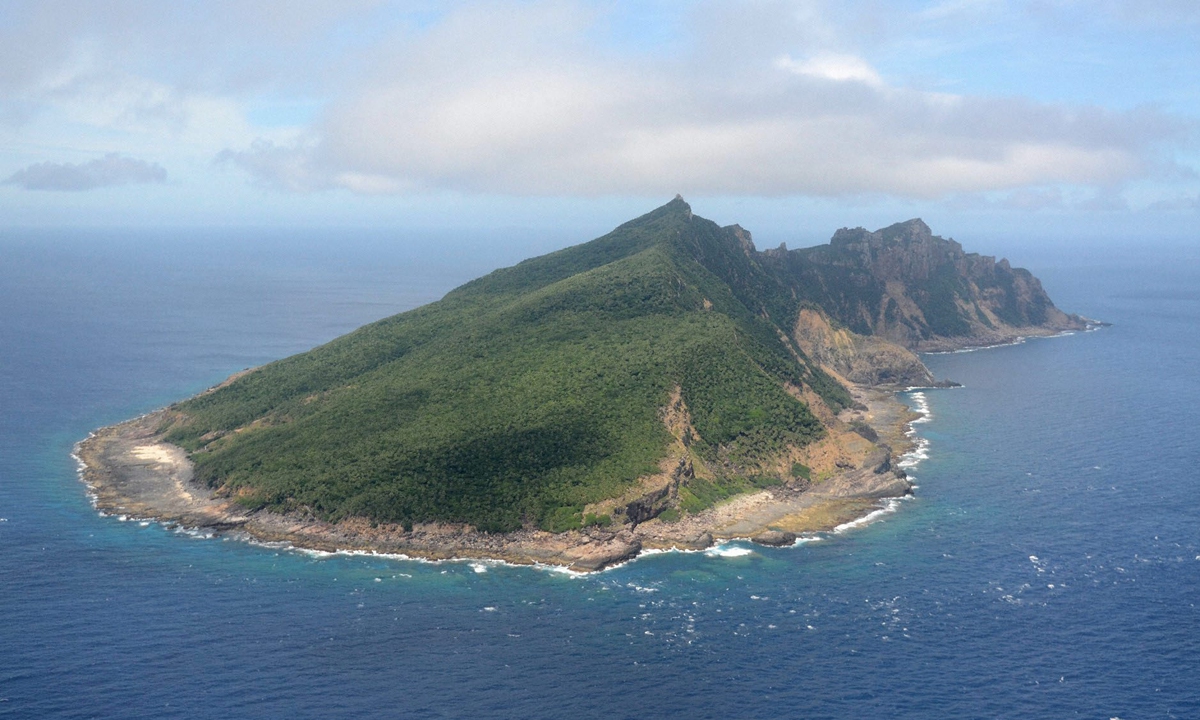
(File) China's Diaoyu Dao Photo: VCG
The Japan Coast Guard (JCG) has requested a record 344.8 billion yen ($2.2 billion) for fiscal 2027, with Japanese media claiming the budget increase came partly against the backdrop of so-called increasing activities by China Coast Guard (CCG) vessels around Diaoyu Dao. Chinese experts slammed Japan for using China as an excuse to justify the continued expansion of the JCG and push it further toward quasi-militarization.According to a report by Japanese media Kyodo News on Thursday, Japan's increased budget was aimed at strengthening the JCG's response to Chinese activities.
The JCG earmarked 189.2 billion yen for capability enhancement, including the construction of eight new large patrol vessels. Seven of them will be developed as part of what the JCG described as "enhanced territorial-water security capabilities" around Diaoyu Dao to "prepare for new threats".
Japan's continued expansion of the JCG attempts to strengthen its ability to interfere in maritime activities in surrounding waters. Meanwhile, it has increasingly portrayed China's legitimate maritime activities and other regional issues as "threats" to justify expanding its maritime security forces, Song Zhongping, a Chinese military affairs expert, told the Global Times on Friday.
In the East China Sea and around Diaoyu Dao, such narratives risk turning China's normal rights-protection and law-enforcement activities into security issues while providing a pretext for the JCG's further security-oriented and quasi-military development, Song noted.
Japan has increasingly portrayed China's legitimate maritime activities and other regional issues as "threats" to justify expanding its maritime security forces. In the East China Sea and around Diaoyu Dao, such narratives risk turning China's normal rights-protection and law-enforcement activities into security issues while providing a pretext for the JCG's further security-oriented and quasi-military development, Song noted.
China has repeatedly rejected Japan's accusations over China's legitimate maritime activities around Diaoyu Dao. The Chinese Foreign Ministry said in July that Diaoyu Dao and its affiliated islands have always been part of China's territory and that activities by Chinese research vessels in adjacent waters are legitimate, lawful and beyond reproach.
Notably, with Japan set to revise its three key security documents at the end of the year, additional funding deemed necessary was included as "item requests", for which no specific amounts have yet been provided, the Okinawa Times reported.
Lü Chao, a research fellow at the Liaoning Academy of Social Sciences, said the JCG buildup should be viewed as part of a broader shift in Japan's security strategy ahead of the planned revision of its three key security documents. He said Japan has increasingly turned maritime issues involving China into security issues to justify expanding its maritime capabilities and support an increasingly outward-looking security posture.
From a broader perspective, Song said Japan's continued expansion of its maritime capabilities could fuel disputes with neighboring countries and negatively affect maritime security in the East China Sea and the wider Western Pacific. By amplifying perceived external threats, the Japanese government appears ultimately to be seeking to build domestic support for constitutional revision, Song said.
RELATED ARTICLES