Marcos to visit Japan with security ties reportedly topping agenda; Tokyo trip reveals Manila's intent to exploit seabed resources around Taiwan island, interfere in China's maritime security: Chinese expert
By and Sun Langchen Published: May 22, 2026 06:11 PM

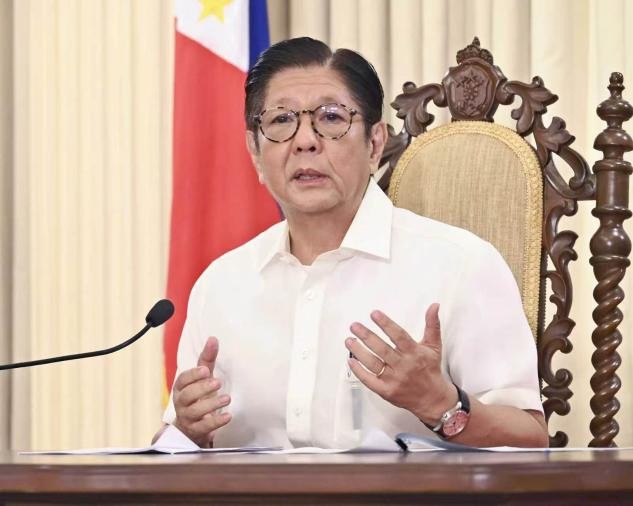
Philippine President Ferdinand R. Marcos Jr. speaks during an interview to Japanese media at Malacanang Palace in Manila, Philippine, on May 18, 2026. Photo: VCG
Philippine President Ferdinand Marcos Jr. will undertake a state visit to Japan from May 26 to 29, during which he is set to meet Japanese Prime Minister Sanae Takaichi and they are reportedly expected to discuss "cooperation toward realizing a free and open Indo-Pacific" and "coordinating responses to China's maritime expansion," according to media reports.
Several media reports previewed the agenda for the talks, with Manila Bulletin releasing a report titled "Security ties with Japan top Marcos' agenda during Tokyo trip." Philippine media GMA News reported that the Philippine president and the Japanese prime minister are expected to discuss the future trajectory of the Philippines and Japan's strengthened strategic partnership. The Japan Times reported that Marcos and Takaichi will discuss Japan's evolving defense and security posture, and will also likely to involve another subject that has garnered headlines in recent days: Taiwan.
A Chinese expert said that beyond economic and trade cooperation, the talks between Japan and the Philippines will inevitably involve military and security cooperation, defense exports, particularly on maritime security, the South China Sea, and Taiwan-related issues.
Coordination and cooperation on maritime issues between the Philippines and Japan has been gradually closer, extending into the South China Sea, the East China Sea and even the Taiwan Straits. Against this backdrop, Marcos' repeated claims that he adheres to the one-China principle are fundamentally contradictory and inconsistent to his actual actions, revealing a highly two-faced strategic posture, and the real objective of the Philippines and Japan is to exploit seabed resources and gain access to undersea mineral wealth in waters around the Taiwan Straits, the expert said.
An X user claiming to be Philippine media figure Benjamin Alejandro recently released a report titled "hidden agendas behind Marcos's visit to Japan," claiming that on maritime issues, Philippine and Japan are expected to reaffirm the arbitral ruling on the South China Sea and coordinate positions on the East China Sea and the Taiwan Straits. There is even talk of consultations with Taiwan authorities on maritime delimitation, potentially expanding into the western Pacific east of Taiwan island.
Some netizens expressed their voices of criticism in the comment section under the X of the article, with one saying "Ugly things are never put in the sun!" and another saying "Marcos is crazy to hype up those maritime issues, I expect China to hit back hard."
It is worth noting that in an interview with Japanese media on Monday, Marcos just reaffirmed the Philippines' adherence to the one-China policy and stressed that the country would not interfere in issues concerning Taiwan island, the Philippine News Agency reported.
When asked by foreign media reporter to comment on Marcos's remarks on Monday that his country would likely be involved in any conflict over Taiwan due to his country's proximity to the island, claiming that "we do not have a choice because Taiwan is so close to the Philippines, and we have almost 200,000 Filipino nationals living and working in Taiwan," Chinese Foreign Ministry spokesperson Guo Jiakun said at Tuesday's press briefing that China noted that the Philippine leader reiterates his commitment to the one-China policy and non-interference in China's internal affairs. It should be emphasized that, "large number of Filipinos living and working" on the Taiwan island and "geopolitical proximity" should not serve as the excuse for one country to interfere in another country's internal and sovereign affairs.
We hope the Philippines will honor its commitments, match its words with actions, and abide by the one-China principle through concrete actions, Guo said.
Marcos' remarks exposed contradictions between Manila's repeated claims of adhering to the one-China principle and its actual strategic behavior. If they discuss maritime delimitation issue, it reflects the long-standing ambitions of both the Philippines and Japan to pursue maritime and military expansion, Chen Xiangmiao, a research fellow at the National Institute for South China Sea Studies, told the Global Times on Thursday.
The expert emphasized that the Philippines' real objective is to secure rights to exploit seabed resources and gain access to undersea mineral wealth in waters around Taiwan island. By attempting to use the Japan's defense related-advantages and the Taiwan authorities to expand its own access to mineral resources, the Philippines is in essence interfering in China's internal affairs, Chen said.
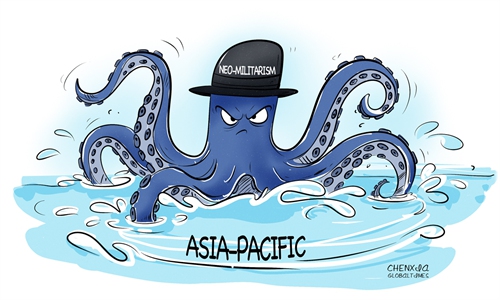
Chen noted that with right-wing forces increasingly dominating Japanese politics and pushing what many see as a dangerous revival of militarism, Tokyo has in recent years continuously sought to expand its continental shelf claims. If the Philippines further enables and advances such a proposal, it would first have a severely destabilizing impact on maritime security.
The key issue now is whether Manila will match its public commitment to the one-China principle with concrete actions. If the Philippines continues to insist on such a contradictory approach, it will further erode mutual trust and inevitably bring negative consequences to bilateral ties and regional stability, Chen said.
RELATED ARTICLES