Photo: Screenshot from Taobao
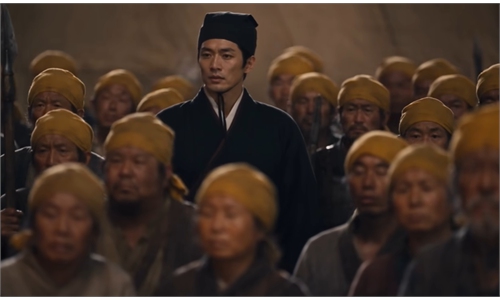
AI-generated wedding photos are giving young Chinese couples a cheaper way to get "married" in front of the camera, without actually stepping into a studio.
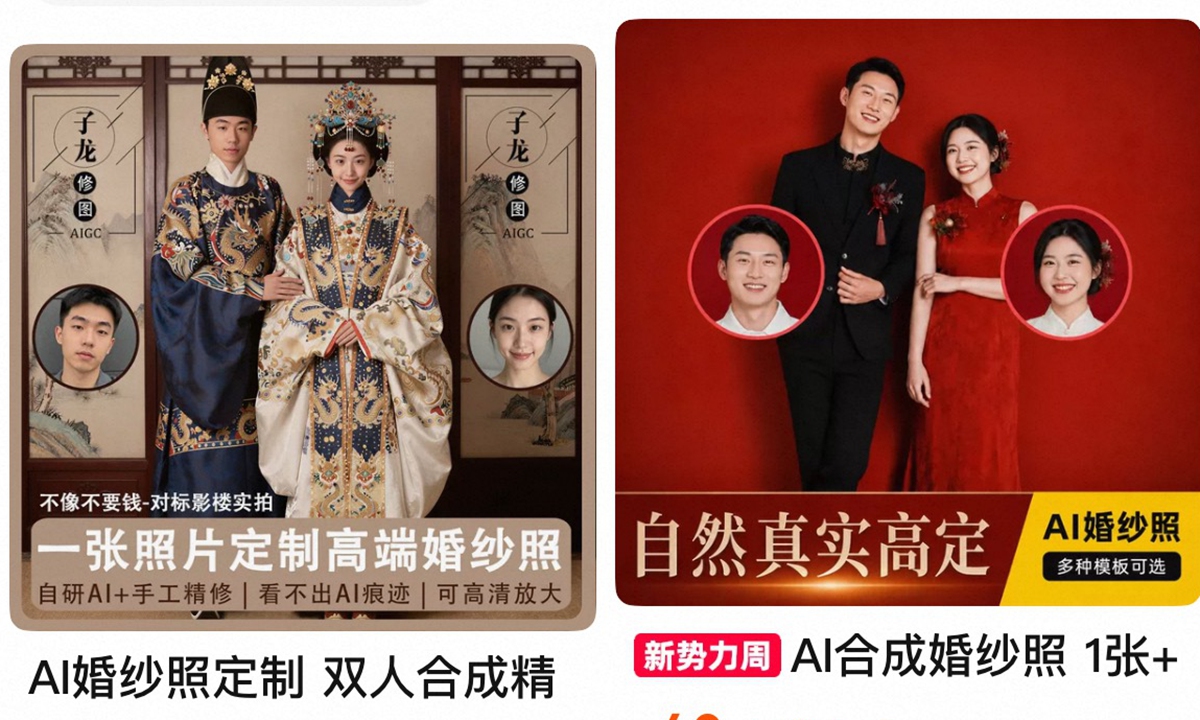
For less than 100 yuan ($14.87), and sometimes for free, users can upload several selfies and generate dozens of wedding photos in styles ranging from traditional Chinese attire to European castles and beach weddings.
The trend is gaining popularity on Chinese social media and e-commerce platforms, offering couples a cheaper and more convenient alternative to conventional wedding photography.
Unlike traditional photo shoots, AI-generated wedding photos require no makeup artist, photographer or physical location. Users typically upload several clear portraits, provide prompts describing clothing, makeup, lighting and settings, and receive dozens of images within hours or several days.
Prices range from several dozen yuan for basic packages to several hundred yuan or more for customized services. Some users also generate wedding photos themselves for free by entering prompts into AI image-generation tools.
On Xiaohongshu, China's lifestyle-focused social media platform, users have shared AI-generated wedding photos, recommended prompts and compared the results with professionally photographed images. Comments under popular posts are diverse such as which software was used and whether the prompts can be shared.
For Zhao Yue, who was preparing for her wedding, the appeal was simple: price and convenience.
"I compared them, and AI wedding photos are really good value for money," she said.
She paid less than 100 yuan, uploaded several selfies from home and received about 100 generated images several days later. She eventually selected more than a dozen.
Several of the China Chic-style images particularly impressed her, with rich colors and a relaxed atmosphere.
"They completely exceeded my expectations," she told the Global Times. "The photos are so realistic, and I rarely look at my wedding photos after the wedding anyway. With so many other wedding expenses, AI-generated wedding photos felt like an ideal choice for me."
Industry figures suggest the market is growing. An industry report estimated that China's wedding photography market is worth about 280 billion yuan, with AI wedding photography accounting for about 5 percent of the market. The share could rise to 15 percent by 2030, according to the report.
The rapid growth has also caught the attention of traditional wedding photography businesses. Some studios have begun using AI for location previews, basic photo retouching and style references, while others are offering packages that combine AI-generated concepts with real-life photography.
For some consumers, however, the question is not simply whether AI can produce a good-looking picture, but whether a wedding photo still means the same thing without the experience of taking it.
28-year-old Tang Yi, who got married this May, chose a traditional photo shoot.
She spent more than 8,000 yuan on a package that included photography and retouching, and spent two full days on the shoot in Beijing. The schedule included early-morning makeup sessions, changing into five wedding dresses and traveling to several outdoor locations under the summer sun.
"It was really tiring," she said. "But I still felt it was worth it."
For Tang, the value was not limited to the finished images.
She said AI-generated images could create attractive poses based on prompts, but could not fully capture spontaneous moments between two people.
"Good-looking pictures can always be edited or generated," she told the Global Times. "But that unique day and those moments when you are face to face with each other cannot be recreated once they are gone."
Tang said she did not oppose AI wedding photography. For couples who mainly want images for social media, electronic invitations or casual keepsakes, she said the technology offered an affordable option.
Bu Xiting, an associate research fellow at the School of Cultural Industries Management at the Communication University of China, told the Global Times that the popularity of AI-generated wedding photos is driven by their affordability and convenience, as well as growing demand among young couples for more flexible and lightweight wedding preparations.
"For young couples who want attractive images without spending thousands of yuan or going through a lengthy photo shoot, AI offers a low-cost and flexible alternative. It also allows them to experiment with styles and settings that may be difficult or expensive to achieve through traditional photography," he noted.
But Bu said AI-generated images still have clear limitations compared with professional photography. "AI can produce visually appealing images very quickly, but it can also struggle with facial details, expressions, hands, clothing textures and the interaction between people and their surroundings."
Privacy and copyright concerns could also pose challenges as the service becomes more widespread, he said, as users need to upload personal photos and may have limited knowledge of how their images are stored or used.
"AI is likely to become an additional option within the wedding photography market," he said. "It may attract consumers looking for affordable, convenient and creative images, while traditional photography will remain valuable for couples who care more about personalized service, physical keepsakes and the experience of documenting an important moment in their lives."