China to assume a central role in the world economy with accelerated innovations: former European Academy of Sciences academician
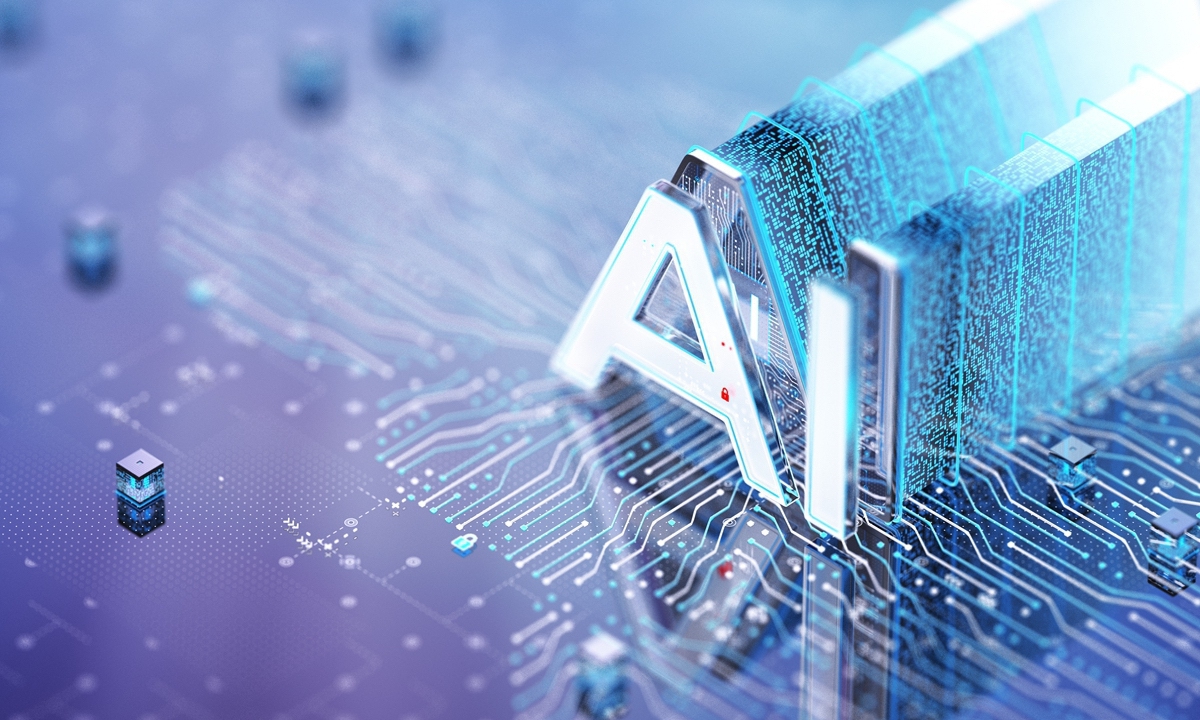
Artificial intelligence Photo: VCG
We are living in an era in which societies around the world are heavily affected by economic uncertainty, trade friction, and intensifying technological competition. In contrast to certain Western countries, China has remained unwaveringly open to global collaboration.
In the near future, the world will recognize China as a principal player in global AI development as well as in other high-tech sectors.
As a European Academy of Sciences academician who has been working in China for many years, I would like to offer my personal observations and thoughts on China's recent accomplishments in science and technology, from the viewpoint of the international research community.
The most noteworthy aspect of China's technological progress is not any single breakthrough in isolation, but the emergence of a large-scale, highly effective innovation system.
This system is built upon sustained, high-level investment in research and development: China has consistently maintained strong national spending on research and development, with R&D intensity as a proportion of GDP steadily expanding over the past decade. For an economy of this size, such consistent and intense commitment reflects an extraordinary level of strategic resolve.
What impresses me even more is the scale and quality of the country's research workforce.
China now maintains one of the largest talent pools of R&D personnel globally. In the research institutions where I work, I frequently interact with young scientists. A substantial proportion of project leaders in major national R&D programs are under the age of 45, and in many large-scale projects, the average team age remains remarkably young. This dynamic talent pool, increasingly enriched by exchanges with international peers, forms the foundation of China's long-term innovative resilience.
Now, China continues to climb steadily in the World Intellectual Property Organization's Global Innovation Index. The country has consistently ranked among the top global contributors in Patent Cooperation Treaty (PCT) international patent filings and high-level international journal publications. These indicators suggest that China has moved from being a technology follower to a major contributor to global innovation.
From my perspective, several characteristics are particularly worth noting.
First, strategic continuity. China has made science and technology self-reliance and self-strengthening at higher levels a strategic pillar of national development. This top-level design provides clear direction and stable, long-term policy support for innovation. Scientific research is inherently a long-term endeavor; major investments often take five, 10, or even more years to bear fruit, and China's institutional advantage lies precisely in its ability to sustain this consistent and unwavering support over time.
Second, a balance between openness and autonomy. While pursuing technological self-reliance, China has never closed the door to international cooperation. It has established science and technology partnerships with over 100 countries and regions and signed numerous intergovernmental cooperation agreements. The European Academy of Sciences has set up its Asia-Pacific Centre in China, which serves as a tangible testament to the country's robust research environment and immense developmental potential.
Third, the shift from following to selective leadership. Chinese researchers are no longer merely learners; in many fields they possess unique advantages, accelerating their transformation into pioneers and leaders. This is particularly evident in my own field of semiconductors and integrated circuits.
Of course, as a rigorous researcher, I am fully aware that in certain areas of basic research and core technologies, China still lags behind the global frontier. However, given the strategic resolve, talent pool, and innovation momentum already demonstrated, I am confident that China will continue to advance steadily on its path toward becoming a global powerhouse.
One striking example is AI, where large models represented by DeepSeek are reshaping the global AI landscape. The recent releases from DeepSeek demonstrate how architectural efficiency and algorithmic optimization can rival or exceed larger models in multi-agent and code benchmark tests. This commitment to architectural efficiency and open-source collaboration has catalyzed an agile global developer community. On major global open-source and application programming interface (API) leaderboards, Chinese models now regularly occupy top positions. As a researcher in integrated circuits, I believe that such architectural innovation offers important strategic implications for countries facing constraints in advanced manufacturing processes.
Achieving top-tier scientific capabilities within a five-year period requires extraordinary resolve, strategic focus, and sustained dedication, and I firmly believe China is well-positioned to make this decisive leap.
To further accelerate growth during the critical phase of the 15th Five-Year Plan period (2026-30), China would benefit from attracting more foreign experts to engage with its scientific and industrial ecosystem. Foreign experts can collaborate with local talent, helping to create robust platforms that fulfill educational and technological ambitions. China holds enormous potential for a bright future.
I have long felt a strong personal pull toward China throughout my life. I have found China to be an amazing country with a long-standing history, rich culture, and unique customs. It is a profoundly rewarding experience to live in China. The society presents a rich cultural tapestry distinct from Western Europe, which I see through Chinese art, festivals, language, symbols, food, fashion, and music that are quite exotic and special. The driving force to come to China has always been present in my mind.
Then, the Chinese Academy of Sciences (CAS) invited me to work in China. At first, I visited China in 2011 to participate in a conference on industrial development. My decision to come to China originated from many years of prior collaboration between my team at the Royal Institute of Technology in Sweden and CAS. I received a national talent program award in China in 2018 and began working full-time as a professor in nanotechnology.
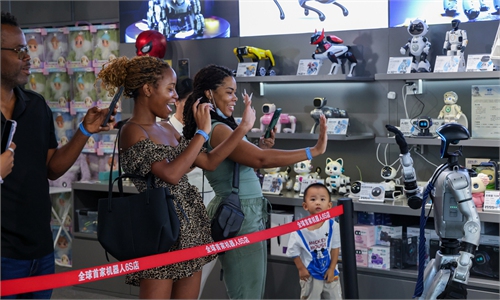
Having lived and worked in China through milestones such as DeepSeek, Unitree Robotics, and China's domestically developed large passenger aircraft C919, I have personally witnessed an unprecedented acceleration across its entire scientific and industrial spectrum.
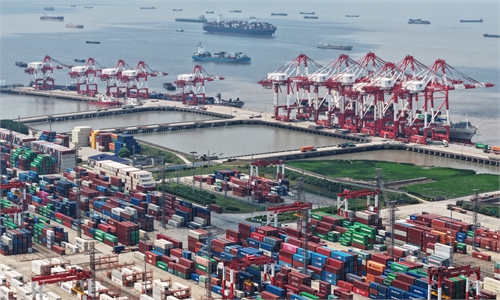
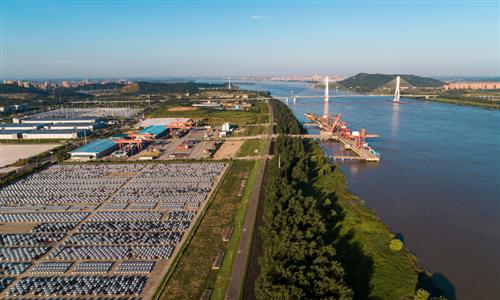
China is technologically robust and will naturally play a central role in the global economy. While the US and the EU remain major traditional trading partners, China has substantially expanded its trade footprint toward emerging market economies. China is already a leading trading partner across much of the Global South, exporting high-value products such as electric vehicles, solar equipment, and lithium batteries. Consequently, China is increasingly well-positioned to navigate protectionist measures from Western economies and contribute constructively to global energy transitions and green, sustainable development.
This article is compiled based on a recent interview with Henry Radamson, former European Academy of Sciences academician and chief scientist at the Guangdong Greater Bay Area Institute of Integrated Circuits and Systems. bizopinion@globaltimes.com.cn
RELATED ARTICLES