Takaichi government's strategic, defense investment push faces economic constraints. Photo: Illustration: Liu Xiangya/GT
Japan's Industry Ministry is seeking an unprecedented 7.8 trillion yen ($49 billion) to accelerate investment in strategic industries such as semiconductors and artificial intelligence (AI), as well as defense and dual-use capabilities, Bloomberg reported. The request reflects Japanese Prime Minister Sanae Takaichi's push to support industrial development through fiscal spending. But mounting economic pressures are narrowing the room for such expansion.
More broadly, Japan's budget requests for the fiscal year starting in April 2027 are drawing market attention, amid concerns over their impact on financial markets. The country's benchmark 10-year bond yield hit 3 percent on Tuesday for the first time since 1996, as investors weighed concerns over the country's fiscal health alongside other pressures.
A more pressing concern is Japan's debt burden. Government debt stands at about 230 percent of GDP, according to media reports, far above the 60 percent level often cited as a benchmark for fiscal sustainability. Against this backdrop, further fiscal expansion could raise concerns about the sustainability of Japan's debt.
A large debt burden also means higher debt-servicing costs, adding to the pressure on Japan's economy. The costs cover both interest payments and debt redemptions. The Mainichi reported that Japan's debt-servicing costs are likely to rise 17.1 percent to a record 36.64 trillion yen in the next fiscal year.
This raises a broader question about Japan's expansionary fiscal policy: How much room does the government really have to keep spending? With debt-servicing costs already rising, further fiscal expansion could put additional pressure on Japan's finances. The challenge for the Takaichi government is that the more it relies on fiscal spending to support strategic industries, the less room it has for further expansion.
The yen presents another problem. The currency has remained weak, hovering around 160 yen to the dollar. A Reuters poll found that 89 percent of economists, or 25 of 28, believed that Takaichi's fiscal policy will contribute to yen weakness.
Despite the rare joint intervention by Japan and the US in the foreign exchange market, the underlying pressures on the yen have not gone away. The US intervention was widely seen as a sign that the yen's rapid decline had begun to affect American interests. If the yen comes under renewed pressure, Tokyo may face greater pressure from Washington to keep the yen broadly stable.
This brings another issue into the picture: interest rates. US Treasury Secretary Scott Bessent said that he believes Japan's government and central bank will take action that leads to a stronger yen, media reports said. His remarks added to expectations that the Bank of Japan could raise interest rates this month.
Higher interest rates could help support the yen and ease some of the pressure from its decline. But they would also increase the cost of government borrowing, as higher rates would mean higher interest payments on newly issued debt. That would add another constraint to fiscal policy at a time when debt-servicing costs are already rising.
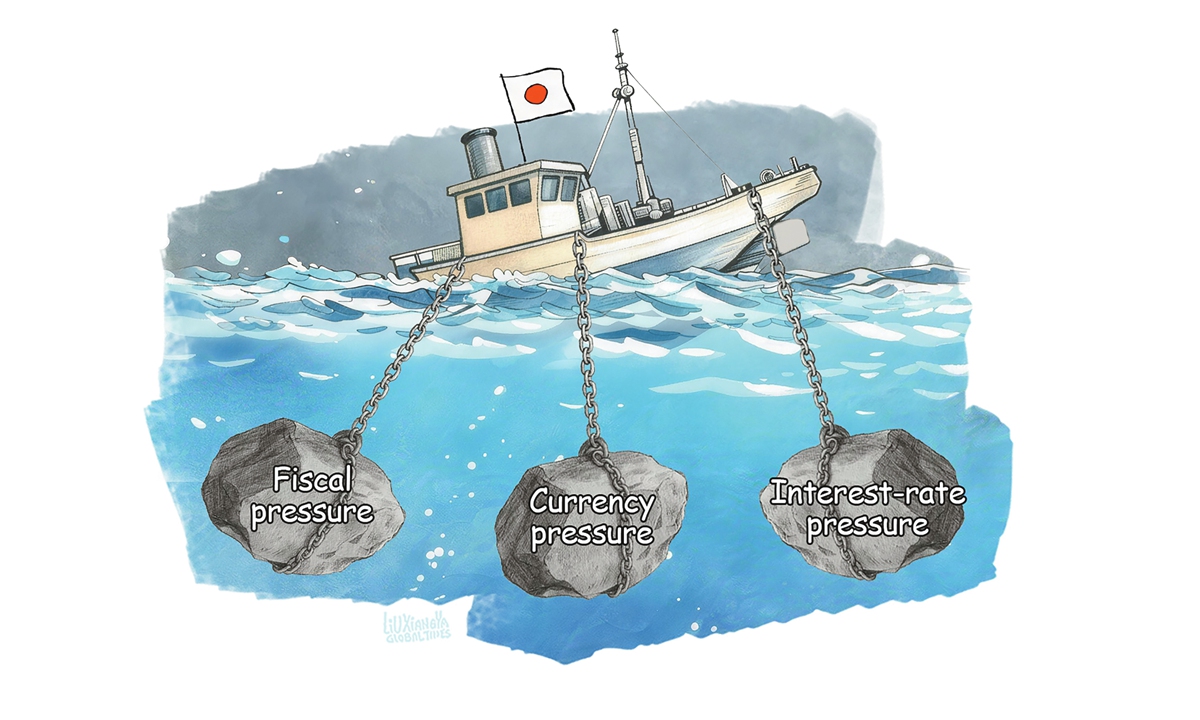
The challenge for the Takaichi government is that these pressures are deeply intertwined. Expanding fiscal spending to support strategic industries could intensify concerns over public finances and put further pressure on the yen. A weaker currency could increase pressure for monetary tightening, but higher rates would also raise borrowing costs and further limit fiscal flexibility.
Japan's policy choices are becoming increasingly difficult as the Japanese government tries to pursue industrial expansion while managing rising fiscal pressures, currency risks and the consequences of tighter monetary policy.
The difficulty facing the Takaichi government is that its push to strengthen strategic industries, including defense-related sectors and dual-use capabilities, is unfolding amid intensifying fiscal, currency and interest-rate pressures. These interconnected pressures are adding complexity to Japan's policy choices and making it harder to expand support for strategic sectors without creating new economic strains.
The author is a reporter with the Global Times. bizopinion@globaltimes.com.cn
RELATED ARTICLES