China, with its economic and financial heft, can play a major role in making the SCO a vibrant regional organization: former Pakistani diplomat
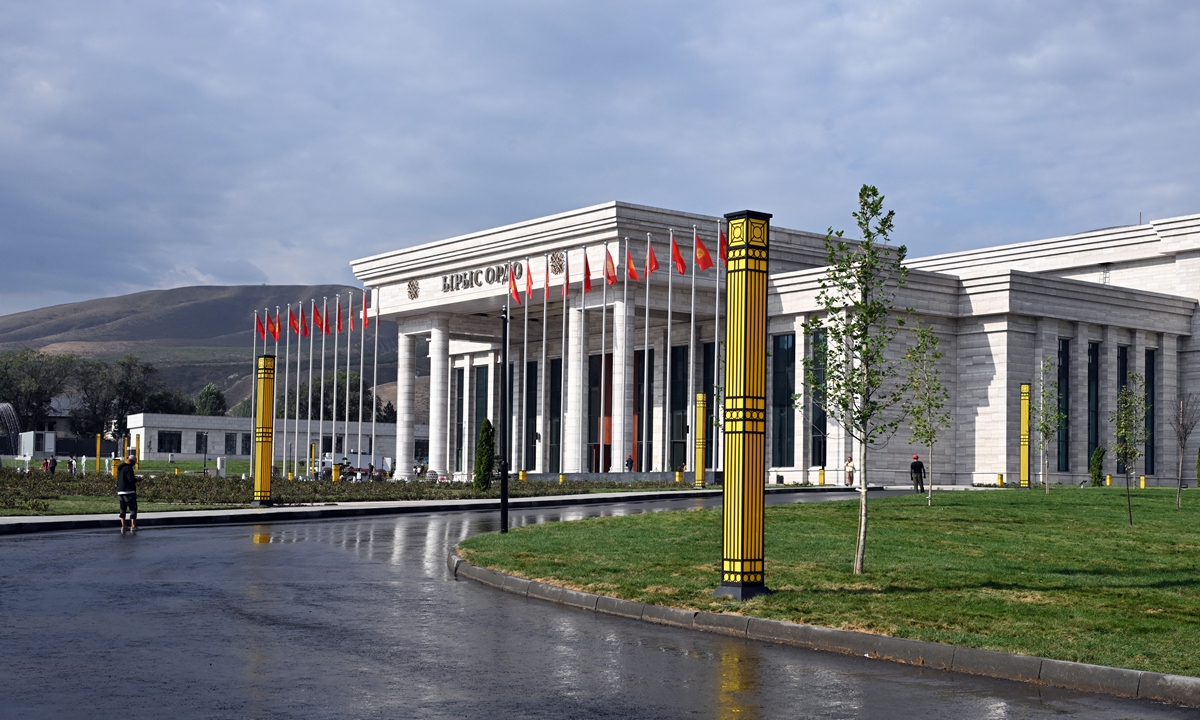
A view shows the Yrys Ordo Congress Hall in Bishkek, Kyrgyzstan. The Shanghai Cooperation Organisation summit is held in the Kyrgyz capital from August 31 to September 1, 2026. Photo: VCG
The Shanghai Cooperation Organisation (SCO) is the largest regional organization with 42 percent of the world's population and 36 percent of world GDP. In 2017, Pakistan formally joined the organization. On the strength of the China-Pakistan Economic Corridor (CPEC), Pakistan is advancing the mutually shared objectives of regional integration, working both bilaterally with SCO member states and collectively through the SCO platform.
To date, a number of countries across the world are either Observers or Dialogue Partners, while many more are keen to obtain some status in the SCO, which underscores its growing importance and regional influence.
Right from the very beginning, SCO has focused on combating terrorism, separatism and extremism. However, over the past decade, SCO has enlarged the scope of its activities and programs to include drug and human trafficking, cross-border crimes and plans for trans-regional connectivity and trade. Cultural cooperation is being expanded. The organization works on the principles of equal rights, mutual respect, noninterference, peaceful coexistence and democratization of international relations. SCO strives to encourage a just and equal world order and a new model of geopolitical and geoeconomic integration.
China's contribution to SCO has been substantial. China has been a pioneer state in the evolution of SCO. As a founding member, China has made a great contribution to the development of this regional community with a shared future, on the strength of the Belt and Road Initiative (BRI) and four global initiatives. The concept characterizing equality, commonality, cooperation and sustainable security advocated by China forms the guiding principle of security cooperation among member states.
China's initiatives have found resonance not only among SCO member states but also in the wider international community, particularly in the countries of the Global South. In the midst of prevailing global turmoil, this concept has become even more relevant. China has always advocated consultation, dialogue, multilateralism, peaceful resolution of disputes, common security and common development for all. This vision is opposed to unilateralism and exclusionary blocs and meets the challenges faced by humanity today.
The model presented by China to deal with global issues is gaining traction because of rationality and pragmatism it offers. I hope China will continue to take the lead in guiding the world toward a more prosperous and peaceful global order and its role in the SCO will contribute to welfare and prosperity of the region.
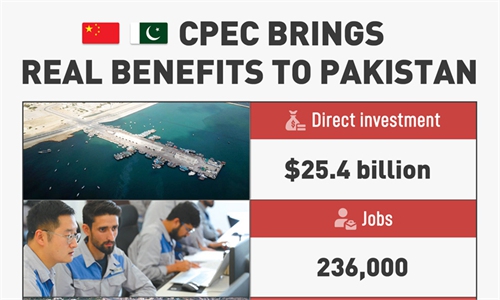
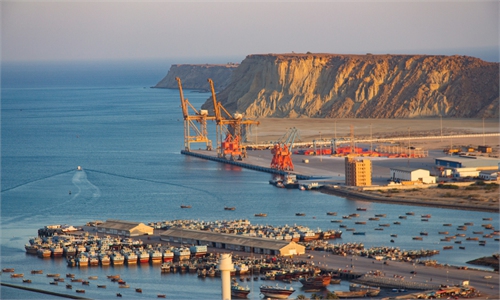
The China-proposed BRI and its flagship project CPEC provide a natural route to realize SCO's overarching goals of regional integration. In the midst of global political and economic turmoil, the need for stable energy corridors, secure supply chains and safe transportation routes has emerged as a global priority. Against this backdrop, many countries including landlocked Central Asian economies are seeking alternatives for their imports and exports and access to seaports. In this context, ports like Gwadar and Karachi provide one of the most cost-effective means. So it is timely that SCO member states jointly expedite those projects which seek to construct regional energy pipelines, work on enhancing road, railway, aviation and shipping links, improve banking channels, promote industrial cooperation and encourage people-to-people exchanges.
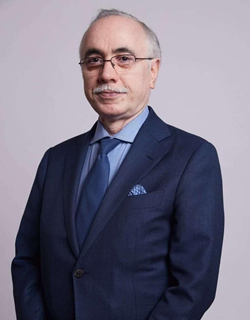
Masood Khalid Photo: Courtesy of Masood Khalid
There is a need for SCO to shape a composite regional sphere enshrining trade and investments, fostering linkages with other regional organizations like Eurasian Economic Union and ASEAN as cooperative ventures. This is how SCO can achieve its optimal potential. The structural bottlenecks need to be addressed comprehensively and urgently. China, with its economic and financial heft, can play a major role in making the SCO a vibrant regional organization.
Since its membership in 2017, Pakistan has remained an active member. As an important country in South Asia and as a gateway for intra-regional connectivity, complemented by CPEC, Pakistan has been part of all major activities of this body. Its active participation in SCO reflects its keen interest in regional peace, stability and development. SCO provides a platform for Pakistan to explore greater economic ties in key areas of energy, trade, investments, transport and communications with the region. Pakistan will take over the chairmanship of the SCO Council of Heads of State for 2026-2027. In that capacity, Pakistan will seek to deepen regional cooperation in mutually identified areas as agreed to by the leadership of member states.
Masood Khalid is a former Pakistani ambassador to China
RELATED ARTICLES