US credibility concerns, G20 economic interests’ consideration limit push for trade curbs, especially against China: experts
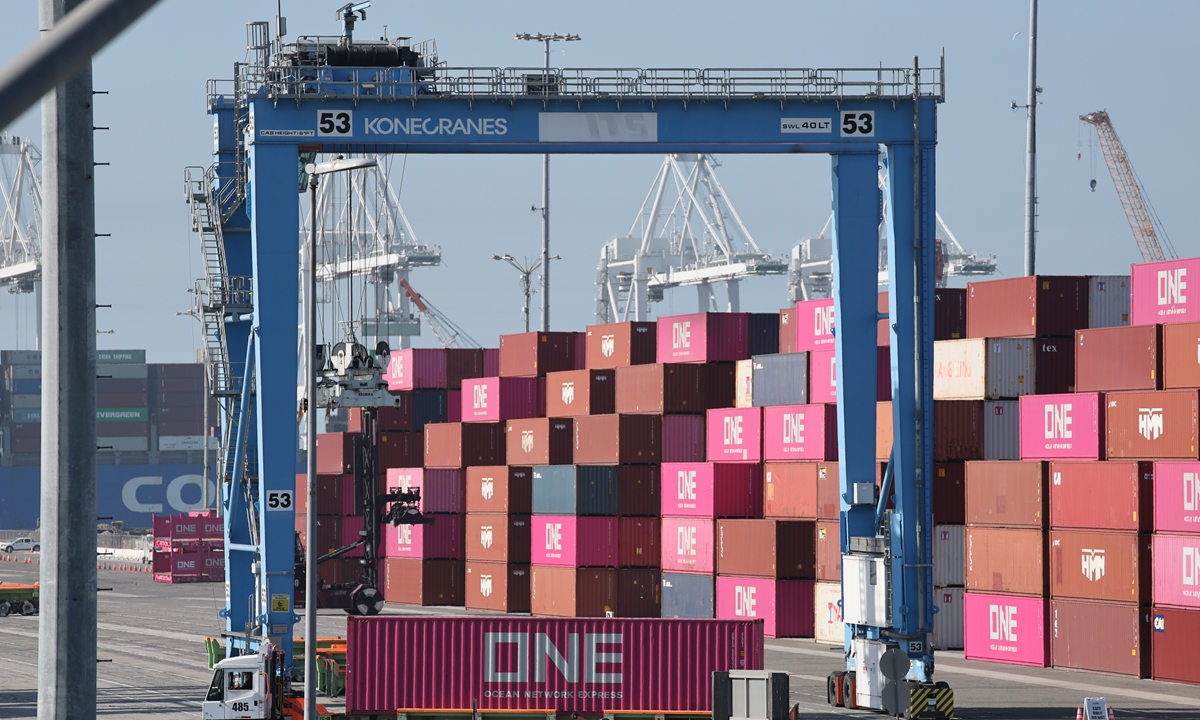
A truck moves goods in a shipping container next to large stacks of shipping containers and cranes at the Port of Long Beach in Long Beach, California, USA on August 26, 2026. Photo: VCG
The reported effort of the US to rally G20 members behind tougher trade measures targeting China is facing challenges as countries weigh their own economic interests and remain cautious about following Washington's protectionist approach amid growing concerns over its credibility, Chinese experts said.
The remarks came after Reuters reported on Tuesday that the US administration won backing from G20 financial leaders, except China, to address "non-market" policies and trade distortions that allegedly contribute to excessive export dependence and hinder growth elsewhere.
Although China was not explicitly named in the meeting, the discussion was widely seen to have a clear target, with Reuters reporting that the finance ministers' meeting clearly focused on China. The report also showed how US officials continued to relentlessly harp on the so-called "Chinese goods" issue, while pushing other G20 members to adopt trade measures against China.
US Treasury Secretary Scott Bessent said at a news conference that "non-market-based economies pushing out a never-ending stream of cheap exports is not sustainable," according to Reuters.
However, the US-led push appeared to face differences among G20 members. US Treasury Under Secretary for International Affairs Erin Browne told Reuters also on Tuesday that a joint communique reflecting Washington's priorities on reducing global imbalances and sovereign debt restructuring might not be possible due to remaining differences over language.
"We've been working really hard on a communiqué, but we want to make sure that it reflects US interests and America First priorities, and if we are unable to come to a conclusion, we're comfortable with that," Browne said, according to Reuters.
Chinese experts said that Washington's attempt to promote trade restrictions against China among other economies is essentially aimed at shifting the consequences of its own trade policies onto others.
"US efforts to push other economies to adopt trade restrictions targeting China are essentially an attempt to shift the contradictions caused by its own trade policies," Zhou Mi, a researcher at the Chinese Academy of International Trade and Economic Cooperation, told the Global Times on Wednesday.
Zhou said that Washington's repeated use of tariffs has evolved from a short-term trade tool into a structural change reshaping the global trade landscape, undermining supply chain stability and increasing uncertainty for businesses worldwide.
"If more economies follow the US in imposing trade restrictions, the existing international trade rules system would be among the first to suffer," Zhou said, noting that the global trade system is built on multilateral consensus, trade liberalization and the most-favored-nation principle.
Any attempt to alter these foundations through unilateral actions would directly undermine the global trade order, he added.
Beyond economic concerns, experts said the US strategy of encouraging allies to take a leading role in trade competition with China has also been weakened by Washington's own trade disputes with partners.
"The US appears to be seeking to stay away from the front line while encouraging its allies to take the lead in trade competition with China. However, Washington's own trade restrictions targeting allies, including Canada, have created a credibility problem, making its hard-line trade barrier strategy less likely to gain trust or support," said Ma Wei, an assistant research fellow at the Institute of American Studies at the Chinese Academy of Social Sciences.
Amid a growing credibility gap and diverging national interests, Washington's highly anti-China trade proposals will struggle to gain traction — if policymakers remain clear-headed and make decisions based on their own interests, Chinese experts said.
Reuters also reported that some G20 members expressed concerns over the broader impact of trade disputes.
A senior German finance official said at the G20 meeting that "uncertainty is poison for economic growth," warning that tariff disputes pursued by the US, "such as the current dispute with Canada, destroy trust," according to Reuters.
Meanwhile, the British side said it would maintain a pragmatic trade relationship with China, while navigating what it said was the sensitive issue of trying to reduce imbalances, the report said.
Canada, which has forged closer economic ties to China since the start of the year, was engaging with China no differently than other G7 countries and with "clear guardrails," its finance minister Francois-Philippe Champagne said.
On the so-called China trade issues repeatedly raised by the US and some Western countries, China has made its position clear on multiple occasions. Chinese experts warned that economies aligning themselves with Washington's unilateral trade agenda could face greater pressure and demands from the US in the future. Therefore, countries should seek to balance economic interests with policy autonomy and make decisions based on their own development priorities amid changes in the global trade environment.
Chinese Vice Finance Minister Liao Min stressed that the global economy is facing multiple challenges and called on the G20 to uphold genuine multilateralism, at the G20 finance ministers and central bank governors' meeting held in the US from Monday to Tuesday. He also urged G20 members to safeguard free trade, promote inclusive economic globalization and create a favorable policy environment for international trade and capital flows.
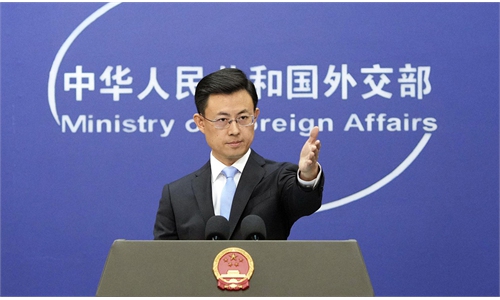
The G20, as the premier platform for global economic cooperation, should play its coordinating role on key issues concerning the global economy in an objective, impartial and balanced manner based on the principle of consensus through consultation and equal participation, Guo Jiakun, spokesperson from China's Foreign Ministry, also told a press conference on Wednesday. China hopes the US in its presidency and other members will abide by this principle, give full respect to all parties' legitimate concerns, and strive for a fruitful Miami Summit, Guo said.
RELATED ARTICLES