ARTS / CULTURE & LEISURE
Northeast China’s biggest trail race draws thousands as trail running gaining ground among young Chinese
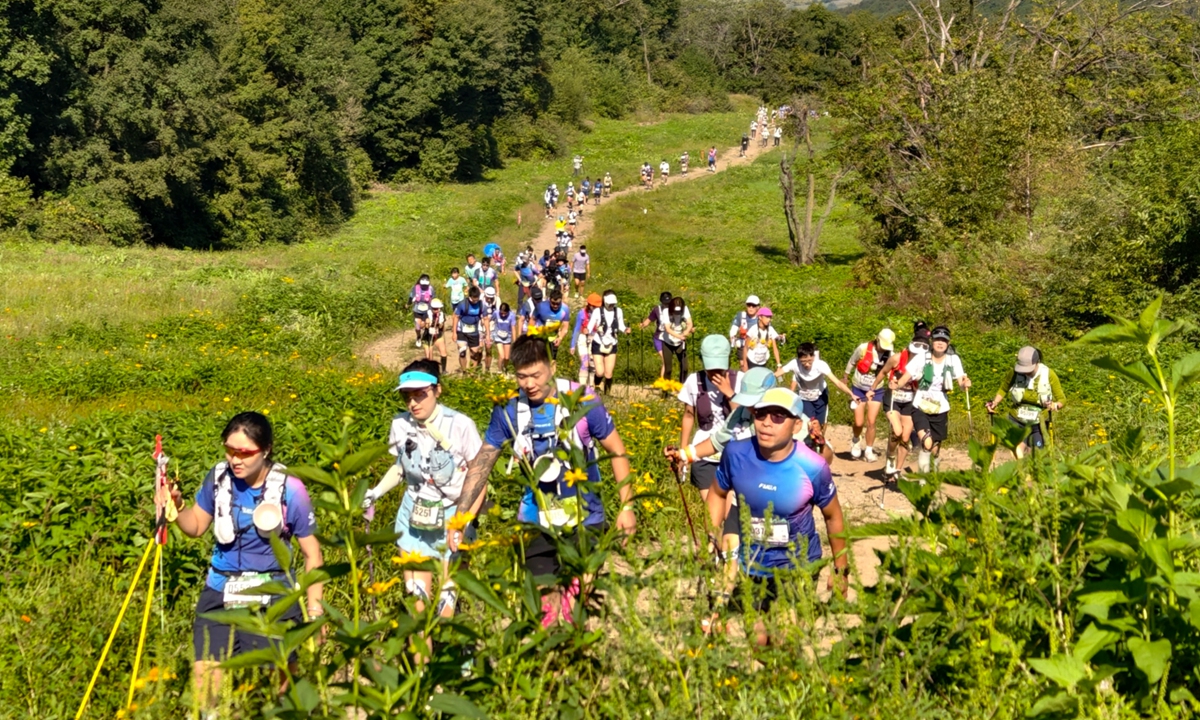
Photo: VCG
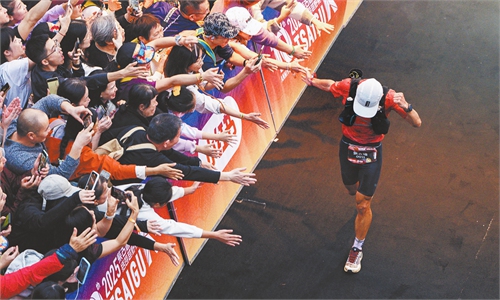
Under a dark sky, runners wearing headlamps made their way through forests and over rocky trails near Songhua Lake in Northeast China's Jilin Province last weekend, their lights forming a moving line across the rugged mountains.About 9,000 runners from 21 countries and regions signed up for the event, which featured races ranging from 10 to 100 kilometers for elite athletes, experienced trail runners and recreational participants. It is also the largest-scale trail-running event in Northeast China.
The crowds at Songhua Lake are part of a growing trail-running scene in China. After years of rapid growth in road running and city marathons, more runners are now heading into the mountains.
China held 258 trail-running events of 25 kilometers or longer in 2025, while the number of shorter training and community races pushed the total number of trail-running events above 800, according to the People's Daily. The sport has spread across much of the country, with races increasingly appearing in mountain destinations far from major cities.
Part of the appeal lies in the challenge and the chance to connect with nature.
Unlike road races, where runners generally compete on paved and predictable courses, trail running requires them to navigate steep climbs, rocks, forests and changing weather.
Liang Song, 29, has participated in more than 10 trail-running races since May 2025.
He told the Global Times he had already been working out, running marathons and competing in races before taking up trail running. After learning about the sport through his contacts in the running community, he quickly fell in love with it. For him, the varied terrain offers a greater challenge while also bringing him closer to nature.
For 31-year-old Xu Yanyan, trail running offers her an escape from the routines of urban life. Instead of following a familiar road through a city, runners spend hours surrounded by forests and mountains, where pace and distance can become less important than managing their energy.
Xu told the Global Times that she turned to exercise to relieve work-related stress long ago. She joined a trail-running group on Xiaohongshu, or RedNote, a lifestyle-focused social media platform, where the group organizer arranges running times and locations. Through the group, she has also made many new friends.
The group includes both experienced runners and complete beginners. For many of them, it's not about time or results. They run simply to enjoy nature, relax, stay active and make friends, Xu said.
That experience has helped turn trail running into more than a competitive sport. It has become a way for many to spend time outdoors, challenge themselves and meet others with similar interests.
Besides, the culture around trail running is also different from that of traditional road races. While completing a marathon is often measured by finishing time or a personal best, trail runners may pay as much attention to the route, elevation, scenery and overall experience. For participants who are not chasing podium finishes, a race can therefore become part sporting challenge, part outdoor adventure and part weekend getaway.
On Xiaohongshu, runners share training plans, race routes and equipment online, while terms such as "first trail race" have become familiar among China's growing outdoor communities. Some races also attract runners who combine competition with travel, turning a weekend race into a longer trip.
Many people with little or no previous trail-running experience also turn to these online communities for advice on training, equipment and race preparation.
Unlike many traditional competitive sports, trail running has a relatively low barrier of entry for amateurs. Recreational runners can often take part in the same events as elite athletes, making the sport both competitive and accessible.
Wang Changyou, a deputy director of the Sports Department at Capital University of Economics and Business, told the Global Times that trail running is not a new sport, but has gained greater attention in recent years amid the nationwide fitness boom and the popularity of marathons.
According to Wang, running on trails offers benefits beyond physical exercise, including opportunities to enjoy nature and socialize, while social media has helped broaden its appeal.
But he cautioned that beginners should be particularly mindful of safety risks. Those new to trail running should start with accessible routes and avoid venturing deep into remote mountainous areas, he said.
Trail running also requires runners to manage their pace, adapt to changing terrain and stay focused on their rhythm, rather than simply chasing a target pace, he noted. At higher elevations, runners also need to be aware of altitude sickness and adjust their pace and intensity accordingly. Running with others can provide an added layer of safety, while basic skills for responding to emergencies are also important, added Wang.
RELATED ARTICLES